

Why in news?
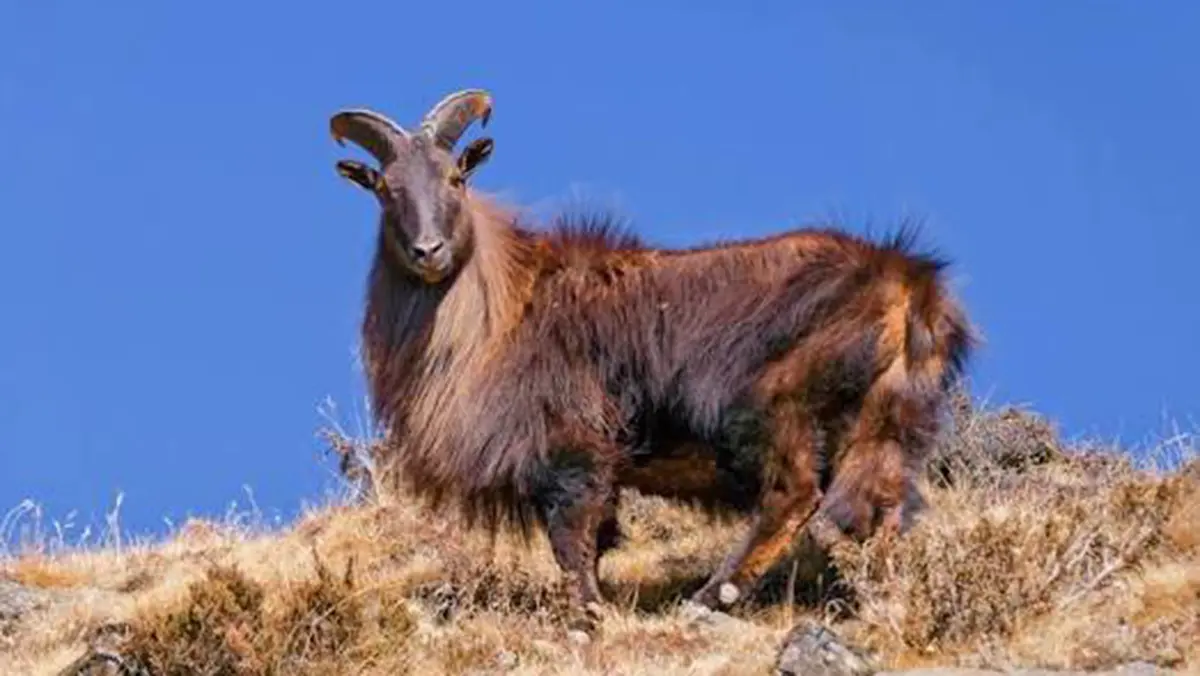
Forest officials in Uttarakhand are considering limits on human activity in parts of Kedarnath Wildlife Sanctuary to protect Himalayan tahr. A 2 October 2026 report describes concerns about disturbance, expanding settlement-related pressures and animals approaching places where food is available. The Himalayan tahr is a goat-like mountain herbivore native to the central Himalaya. It uses steep terrain and high-elevation grazing habitats, where human activity can affect access to food and shelter. The proposed response includes managing disturbance and cleaning affected areas. These are reported conservation plans, not evidence that a sanctuary-wide closure has already taken effect or that a new population census has been completed.
Where the sanctuary fits into Himalayan geography
Kedarnath Wildlife Sanctuary lies in Uttarakhand's Rudraprayag and Chamoli districts. The Wildlife Institute of India records its establishment in 1972 and an area of 975.20 square kilometres. It occupies upper catchments of the Alaknanda and Mandakini rivers. A catchment is the land from which water drains into a river system. Here, protecting slopes and vegetation is connected with both wildlife habitat and the movement of water downhill.
The sanctuary spans a large altitude range, from lower mountain forests towards high peaks. Its habitats therefore change markedly with elevation and weather. The institute describes heavy winter snowfall in its alpine and temperate areas. Such variation matters because wildlife does not use the entire protected area in an identical way. A disturbance concentrated in an important feeding or movement area can matter even within a large sanctuary.
Understanding the animal
The Himalayan tahr's scientific name is Hemitragus jemlahicus. It is a grazing and browsing herbivore adapted to steep, rugged mountain country. New Zealand's Department of Conservation identifies its native range in the central Himalaya of India and Nepal. Its account describes use of alpine grassland and subalpine vegetation. The Himalayan tahr should not be confused with the Nilgiri tahr of southern India's Western Ghats.
Grasslands and shrub-covered slopes provide more than a scenic setting for these animals. They are feeding environments connected to shelter and movement across the mountains. Protecting only an isolated sighting location can therefore miss the wider habitat an animal uses. Conservation needs to consider how access changes with weather, vegetation and human presence, rather than treating each photographed herd as a self-contained population.
What the reported pressures mean
The New Indian Express quotes officials concerned about increasing contact around settlements and food sources. An animal appearing near people is not necessarily evidence that its wild population is thriving. It may also reflect attraction to accessible food or changes in how it uses habitat. Establishing the cause requires observations over time; one encounter cannot distinguish among these possibilities.
Managing food waste and visitor behaviour can address specific pressures without assuming that every human activity has the same effect. Restrictions need a clear location, purpose and implementation plan. Monitoring then needs to show whether disturbance falls and animals continue using suitable habitat. Announcing an intention to restrict activity and demonstrating a conservation benefit are different stages.
Why conservation status depends on place
The Department of Conservation describes Himalayan tahr as Near Threatened under the International Union for Conservation of Nature's assessment. It links concern in the native range to hunting and habitat loss. Near Threatened is not the same category as Endangered, and it is not a local head count. A global category provides context; sanctuary management still needs reliable evidence about the animals and pressures at that site.
The same species presents a different problem in New Zealand, where it was introduced outside its native range. There, browsing and trampling can damage alpine plants and affect habitats used by native animals. The contrast is important: conserving a species in its native ecosystem and controlling it in an introduced range are not contradictory goals. The ecological relationships and conservation responsibilities differ between the two places.
Conclusion
The Kedarnath proposal places attention on the habitat conditions that allow Himalayan tahr to persist, rather than sightings alone. Clear local rules, waste management and repeated ecological observations would provide a stronger basis for protection. The outcome should be judged through reduced pressure and continued habitat use, not by an unverified population figure or the announcement of restrictions.