

Why in news?
India and Denmark held their fourth joint working group programme in Copenhagen from 24–28 August 2026. India’s Ministry of Micro, Small and Medium Enterprises announced the outcomes on 1 September. Discussions covered innovation, intellectual property and support for smaller businesses. The engagement aimed to strengthen institutional cooperation and turn useful ideas into commercial opportunities.
What the bilateral programme covered
The Indian ministry worked with the Danish Patent and Trademark Office. Their discussions addressed technology adoption, entrepreneurship and business clusters. They also examined links between research institutions and industry. These connections can help small firms access knowledge they cannot easily develop alone.
The delegation visited Aarhus University’s innovation facility, known as The Kitchen, and Agro Food Park. These engagements focused on mentoring and business-support systems. They offered examples of how institutions can support emerging enterprises. The meetings also reviewed priorities for continuing cooperation.
Micro, small and medium enterprises are commonly abbreviated as MSMEs. Their exact legal definitions vary between countries. In this partnership, the important issue is their shared need for accessible support. Technical advice and usable market knowledge can matter as much as a new invention.
Denmark’s location and wider geographical setting
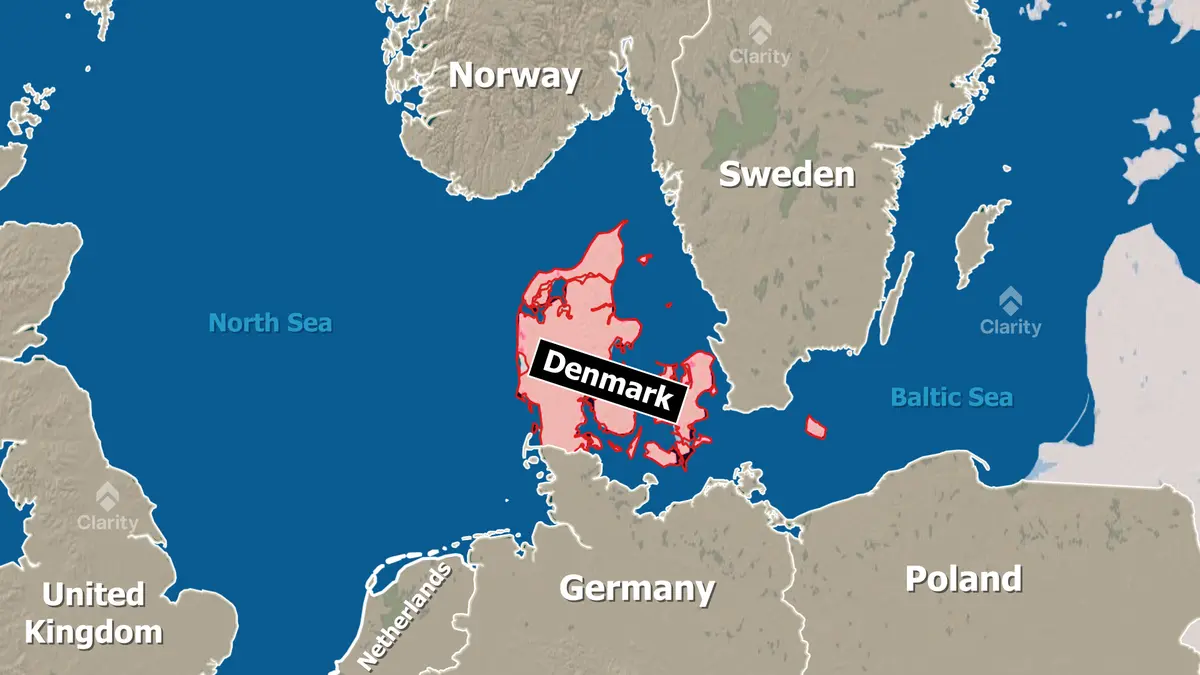
Denmark lies in northern Europe and forms part of Scandinavia. Its European territory includes the Jutland peninsula and many islands. Germany adjoins Jutland to the south. The North Sea lies to the west, while the Baltic Sea lies to the east.
Copenhagen, the capital, faces Sweden across the Øresund strait. Denmark’s islands and straits connect the Baltic region with the North Sea. This maritime setting helps explain the importance of shipping and cross-border connectivity. It also provides context for cooperation on cleaner transport and energy.
The Kingdom of Denmark also includes Greenland and the Faroe Islands. These have extensive self-government and distinct geographical settings. Greenland lies near North America, while the Faroes lie in the North Atlantic. Their inclusion makes the kingdom wider than Denmark’s European territory.
A 2022 boundary agreement divided Tartupaluk, also called Hans Island, between Canada and the kingdom through Greenland. This created a land boundary in the Arctic. Germany remains the land neighbour of Denmark’s European mainland. The two geographical descriptions should not be confused.
Why intellectual property matters to smaller firms
Intellectual property refers to legally protected creations and business assets. Patents, trademarks, designs and trade secrets serve different purposes. Choosing the right protection depends on what a firm has developed. A single label cannot cover every form of innovation.
A patent can protect a qualifying invention for a limited period. A trademark helps distinguish one business’s goods or services from another’s. These rights address different commercial problems. Protecting an invention does not automatically protect its brand name, and the reverse is also true.
Licensing allows a rights holder to permit agreed uses by another party. A small firm may earn revenue without manufacturing everything itself. Another enterprise may obtain technology it needs to expand production. Clear agreements should define permitted uses, responsibilities and payments.
Protection also involves choices and costs. Businesses need to identify commercially valuable assets before spending on registration. They should understand where protection applies and how it can be enforced. Advice must be matched to the firm’s market and financial capacity.
Turning institutional cooperation into practical gains
India and Denmark established a Green Strategic Partnership in September 2020. Its agenda includes cooperation on sustainable development and green technologies. The small-enterprise dialogue fits within this wider relationship. However, the working group’s discussions should not be mistaken for a new trade treaty.
Business clusters can make shared services easier to organise. Nearby firms may use common testing facilities, training or technical support. Universities can contribute research and skilled graduates. The benefit comes from useful collaboration, not simply placing institutions near each other.
For India, adaptation matters more than copying a foreign model. Local firms differ in size, skills and access to finance. Support systems should address these conditions directly. A programme succeeds when businesses can actually use the knowledge it provides.
Follow-up should therefore track practical results rather than meeting numbers alone. Useful indicators include technology partnerships, trained entrepreneurs and commercially workable licensing arrangements. Smaller firms should also understand the assistance available to them. Public institutions can help translate complex rules into accessible guidance.
Conclusion
The Copenhagen engagement strengthens an established channel for India–Denmark cooperation. Its focus on innovation and intellectual property can benefit smaller enterprises. Results will depend on affordable advice and sustained institutional links. Partnerships should help firms protect useful ideas and bring them to market. Practical business outcomes are the clearest measure of success.