

Why in news?
In early June 2026 reports from coastal Odisha highlighted that many farmers have abandoned paddy and vegetable cultivation because wild boars and other animals repeatedly raided their fields. To protect their livelihoods, villagers in Ganjam and adjoining districts are switching to the screw pine plant, locally called kewra. The plant’s sharp leaves and hardy nature make it unappealing to wildlife, and its fragrant male flowers are distilled into valuable perfume.
Background
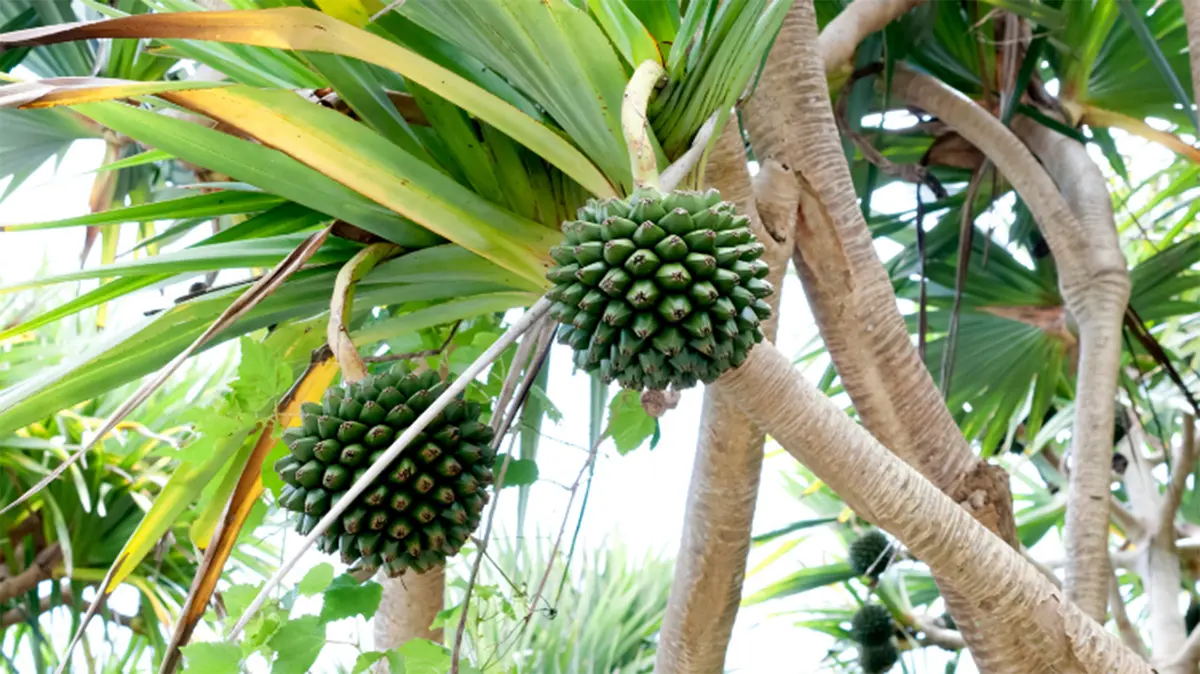
Kewra (Pandanus odorifer) is an evergreen shrub or small tree native to coastal areas of India and Southeast Asia. It has a flexuous trunk that can reach 4–6 metres and is supported by numerous aerial prop roots that anchor it in loose, sandy soils. Long, sword‑shaped leaves with spiny margins radiate from the branches. Male inflorescences bear creamy, tubular flowers whose scent is distilled to produce kewra water, attar and essential oil. The plant thrives in saline marshes and stabilises shorelines, forming dense thickets that protect against erosion.
Traditionally, communities on India’s east coast collect the aromatic flowers to flavour sweets and drinks. The fibrous leaves are woven into mats, baskets and thatching material. Because the plant tolerates saltwater and resists grazing, it grows where few crops can survive. It also forms part of sacred groves and coastal ecosystems.
Why farmers are switching to kewra
- Protection from wildlife: Wild boars, deer and monkeys uproot and eat rice plants, sweet potato and other crops, causing severe losses. Kewra’s spiny leaves and strong aroma deter animals, reducing the need for night‑long patrols and electric fencing.
- Low maintenance and resilience: Once established, kewra requires minimal irrigation and can withstand drought, salinity and high winds. Farmers do not have to replant every season, which lowers labour costs.
- Alternative income: The male flowers are harvested several times a year and distilled into kewra essence, which is sold to perfume makers and food processors. The leaves are sold to artisans who weave them into mats and baskets, providing supplementary revenue.
- Ecological benefits: Kewra hedges help stabilise embankments and prevent soil erosion along canals and riverbanks. The dense thickets create microhabitats for birds and insects.
Conclusion
The switch from paddy to kewra cultivation illustrates how farmers adapt to persistent wildlife conflict. By growing a hardy, coastal shrub that yields aromatic flowers and useful fibres, farmers can earn a steady income while reducing crop losses. Long‑term solutions, however, will require better management of wildlife habitats and support for farmers coping with crop raids.