

Why in news?
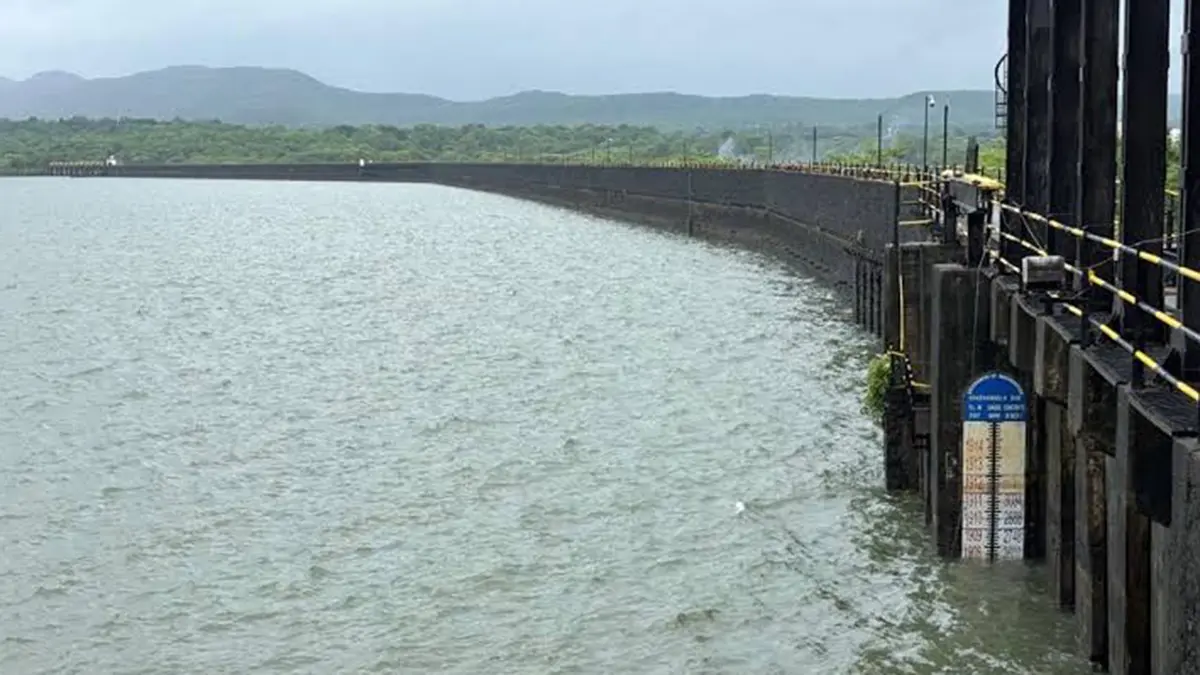
Heavy rain filled reservoirs around Pune during early July 2026. Officials released water from Khadakwasla Dam into the Mutha River. Discharge reached 27,203 cubic feet per second on 8 July. Waterlogging followed, and five families were moved to safety.
Background
Khadakwasla Dam stands on the Mutha River near Pune, Maharashtra. It is about 20 kilometres south-west of central Pune, and the reservoir provides drinking water and supports irrigation.
Severe nineteenth-century droughts created demand for dependable water storage, and Captain Fife proposed a high-level reservoir in 1863. Detailed construction work began in 1869.
The original masonry dam was completed around 1879, and some official registers record its completion year as 1880. Its reservoir was once called Lake Fife.
Important official specifications
The national dam register lists Khadakwasla as a composite dam, and it includes earth and masonry sections. Its listed height is about 32.9 metres.
The listed length is about 1,539 metres, and gross storage is around 86 million cubic metres. Live storage is around 56 million cubic metres.
The register identifies irrigation and water supply as its main purposes. It does not list hydropower as a principal purpose, and Maharashtra’s Water Resources Department owns the dam.
The Khadakwasla reservoir system
Khadakwasla operates within a group of four important reservoirs, and the others are Panshet, Varasgaon and Temghar. Their catchments received continuous rain before the July release.
Panshet stores water on the Ambi River, and Varasgaon lies on the Mose River. Releases from these upstream reservoirs eventually feed the Mutha system.
The Mutha flows through Pune and joins the Mula, and the combined Mula–Mutha then joins the Bhima. The Bhima is a major tributary of the Krishna River.
What does “cusec” mean?
A cusec means one cubic foot per second, and it measures flow, not total stored water. A discharge of 27,203 cusecs equals roughly 770 cubic metres each second.
Large releases can raise river levels quickly downstream, and low-lying housing and roads face the greatest risk. Early warning and controlled evacuation therefore become important.
The 1961 Pune flood
Khadakwasla is closely linked with Pune’s devastating 1961 flood. On 12 July, the upstream Panshet Dam failed during extreme inflow, and the sudden surge then overwhelmed Khadakwasla.
A central section of Khadakwasla breached later that morning, and floodwater entered Pune and damaged many older neighbourhoods. The disaster changed the city’s settlement and flood-management planning.
Khadakwasla was rebuilt during the following years, and the episode remains a major Indian dam-safety lesson. Upstream failures can create a cascading emergency downstream.
What happened in July 2026?
- Three days of heavy rain increased inflow into four reservoirs; water release began around midnight on 8 July.
- Discharge was later increased to 27,203 cusecs; low-lying parts of the Sinhagad Road area were inundated.
- Pune’s disaster cell warned residents before the larger release.
Conclusion
Khadakwasla is both a historic dam and a critical Pune water source. Monsoon releases show why reservoir operations affect urban safety, and accurate names and official specifications are important for Prelims.