

Why in news?
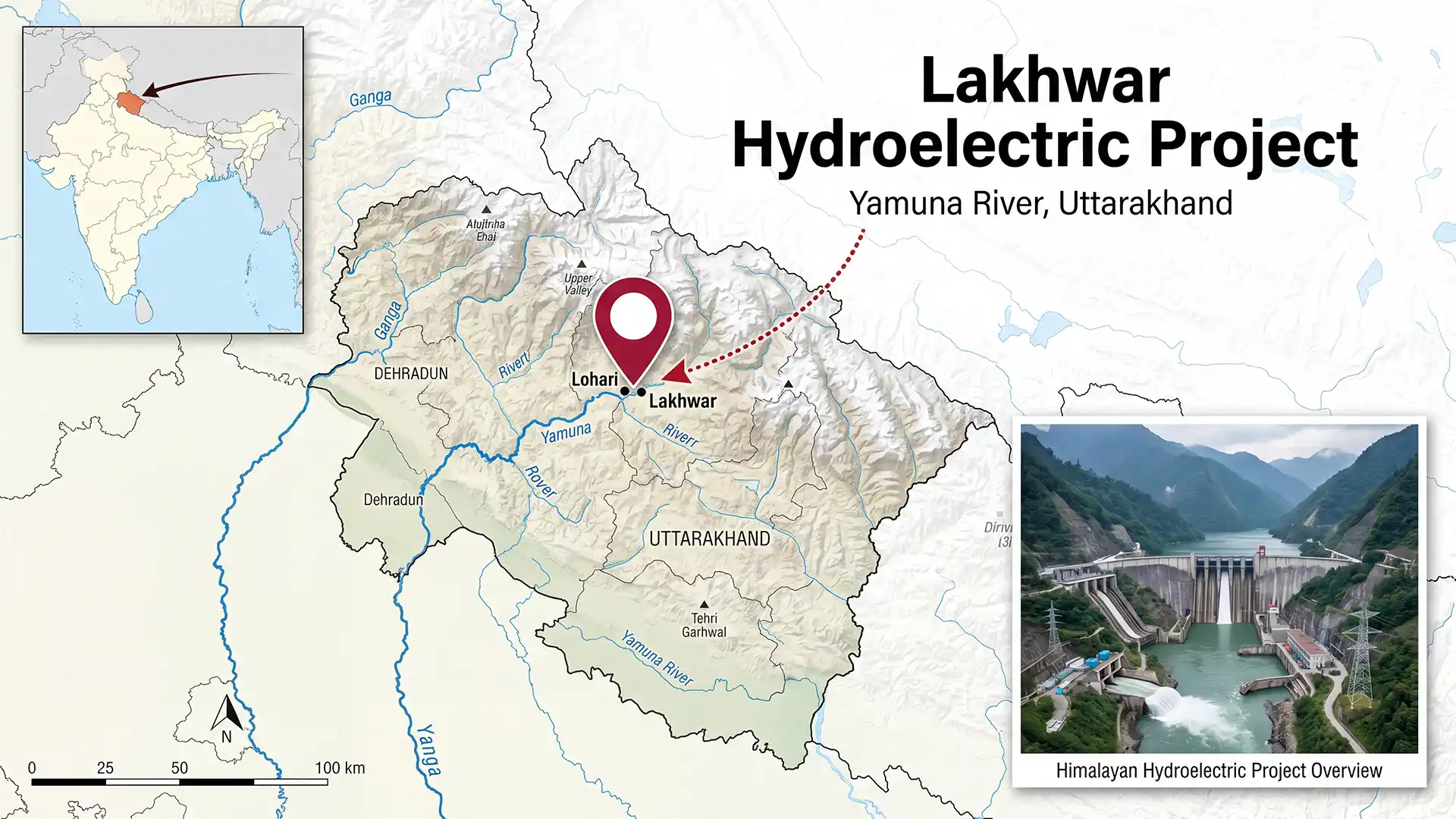
The Union Jal Shakti ministry recently reviewed progress on the Lakhwar multipurpose project and urged the executing agency to stick to timelines. The 300‑megawatt dam, under construction in Uttarakhand, is expected to provide regulated water supply to six states and generate renewable energy. The review underscores the project’s significance for water sharing in the Yamuna basin.
Background
The Lakhwar dam is being built on the Yamuna River near Lohari village in Dehradun district. The project was conceived in the 1970s but stalled for decades. In 2018 the Centre and the governments of Uttar Pradesh, Uttarakhand, Haryana, Rajasthan, Delhi and Himachal Pradesh signed a memorandum of understanding to revive it. Developed by the Uttarakhand Jal Vidyut Nigam Limited, the dam will stand about 204 metres high, creating a reservoir with a live storage capacity of roughly 330 million cubic metres.
Key features
- Power generation: The project will house a 300‑MW power station (three units of 100 MW each) capable of producing about 572 million units of electricity per year.
- Water supply: Its reservoir will store water during the monsoon and release it during the dry season to supply approximately 78.8 million cubic metres to partner states.
- Irrigation and flood control: The regulated flows will irrigate around 33,780 hectares of agricultural land and help moderate floods downstream.
- Cost sharing: States benefiting from the project share construction costs and water entitlements, reflecting cooperative federalism in the management of the Yamuna basin.
Significance
- Hydropower boost: Renewable electricity generated from the project will contribute to India’s clean‑energy goals and reduce dependence on fossil fuels.
- Water security: Storing monsoon water will ease water shortages in Delhi, Haryana and Rajasthan during lean months and support urban and agricultural demand.
- Regional cooperation: The project exemplifies inter‑state collaboration on river basin management, setting a precedent for future water‑sharing initiatives.
Source: NIE