

Why in news?
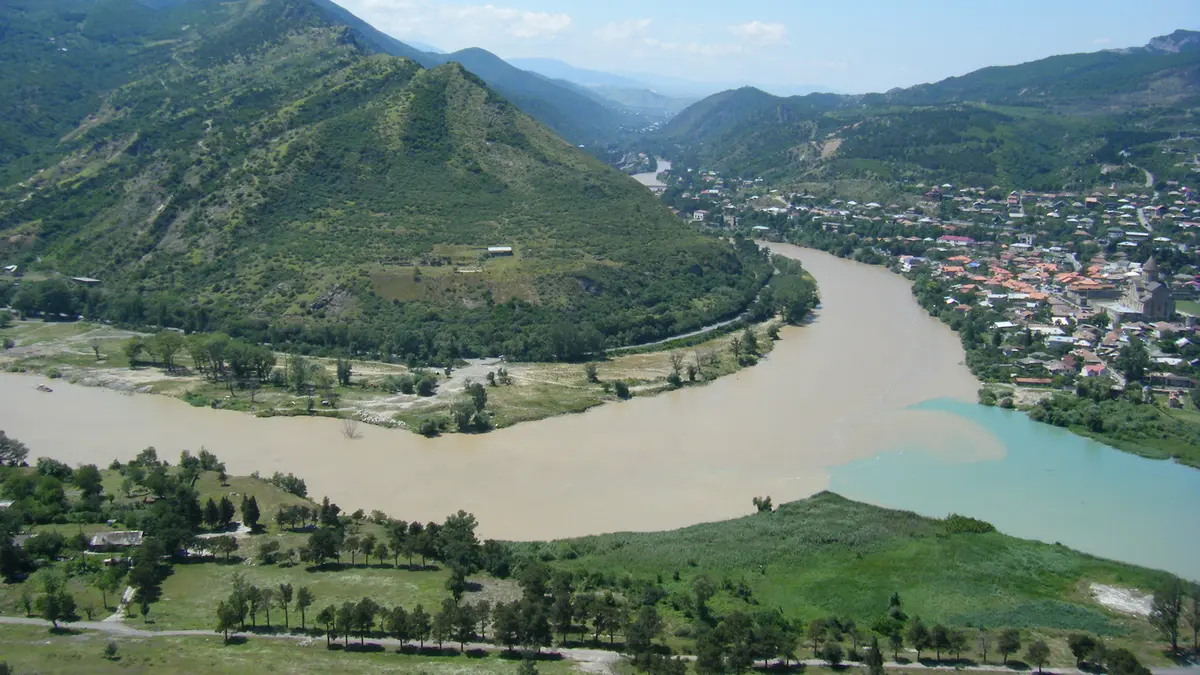
The Mtkvari, better known internationally as the Kura, is the longest river in the Caucasus. It frequently appears in reports on trans‑boundary water management and ecology because it flows through Turkey, Georgia and Azerbaijan before emptying into the Caspian Sea. Understanding its history and geography is essential for regional cooperation.
Background
The Mtkvari rises in northeastern Turkey at an elevation of about 2,750 metres and travels roughly 1,515 kilometres eastwards. In Georgia it passes through the capital Tbilisi and the ancient towns of Mtskheta and Gori. It then crosses Azerbaijan, where it is joined by its largest tributary, the Aras River, before reaching the Caspian Sea. Archaeological evidence shows that humans have lived along its valley for thousands of years, making the river a cradle of Caucasian civilisation.
Key features
- Course: Originating in Turkey’s Kars mountains, the Mtkvari flows through deep gorges and broad plains. Major cities along its banks include Tbilisi, Rustavi and Mingachevir. The river’s lower course forms part of the Azerbaijan–Georgia border before turning southeast into Azerbaijan.
- Tributaries: The river’s main tributary is the Aras, which drains much of Armenia and western Iran. Smaller tributaries include the Alazani, Iori and Qudyalchay.
- Economic use: Communities rely on the Mtkvari for irrigation, drinking water and hydroelectric power. Dams such as the Mingachevir reservoir generate electricity and support agriculture. However, extensive regulation has slowed the river’s flow and increased pollution in some stretches.
- Environmental concerns: Rapid urbanisation, industrial discharge and over‑extraction have degraded water quality. Cross‑border cooperation is needed to combat pollution, manage floods and ensure equitable water sharing in a changing climate.
Conclusion
The Mtkvari is more than a geographical feature—it is the spine that binds the Caucasus. Sustaining its health requires joint efforts by Turkey, Georgia and Azerbaijan to balance development with conservation. Coordinated policies can transform the river from a source of tension into a symbol of regional unity.