

Why in news?
Assam police arrested two people and seized six suspected musk-deer pods at Medhikuchi on 26 September, according to The Hindu. The report, published the next day, gives the combined weight as 158 grams. Musk pods contain a secretion produced by male musk deer, animals vulnerable to hunting for the illegal wildlife trade. The seizure took place east of Guwahati, but the report says the material's origin, exact species and intended destination remained under investigation. The arrests therefore establish a reported enforcement action, not a completed reconstruction of the trafficking route. The case draws attention to the link between a small traded animal product and pressure on wild populations.
Why musk deer are not ordinary antlered deer
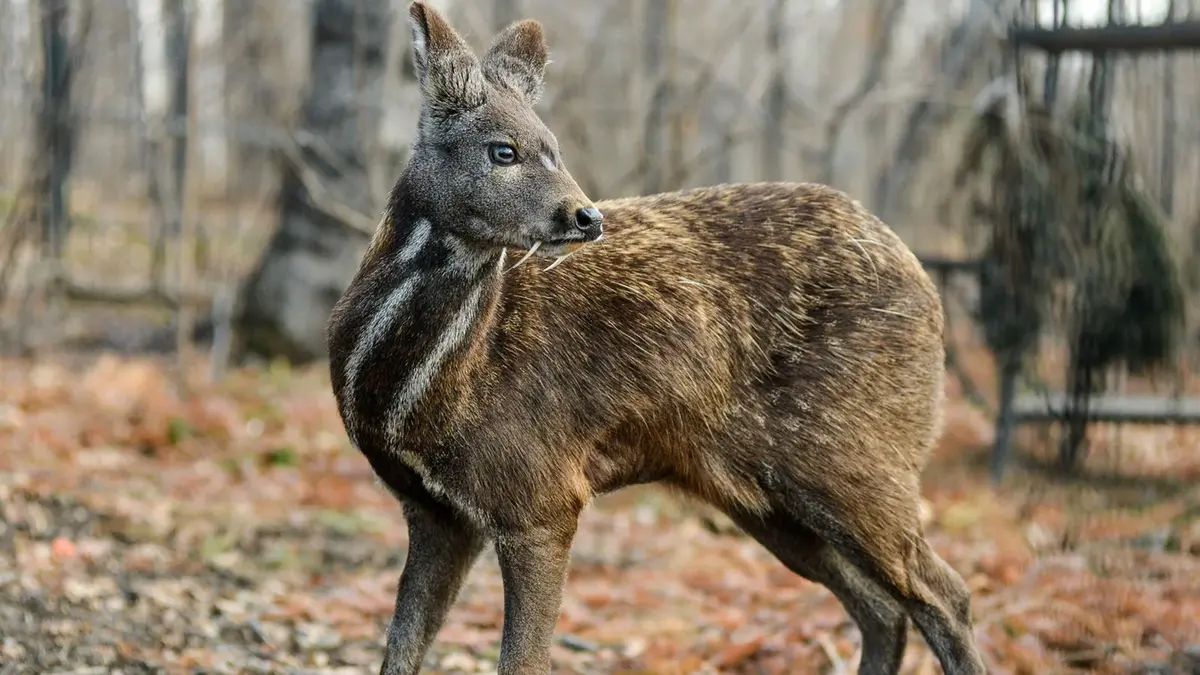
Musk deer belong to the genus Moschus in the family Moschidae. They are separate from the family Cervidae, which includes familiar antlered deer. Musk deer lack antlers, while males have prominent upper canine teeth. Their common name can therefore be misleading if it encourages the reader to imagine a miniature version of an antlered stag.
The group includes several species associated with Asian mountain and forest environments. One example is the Himalayan musk deer, Moschus leucogaster. Biological descriptions of that species should not automatically be applied to every member of the genus. Nor can its identity be assigned to the Assam material simply because a news report uses the general term “musk deer”.
The product behind the demand
The musk gland occurs in adult males in the abdominal region. Its secretion has attracted demand for perfumery and traditional medicinal uses. Mentioning those uses describes the market; it does not establish medical effectiveness. The animal's commercial value can create a strong incentive for illegal killing and collection.
The Animal Diversity Web account of Himalayan musk deer describes hunting and trapping as major pressures. Traps can also harm females and young animals, even though the desired musk gland is a male characteristic. This helps explain why demand for one body product can damage a population more broadly than the number of traded pods might suggest.
Habitat and the problem of identification
Himalayan musk deer use wooded mountain habitats and vegetation that provides cover. Their herbivorous diet and behaviour connect them with the surrounding plant community. Habitat loss and fragmentation add pressures alongside hunting. Protecting the animal therefore requires more than intercepting products at a market or transport point.
Species identification also affects how evidence is interpreted. Research has repeatedly noted confusion between closely related musk-deer forms. A seized product needs appropriate identification before investigators can confidently connect it with a particular species or source area. The place of seizure is an enforcement location, not automatically the animal's original habitat.
Three different kinds of conservation status
The Himalayan musk deer is assessed as Endangered on the International Union for Conservation of Nature Red List. The Mammal Diversity Database links this assessment. It concerns extinction risk, not a criminal-law provision. It also does not establish that all musk-deer species have an identical status.
Indian legal protection comes separately from the Wild Life (Protection) Act, 1972. Its current Schedule I names Himalayan, Alpine, Black and Kashmir musk deer. Section 9 prohibits hunting animals in the relevant schedules, subject to the Act's specified exceptions. The law also regulates dealings in protected animal articles and trophies. A criminal case must establish the applicable facts and offences through that legal framework.
International trade is governed by the Convention on International Trade in Endangered Species of Wild Fauna and Flora, or CITES. Its appendices place Moschus populations from Afghanistan, Bhutan, India, Myanmar, Nepal and Pakistan in Appendix I. Other populations are in Appendix II. The geographical qualification is part of the listing and should not be dropped.
Appendix I generally bars international commercial trade in wild specimens, subject to the Convention's rules and limited exceptions. Appendix II instead provides a regulated trade framework. Neither label should be confused with India's Schedule I or the Red List's Endangered category. These systems concern different legal jurisdictions and different kinds of decisions.
What remains to be established in the Assam case
The reported seizure is a starting point for determining species, provenance and the people involved in movement or sale. It does not justify assuming a particular foreign destination or a fixed number of animals killed. Establishing those links can help enforcement move beyond possession of one consignment towards the network supplying it.
Conclusion
The Assam operation highlights a conservation problem in which small, valuable products can conceal a wider ecological cost. Sound investigation must connect the seized material with reliable identification and its actual source. Habitat protection and action against illegal trade then address different parts of the same pressure. The unresolved case details should remain unresolved in the news until evidence establishes them.