

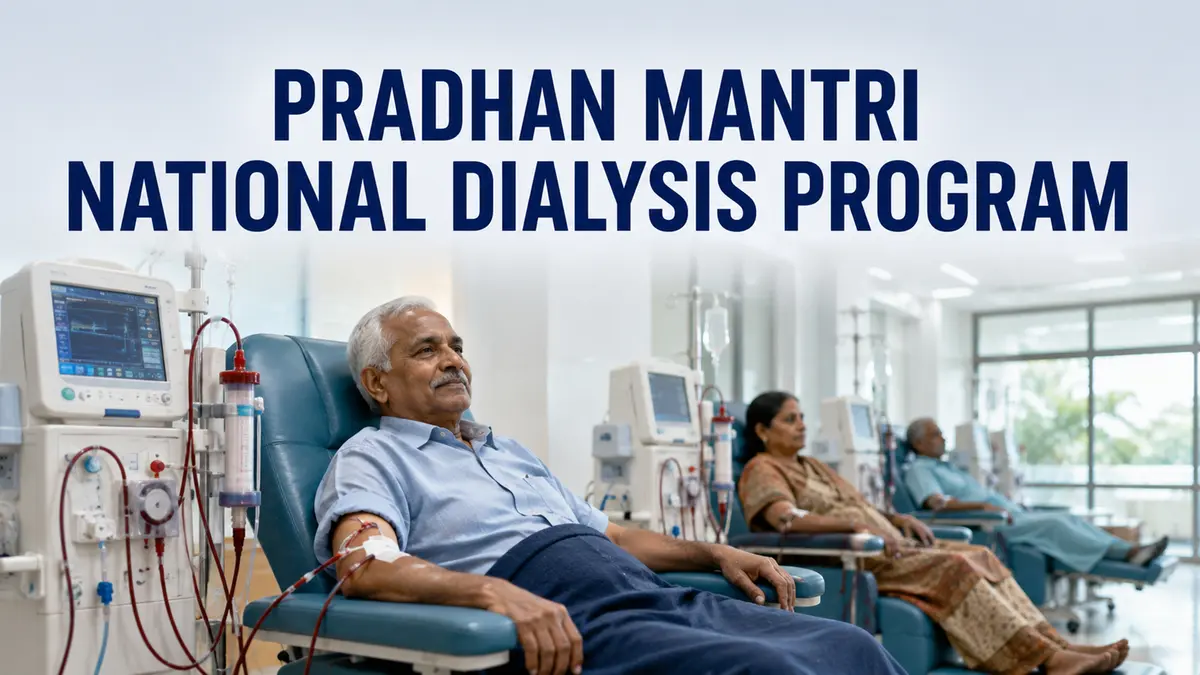
Why in news?
The Union government released a new coverage update for the Pradhan Mantri National Dialysis Programme. States reported services across all 36 states and Union Territories.
Programme design
The programme began on 7 April 2016 under the National Health Mission. It supports free dialysis access for eligible patients in public facilities.
States may use public-private partnerships, in-house services or hybrid arrangements. Both haemodialysis and peritoneal dialysis fall within the programme’s design.
Public health and hospitals remain state subjects. The Union government provides financial and technical support, while states manage facilities and personnel.
Why access is demanding
Haemodialysis usually requires repeated visits and dependable transport. Missed sessions can quickly endanger a patient with kidney failure.
Machines alone do not ensure safe care. Clean water, infection control, trained staff, medicines and functioning referral systems are equally necessary.
Peritoneal dialysis can reduce travel for suitable patients. It still needs training, sterile supplies and rapid support when complications appear.
What should be measured
Coverage reports should show waiting time, interruptions, infection rates and patient outcomes. District presence cannot reveal unequal capacity within a district.
Governments should also protect patients from hidden travel and medicine costs. Financial access remains incomplete when treatment disrupts work and family income.
Building a complete care pathway
Early detection of kidney disease can delay progression for some patients. Primary care must therefore connect screening with treatment and specialist referral.
Dialysis centres need emergency links with hospitals. Complications such as infection or unstable blood pressure may require rapid escalation.
Workforce planning should cover nephrologists, nurses and technicians. Remote support can assist teams but cannot replace safe staffing at the machine.
Patient feedback can reveal unreliable schedules or informal charges. Public dashboards should combine service volume with quality and continuity indicators.
Preventive care remains the least disruptive pathway. Diabetes and hypertension management can reduce avoidable kidney damage for many people.
Governments should compare delivery models across states. Cost, uptime and patient outcomes can show which arrangements deserve replication or correction. Contracts should publish enforceable quality and continuity standards.
Conclusion
The programme has created a wide public platform for dialysis. Its next test is reliable, safe and humane care near every patient.