

Why in news?
Prime Minister Narendra Modi travelled to Norway this week to attend the third India–Nordic summit. The summit brings together the leaders of Norway, Denmark, Finland, Iceland and Sweden to discuss cooperation in trade, clean technology and the blue economy. Many people hear the term “Nordic” and wonder how it differs from “Scandinavian.”
Background
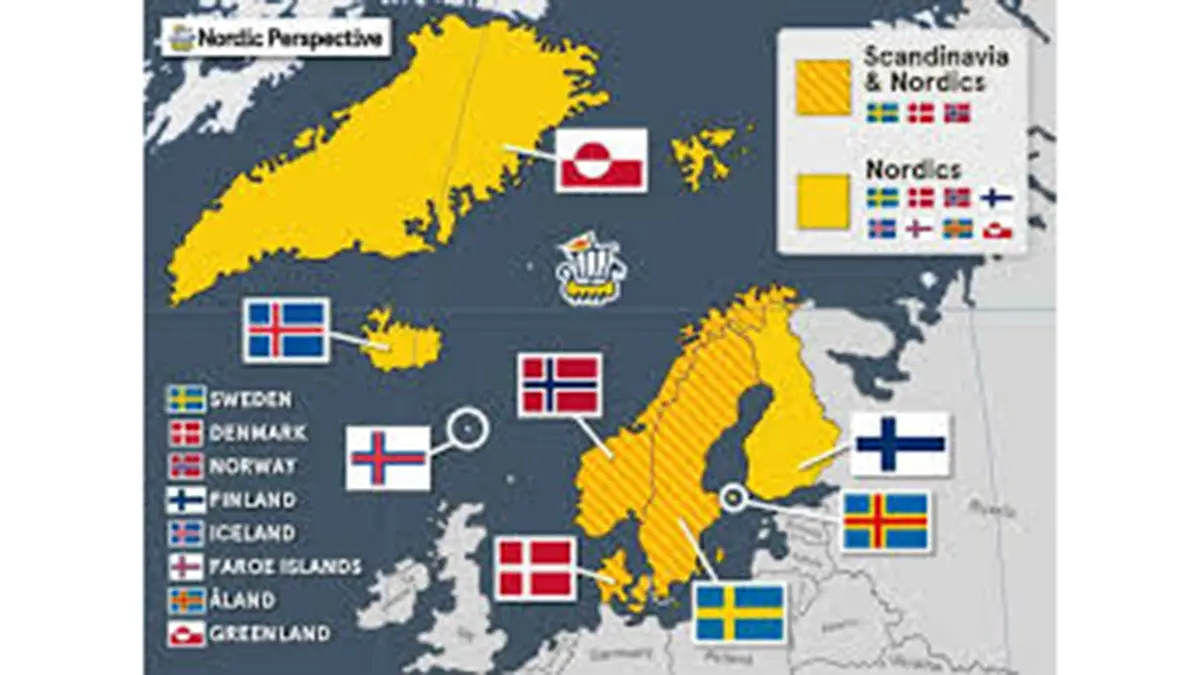
The Nordic region is a cultural and geographical grouping of five countries in northern Europe: Denmark, Norway, Sweden, Finland and Iceland. Denmark also administers Greenland and the Faroe Islands. These countries share a history of Viking seafaring, Lutheran traditions and robust welfare states, but each has its own language and identity.
People sometimes equate the Nordic countries with Scandinavia. Strictly speaking, Scandinavia refers to the Scandinavian Peninsula—Norway and Sweden—plus Denmark because of shared linguistic roots. Finland and Iceland have different languages and historical ties; therefore, they are Nordic but not Scandinavian.
Key facts about the Nordic region
- Political systems: Sweden, Norway and Denmark are constitutional monarchies with ceremonial kings or queens, whereas Finland and Iceland are republics with elected presidents.
- Parliaments: Iceland’s Alþingi is one of the world’s oldest parliaments, tracing its origins back to 930 CE. All Nordic countries operate modern parliamentary democracies.
- Population and size: Sweden is the largest and most populous, with more than 10 million inhabitants. Denmark is the smallest by area but includes the vast territory of Greenland. Iceland has fewer than 400,000 people.
- Languages: Danish, Norwegian and Swedish are mutually intelligible North Germanic languages. Finnish belongs to the Uralic family, and Icelandic preserves many features of Old Norse.
- Economy and cooperation: The Nordic countries cooperate through the Nordic Council. Their economies are diversified, with strengths in renewable energy, shipping, information technology and fisheries. They often rank high in global indices for education, gender equality and environmental performance.
India–Nordic relations
India’s engagement with the Nordic region has deepened over the last decade. The first India–Nordic summit was held in 2018 in Stockholm. Since then, India has sought Nordic investments in green energy, digital health and Arctic research. Nordic countries, in turn, view India as a major market and a partner in climate action.
At the 2026 summit, leaders discussed collaboration on hydrogen technology, maritime security, sustainable ocean management and resilient supply chains. The meeting underscored how middle‑sized democracies can work together to address global challenges.
Conclusion
Understanding the distinction between the Nordic and Scandinavian regions helps make sense of diplomatic initiatives like the India–Nordic summit. The five Nordic countries are bound by shared values of democracy, welfare and environmental stewardship yet have diverse languages and histories. Their partnership with India promises cooperation in clean technologies and sustainable development.