

Why in news?
A major leak of oleum gas at a chemical unit in Boisar, Maharashtra, on 2 March 2026 led to the evacuation of more than 2,600 people, including school students and factory workers. The incident brought the hazardous properties of oleum into focus and highlighted the need for strict industrial safety measures.
Background
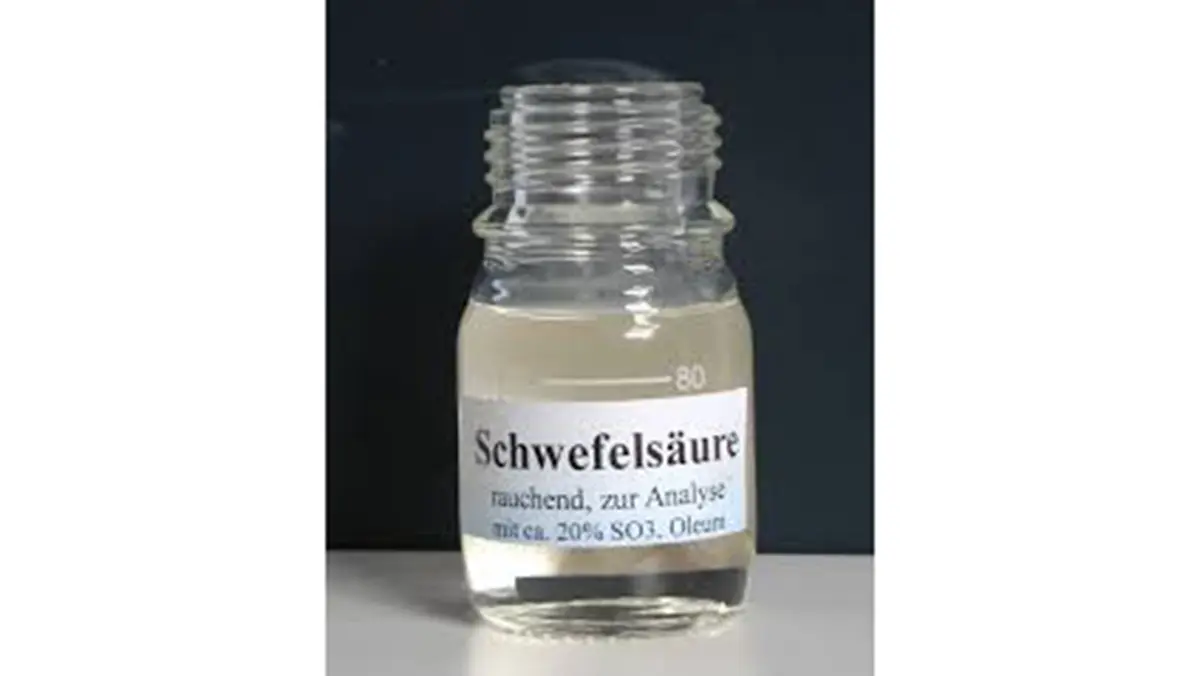
Oleum is a solution of sulphur trioxide (SO₃) dissolved in concentrated sulphuric acid (H₂SO₄). It is produced through the contact process used to manufacture sulphuric acid. Depending on the amount of dissolved SO₃, oleum ranges from colourless to pale yellow and is often called “fuming sulphuric acid” because it releases pungent SO₃ fumes when exposed to air.
Properties and applications
- Highly reactive: Oleum contains excess SO₃, making it more reactive than concentrated sulphuric acid. It readily dehydrates organic materials and can cause combustion when in contact with water or combustible substances.
- Industrial uses: It serves as an intermediate for producing high‑concentration sulphuric acid and is used in the manufacture of explosives, dyes, detergents and pharmaceuticals. Its high viscosity and dehydrating power make it useful in certain chemical syntheses.
- Hazardous nature: Oleum is highly corrosive and can cause severe burns to skin and eyes. Inhalation of its fumes can damage the respiratory tract. Handling requires specialised equipment and strict safety protocols.
Boisar gas leak incident
The leak occurred from a 2,500‑litre oleum tank at an industrial unit in the Boisar MIDC area near Mumbai. Strong winds carried dense white fumes across a radius of about 5 km, prompting authorities to evacuate schoolchildren and workers. Teams from the National Disaster Response Force and chemical experts located the leaking tank, deployed sandbags to contain the fumes and used self‑contained breathing apparatus to enter the site. Three people reported minor eye irritation, but there were no serious injuries.
Conclusion
Oleum plays a vital role in chemical industries, but its extreme reactivity and corrosiveness demand rigorous safety measures. The Boisar incident serves as a reminder for industries to maintain proper storage, monitoring and emergency response systems when dealing with hazardous substances.
Source: The Hindu