

Why in news?
Lockheed Martin announced on 17 September that GM Defense had delivered an initial batch of components for its advanced Patriot interceptor. GM Defense is General Motors’ defence subsidiary. The companies signed their contract on 6 August, and the first housing components arrived on 28 August, according to Lockheed’s account. The interceptor is the Patriot Advanced Capability-3 Missile Segment Enhancement, usually called PAC-3 MSE. It is designed to intercept incoming aerial threats as part of a wider defence system. The announcement highlights efforts to expand manufacturing through a new supplier. It concerns component delivery, not delivery of complete missiles or an operational Patriot battery. The reported 22-day interval is also a supplier’s claim about this particular batch.
Patriot is a system, not just a missile
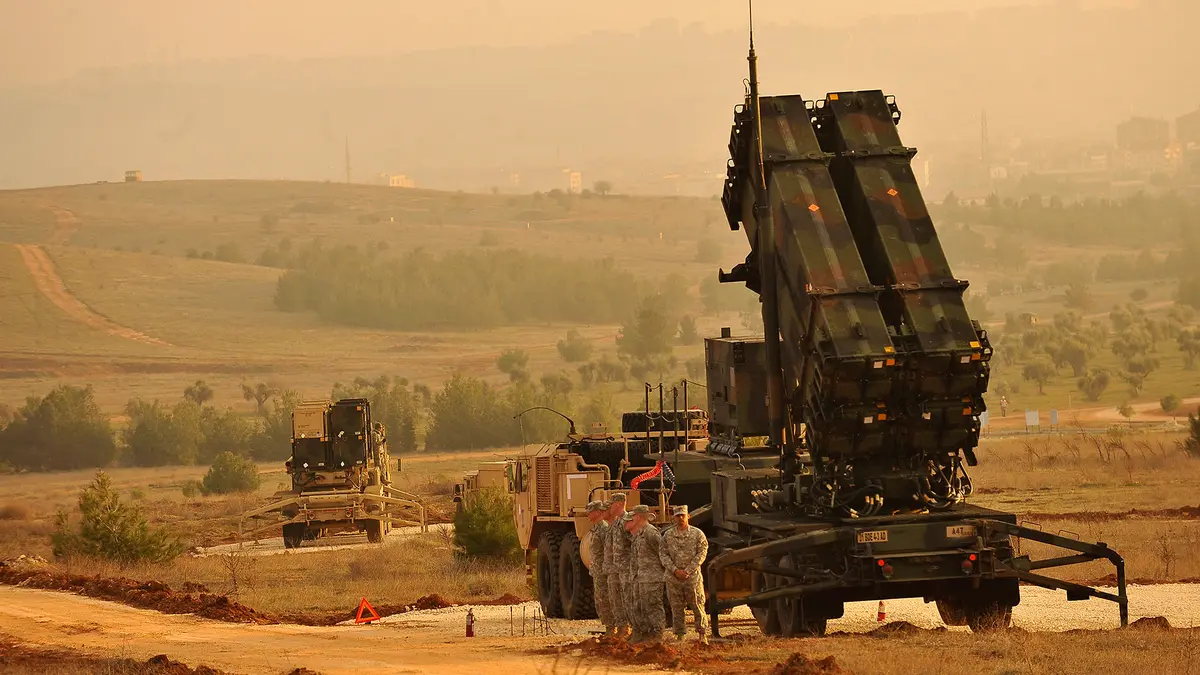
Patriot is a ground-based air and missile defence system. A fire unit combines radar, launchers, command-and-control equipment and supporting infrastructure. The radar helps detect and track objects; the control equipment processes information and supports engagement decisions. An interceptor is the missile launched to meet an incoming threat. Without the other elements, a supply of interceptors is not a complete defence capability.
Raytheon supplies the wider Patriot system, while Lockheed Martin produces the PAC-3 family of interceptors. Other suppliers contribute equipment and components within these programmes. GM Defense’s new role belongs within that manufacturing chain. No single company therefore needs to make every part. Supplying one component also does not make a subcontractor the provider of an entire air-defence network.
What distinguishes PAC-3 MSE?
PAC-3 MSE uses a hit-to-kill approach, seeking to defeat a target through direct collision. This differs from relying primarily on an explosion that spreads fragments nearby. The interceptor’s speed gives the collision substantial energy. Guidance and control are therefore essential to bringing two rapidly moving objects together, rather than merely sending a missile towards a general area.
The manufacturer identifies tactical ballistic missiles, cruise missiles and aircraft among the threats the interceptor is intended to counter. These are not identical targets, so capability cannot be reduced to one universal range or one success percentage. The type of threat, the available sensors and the wider system all influence what an air-defence arrangement can accomplish.
The MSE version developed the earlier PAC-3 design with a more powerful propulsion arrangement and greater manoeuvrability. United States Army explanations describe the importance of accompanying radar and system improvements. A more capable interceptor cannot automatically realise every benefit if the equipment supplying information to it remains a constraint. Modernisation therefore involves the system as well as the missile.
What the new delivery actually shows
Lockheed’s announcement says GM Defense used casting and machining capabilities to produce the initial housing components. A housing is a manufactured structural component, not a finished guided weapon. Its production must fit the requirements of the larger assembly. The significance of the announcement is the addition of manufacturing capacity at one stage of a complex supply chain.
The 22-day period runs from the formal contract to the stated first delivery. It does not establish how long earlier preparation took, the size of the batch, or the pace of future deliveries. Nor does it prove that every component required for complete interceptors can now be produced on the same schedule. Those are separate questions about sustained manufacturing capacity.
A supply chain can be constrained by its slowest essential stage. Producing one component faster is useful only if the other parts, assembly and acceptance processes can support the required output. This is why initial delivery and sustained production are different achievements. A first batch demonstrates a step; repeated deliveries establish whether the new arrangement works reliably at scale.
Why manufacturing matters to readiness
Air defence requires more than a system’s technical specification. Operators also need available equipment, trained personnel, maintenance and stocks of usable interceptors. Replenishment matters because interceptors are consumed when fired. Expanding manufacturing can support those requirements, but a production announcement does not show where equipment has been deployed. Nor does it establish how a particular engagement will turn out.
Patriot itself has evolved through successive upgrades rather than remaining one unchanged design. Different users and configurations can have different equipment combinations. It is therefore misleading to attach every advertised capability of the newest interceptor to every system described as Patriot. The relevant question is which components and supporting systems are actually present and integrated.
Conclusion
The GM Defense delivery is a specific manufacturing development within the PAC-3 MSE programme. It may help expand a supplier base, but its immediate evidence is narrower than a claim of increased battlefield protection. The next meaningful test is dependable production, integration and acceptance of complete equipment. Initial component delivery is one step towards capacity that must be demonstrated through repeated, accepted deliveries.