

Why in news?
The Union Territory of Ladakh has set a Guinness World Record by hosting a 21‑kilometre trail running event on the frozen Pangong Tso. Known as the “Last Run”, the event drew 75 participants who ran at an altitude of 13,862 feet, drawing attention to climate change and promoting winter tourism.
Background
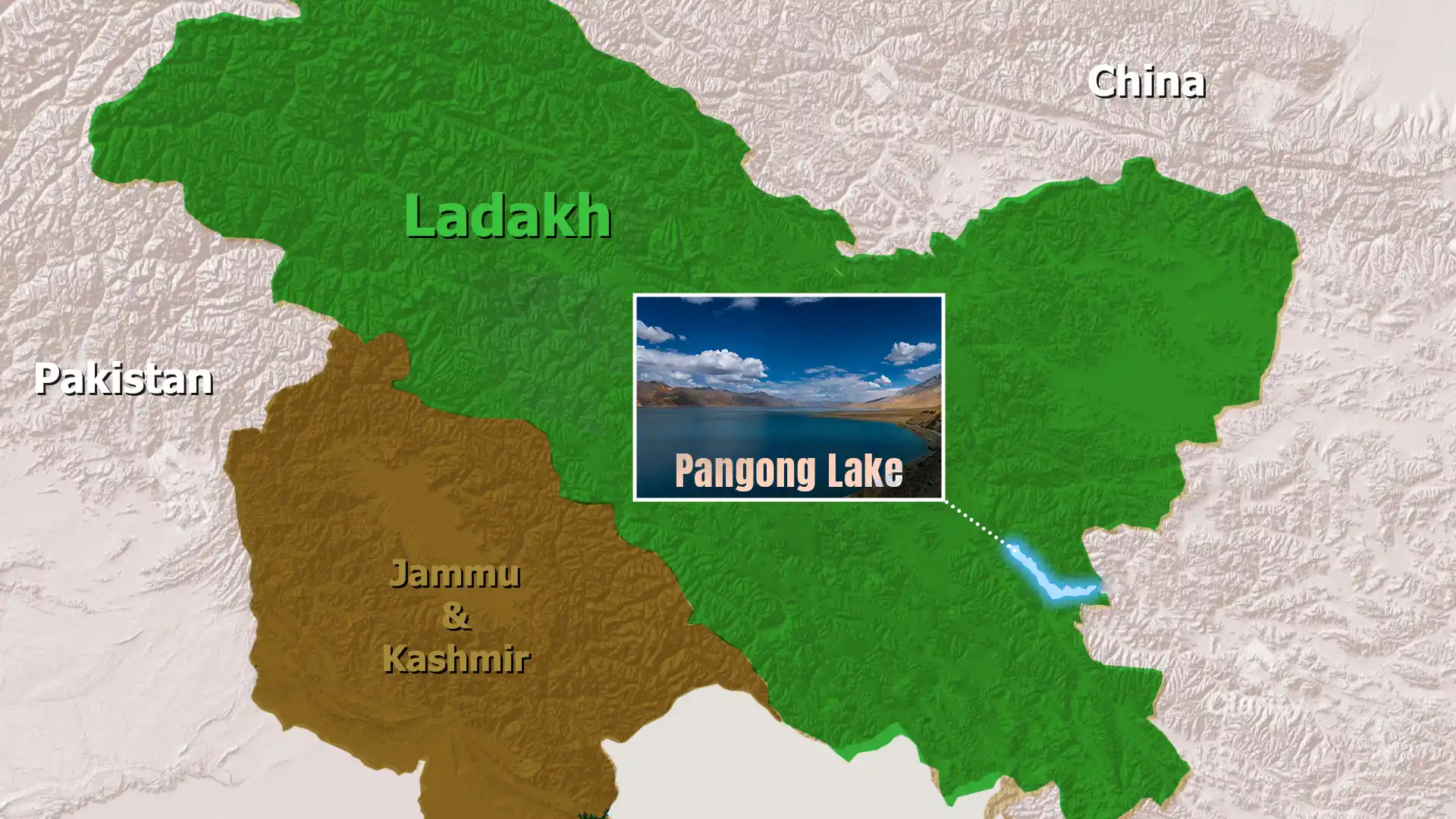
Pangong Tso is an endorheic (landlocked) brackish water lake in the eastern Ladakh Himalayas, situated at about 4,350 m (14,270 ft) above sea level. Roughly 134 km long and up to 5 km wide, one‑third of the lake lies in India and the rest in Tibet. It is renowned for its changing colours, high altitude wildlife and the fact that it freezes solid in winter despite being saline. The Line of Actual Control between India and China passes through the lake.
About the marathon
- Record‑breaking event: The 21‑km trail from Lukung to Maan village was held in temperatures of minus 30 °C, making it the world’s highest frozen lake half‑marathon.
- Organisers: The event was organised by the Adventure Sports Foundation of Ladakh (ASFL) along with the Ladakh Autonomous Hill Development Council (LAHDC), the tourism department and the district administration.
- Purpose: Named the “Last Run”, the marathon aimed to raise awareness about climate change and support the central government’s Vibrant Village Programme, which encourages sustainable tourism and livelihood opportunities in border areas.
- Safety measures: Participants underwent a six‑day acclimatisation process, and five energy stations with medical teams, oxygen support and mobile ambulances were set up along the route. Personnel from the Indian Army, Indo‑Tibetan Border Police (ITBP), Disaster Response Force and local guides ensured safety and logistics.
Significance
Hosting a high‑altitude half‑marathon on a frozen lake demonstrates Ladakh’s potential for adventure sports and sustainable tourism. The world‑record event underscores the fragility of Himalayan ecosystems and the urgent need for climate action. It also showcases cooperation between local authorities, communities and security forces in promoting eco‑friendly initiatives.
Source: NDTV