

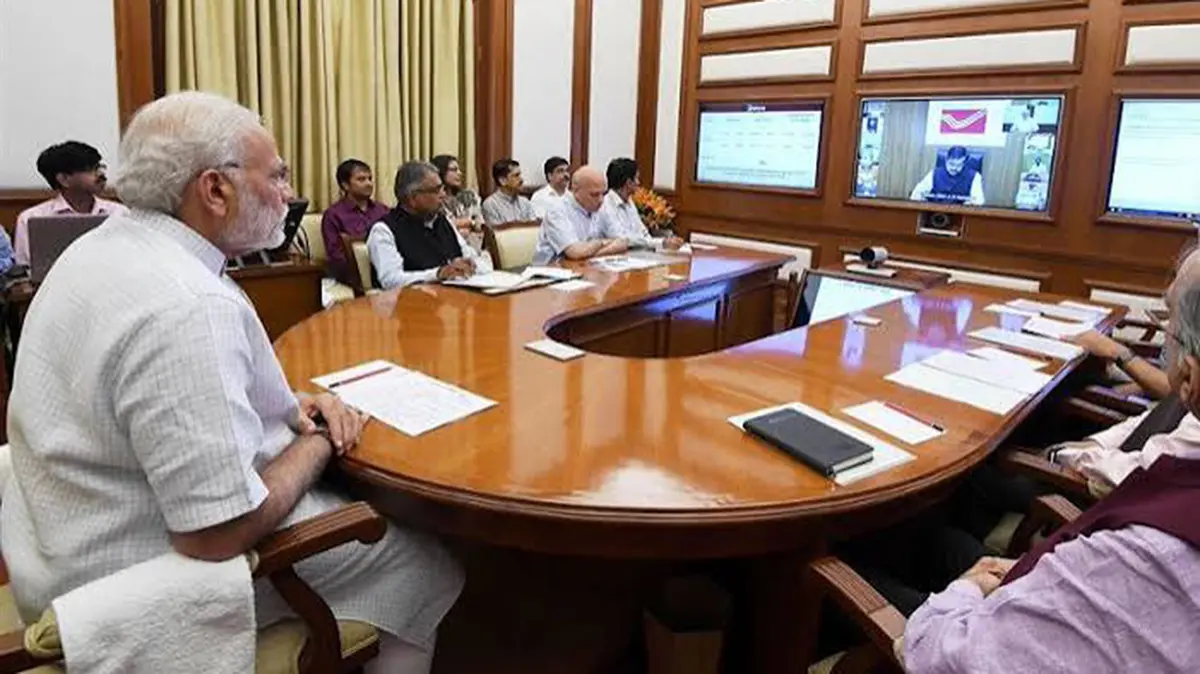
Why in news?
Prime Minister Narendra Modi chaired the 53rd PRAGATI meeting at Seva Teerth on 25 August. The review covered six railway, road and power projects across nine states. Their combined investment exceeded ₹30,000 crore. AgriStack and coordinated action against cyber fraud also formed part of the discussion.
What PRAGATI is
PRAGATI means Pro-Active Governance and Timely Implementation. It is an Information and Communication Technology-enabled review platform. The Prime Minister launched it on 25 March 2015. It combines project monitoring, programme review and public-grievance follow-up.
The platform brings Union secretaries and state chief secretaries into one meeting. Digital records, video conferencing and geospatial information support the discussion. Officials can examine the same project data and ground images. This structure aims to reduce delays caused by separate departmental decisions.
How the review process works
PRAGATI operates through three administrative levels. These are the Prime Minister’s Office, Union ministries and state governments. Issues are selected from project and grievance databases. Departments then upload their latest position before the central review.
Directions remain recorded for later follow-up. This matters because a meeting alone cannot clear a delayed project. Officials must complete land, utility, finance or permission work afterwards. A digital trail can show whether assigned actions remain pending.
What the 53rd meeting examined
The six infrastructure projects covered railways, roads and power. They extended across nine states and together exceeded ₹30,000 crore. The Prime Minister asked officials to view connected sections as one system. He also stressed that faster completion must preserve construction quality.
The meeting reviewed AgriStack, a digital public infrastructure effort for agriculture. The discussion called for newer digital tools, including artificial intelligence, to improve value from agricultural data. Better data can support services and planning. Privacy, accuracy and farmer access remain essential safeguards.
Cyber fraud and so-called digital arrest scams formed another agenda item. The review stressed training, public awareness and cyber-safety education. It also called for coordinated action among institutions. These crimes cross banking, telecom and policing systems, so isolated responses have clear limits.
Why infrastructure projects become delayed
Large projects cross administrative and physical boundaries. Land acquisition may involve states and local bodies. Forest, railway or utility approvals may come from different agencies. A delay in one link can leave completed work elsewhere underused.
Geospatial information helps locate the actual bottleneck. It can show land parcels, alignments and nearby infrastructure. Senior joint review can then resolve conflicting instructions. However, technology cannot replace lawful consultation, compensation or environmental assessment.
Cooperative federalism in practice
Many national projects depend on state execution. PRAGATI creates direct contact between senior Union and state officers. This can shorten correspondence and clarify responsibility. It also gives states a route to raise obstacles requiring central decisions.
Strong central review may improve pace, but it needs transparent reasoning. Project quality and public impact should remain visible beside expenditure. Local communities need meaningful grievance channels. Timeliness should never become a reason to weaken legal safeguards.
How results should be judged
The government reported in January 2026 that PRAGATI had fast-tracked projects worth more than ₹85 lakh crore. Such cumulative value shows the platform’s scale. It does not by itself measure savings or social benefit. Independent evaluation should compare delays, costs and outcomes before and after intervention.
Useful public reporting would identify completed directions and remaining risks. It should distinguish a resolved approval from a finished project. Maintenance and service quality also matter after construction. Clear measures can protect the platform from becoming only a high-level review calendar.
A coordination platform, not a substitute for institutions
PRAGATI can bring decision-makers and verified information together quickly. Each ministry and state must still perform its legal and technical duties. Durable improvement requires those regular systems to learn from repeated bottlenecks.
Conclusion
The 53rd meeting showed PRAGATI’s widening range. It linked infrastructure delivery with agriculture data and cyber safety. Direct review can resolve problems that fall between institutions. Yet speed must remain compatible with quality, rights and evidence. The strongest outcome would be fewer recurring bottlenecks across ordinary administration.