

Why in news?
In March 2026 Indonesia’s culture minister and a team from the Archaeological Survey of India (ASI) discussed the conservation of the Prambanan Temple complex in Yogyakarta, Indonesia, and ASI proposed restoration work. The talks underscore growing cultural ties under India’s “Act East” policy and aim to use India’s expertise in conserving Southeast Asian heritage.
Background
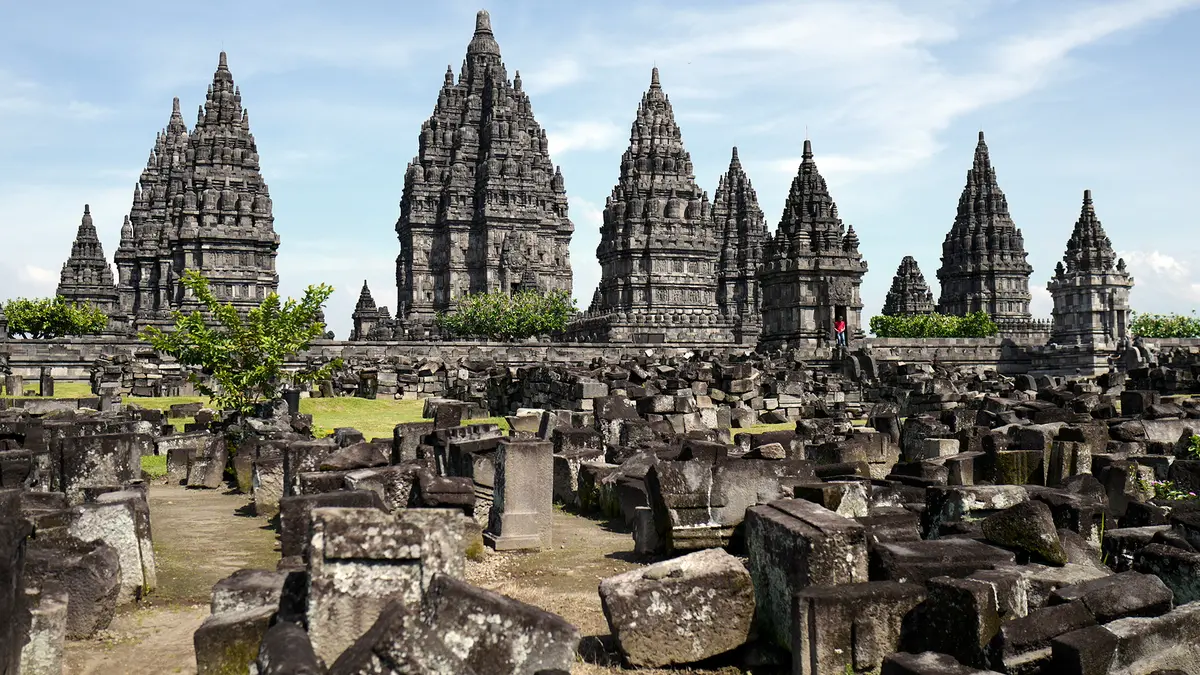
Prambanan is the largest Hindu temple complex in Indonesia and a UNESCO World Heritage site. Built around the 9th century by the Hindu Sanjaya dynasty, the complex was dedicated to the Trimurti – the trio of Hindu deities Shiva, Vishnu and Brahma. The temple lay abandoned for centuries after a series of earthquakes and volcanic eruptions. Dutch colonial reconstruction began in 1918, and proper restoration in 1930. It features more than 200 structures arranged around a 47‑metre central tower dedicated to Shiva, with exquisite bas‑reliefs depicting scenes from the Ramayana. The architecture combines local Javanese styles with influences from South India’s Pallava tradition.
Key points of the restoration effort
- Partnership between nations: Indonesia invited India’s Archaeological Survey to use the anastylosis technique, which involves re‑assembling fallen stones on original foundations, similar to India’s work at Angkor Wat and My Son in Cambodia and Vietnam.
- Preserving a cultural landscape: Indonesia’s culture minister described the related Buddhist complexes of Sewu and Plaosan as part of the wider cultural landscape to be protected.
- Soft diplomacy: India’s involvement highlights cultural diplomacy; past projects in Southeast Asia have strengthened regional ties and showcased India’s conservation expertise.
Significance
- Heritage conservation: Restoring the temple protects an outstanding example of ancient Hindu architecture outside India, helping ensure its preservation for future generations.
- Cultural connection: The project deepens cultural links between India and Indonesia and supports the broader “Act East” policy aimed at strengthening ties with Southeast Asia.
- Tourism boost: A well‑restored complex is likely to attract more visitors, contributing to local economies and raising awareness of shared cultural heritage.
Conclusion
The proposed Prambanan restoration shows how heritage conservation can foster international friendship while preserving cultural treasures. By sharing expertise and resources, India and Indonesia can safeguard a monument that stands as a testament to centuries‑old cultural exchange across the Indian Ocean.
Source: The Print