

Why in news?
Maharashtra wildlife teams moved 216 rescued Indian star tortoises from Mumbai and Thane to Tadoba–Andhari Tiger Reserve. The operation launched Project STRIPES, meaning Star Tortoise Repatriation Initiative Protecting Endangered Species. Authorities said the animals received medical checks and travelled more than 800 kilometres in ventilated carriers. They were released in batches within designated forest ranges after an overnight rest.
The species and its appearance
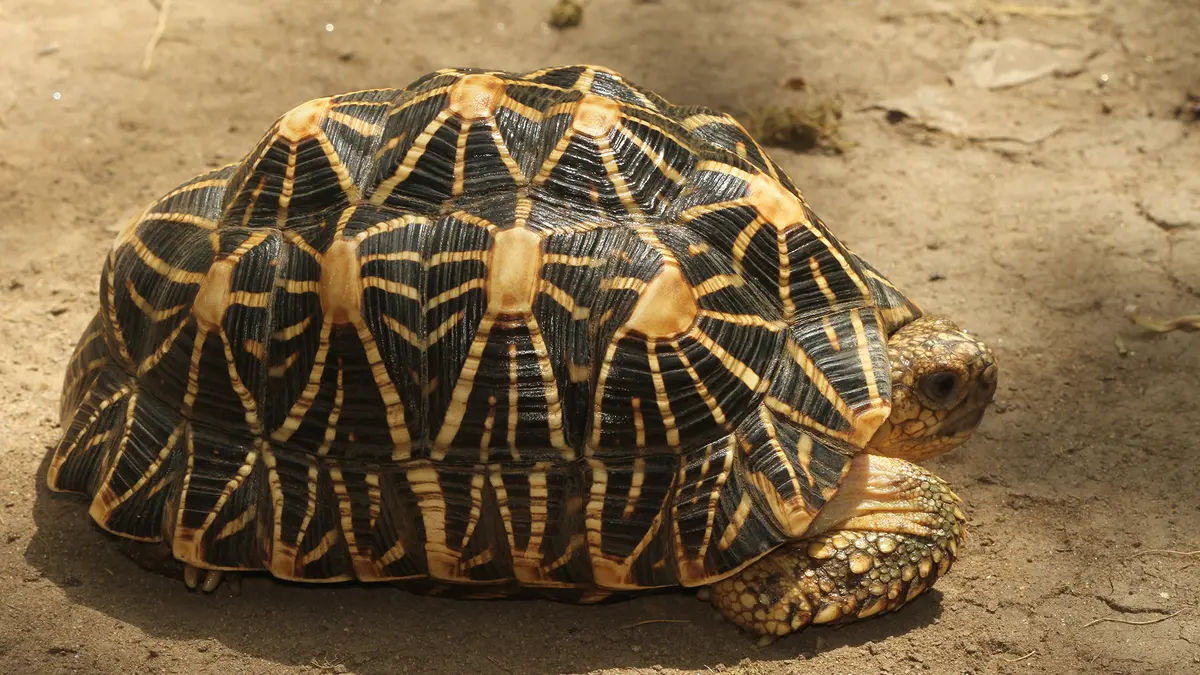
The Indian star tortoise has the scientific name Geochelone elegans. Pale radiating lines cover each dark shell plate and form a star-like pattern. This pattern can break up the animal’s outline among dry grass. The attractive shell also drives demand in the illegal pet trade.
It is a land tortoise rather than an aquatic turtle. The species eats grasses, leaves, flowers and fallen plant material. Activity often increases during monsoon rain. It survives within dry scrub, grassland, thorn forest and some human-modified landscapes.
Range and conservation status
Natural populations occur across separated parts of India, south-eastern Pakistan and Sri Lanka. Within India, major ranges lie in the north-west and the south-east. Habitat conditions vary across this large area. Local populations may therefore contain important genetic differences.
The International Union for Conservation of Nature lists the species as Vulnerable. It entered Appendix I of the Convention on International Trade in Endangered Species in 2019. India now places it in Schedule I of the Wild Life (Protection) Act. These protections reflect heavy trafficking pressure.
How the 216 animals reached care
The tortoises came from several enforcement seizures and rescue operations in Mumbai and Thane. Resqink Association for Wildlife Welfare cared for 150 animals. Forest Department facilities and other rescue organisations held the remaining animals. A ten-member team managed the transfer.
Grouping animals from different seizures creates scientific questions. Their original capture locations may be unknown. Time in captivity can change health and behaviour. Some animals may carry pathogens from mixed housing. Release planning must therefore consider much more than immediate survival.
Geography of Tadoba–Andhari Tiger Reserve
Tadoba–Andhari lies in Chandrapur district of eastern Maharashtra. The reserve covers about 1,727 square kilometres across its core and buffer. It occupies the Central Indian Deccan plateau. Dry deciduous teak forest, bamboo, grassland and water bodies dominate the landscape.
The Andhari River drains through the reserve and later joins the Wainganga system. Tadoba Lake provides an important perennial water body. The wider landscape connects towards forests of Maharashtra and Chhattisgarh. Its dry habitats can support star tortoises where site conditions remain suitable.
What responsible rehabilitation requires
Each animal needs screening for injury, parasites and infectious disease. Sex, size and body condition should be recorded. Genetic testing can help prevent release into a mismatched population. Animals require quarantine when their health history remains uncertain.
Release sites need food plants, shelter and low road risk. The reported batch releases used a planned male-to-female ratio. That may support future breeding. Long-term value still depends on survival and reproduction after release. Those outcomes require post-release monitoring.
Why “release” is not the final step
Released tortoises may disperse slowly and remain hard to locate. Marking or telemetry can track selected animals. Teams should compare mortality, movement and habitat use. Results can improve later batches under Project STRIPES. Public reports should state both success and failure.
A release also needs protection from renewed collection. Patrols must cover roads, markets and online trade. Local communities can report suspicious movement. Enforcement agencies should trace networks beyond the person carrying an animal. Demand reduction remains necessary in destination countries.
Pet trade and animal welfare
Star tortoises often suffer dehydration, crushing and disease during concealed transport. Their small size makes mass trafficking possible. Buyers may mistakenly view them as easy pets. Proper temperature, diet and lifetime care are difficult to maintain.
International Appendix-I status sharply restricts commercial trade. Domestic possession and transfer also face strict legal controls. People finding a tortoise should contact the Forest Department. Unplanned private release can spread disease or place the animal in unsuitable habitat.
Rehabilitation needs continuing evidence
The operation moved rescued animals into designated habitat after health checks. Its full conservation success depends on later survival, breeding and genetic suitability. Those results cannot be assumed on release day.
Conclusion
The Tadoba operation gives trafficked tortoises a route back to life in the wild. It also creates a structured framework for future seizures. Strong quarantine, genetic care and monitoring must remain central. Enforcement should target the trade networks that caused the harm. Project STRIPES will succeed when rehabilitation and crime prevention reinforce each other over many years.