

Why in news?
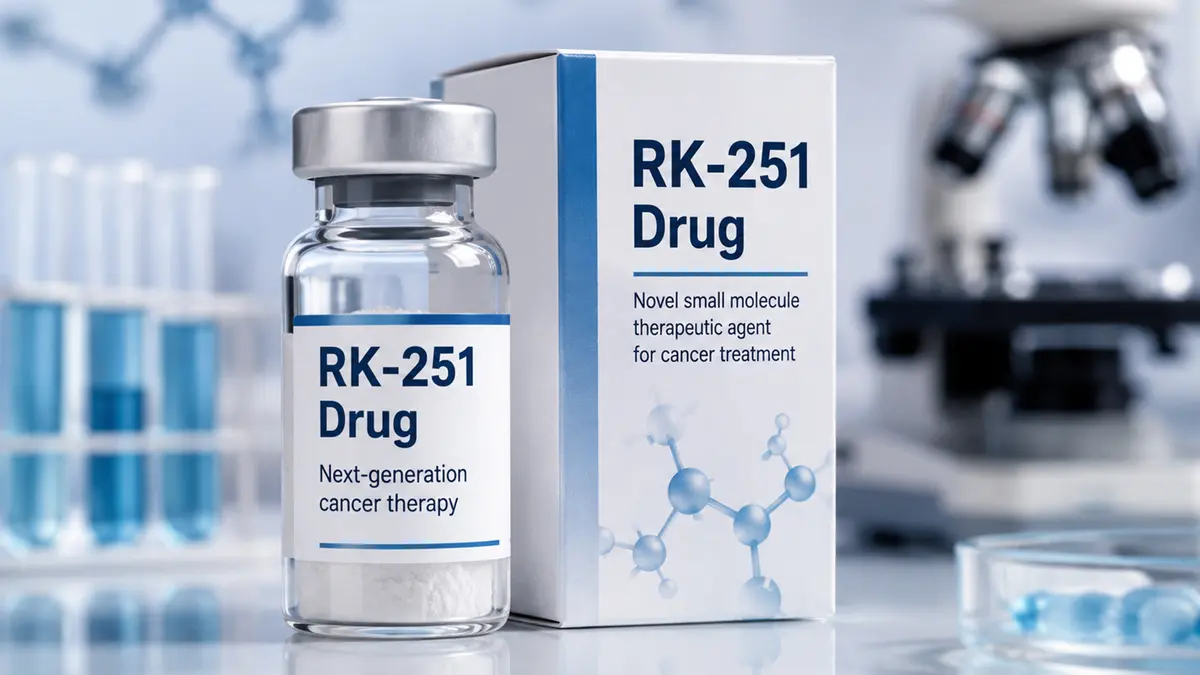
India’s Ministry of Science and Technology highlighted RK-251, a new experimental cancer drug candidate. Researchers from two Guwahati institutions developed it together. The team belongs to the Institute of Advanced Study in Science and Technology and the Indian Institute of Technology Guwahati. The peer-reviewed study appeared in the American Chemical Society’s Journal of Medicinal Chemistry in July 2026.
The candidate activates in environments rich in reactive oxygen species, which are common inside many cancer cells. It then releases an anticancer compound and produces a fluorescent signal. Laboratory tests showed selective activity against triple-negative breast cancer cells. The work remains preclinical and does not establish a replacement for chemotherapy.
What RK-251 actually is
RK-251 is a prodrug rather than a finished clinical medicine. A prodrug becomes active after a chemical or biological trigger. Researchers designed this candidate to respond to reactive oxygen species, usually shortened to ROS. These unstable oxygen-containing molecules occur naturally during cellular activity. Their levels often rise within stressed or rapidly growing cancer cells.
The design joins three functional parts within one molecule. One part carries the anticancer compound NBDHEX. A second part responds to ROS and releases that compound. The third is a near-infrared fluorophore called QCy7. Its light signal helps researchers observe activation. This combined treatment-and-imaging approach is sometimes called theranostic design.
Why triple-negative breast cancer is difficult
Triple-negative breast cancer lacks three common treatment targets. Its cells lack oestrogen receptors, progesterone receptors and excess human epidermal growth factor receptor 2. Hormone medicines and HER2-targeted drugs therefore cannot address those missing targets. Treatment often depends on chemotherapy, immunotherapy or other options chosen for each patient.
This subtype can grow quickly and has fewer targeted choices than several other breast cancers. That does not mean every case behaves identically. Stage, genes, immune markers and previous treatment still shape medical decisions. A laboratory result against one cell line cannot represent all patients. Clinical value requires evidence across models and carefully designed human trials.
How the experimental mechanism works
NBDHEX inhibits glutathione-S-transferase pi 1, or GSTP1. Many cancer cells produce high amounts of this enzyme. GSTP1 can neutralise some anticancer compounds and support treatment resistance. NBDHEX can block that protective action. However, the compound has poor water solubility and limited bioavailability. Those weaknesses encouraged the team to build an activatable delivery form.
ROS can remove the protective part of RK-251 inside a suitable chemical environment. The reaction releases NBDHEX and turns on red or near-infrared fluorescence. Researchers can then link the light signal with drug activation. The method aims to concentrate useful activity in cancer cells. Normal cells with lower ROS should experience less activation, although biology is rarely uniform.
What the experiments found
The published study tested RK-251 against MDA-MB-231 triple-negative breast cancer cells. It also compared effects on non-malignant cells. The candidate showed stronger activity against the cancer line than those comparison cells. Gene studies suggested changes in important cancer markers. These results support further investigation, but they remain cell-based evidence.
The team also studied developing zebrafish embryos, scientifically named Danio rerio. The embryos displayed the expected fluorescence after activation. Researchers reported no noticeable abnormalities or acute toxicity in that experiment. Zebrafish provide a useful whole-organism screening model. They cannot establish safety, dosage or effectiveness in human patients.
Why selectivity matters
Conventional chemotherapy attacks processes used strongly by dividing cells. Cancer cells may be affected, but healthy dividing cells can also suffer. This produces familiar harms involving blood cells, hair follicles and the digestive lining. Targeted activation seeks a wider gap between tumour effects and normal-tissue effects. A wider gap could improve tolerability and useful dosing.
ROS-responsive treatment also presents challenges. Reactive oxygen levels differ among tumours and within the same tumour. Inflammation and other diseases can raise ROS in non-cancerous tissue. Cancer cells may also adapt their antioxidant systems. Researchers must therefore map where activation occurs. They must measure how long the released drug remains active and where it travels.
The long path from laboratory to clinic
Further preclinical work must study metabolism, repeated dosing and organ toxicity. Animal models should test tumour response and effects on healthy tissue. Manufacturing must produce the same compound with consistent purity. Regulators will require pharmacology and safety data before human testing. Several promising drug candidates fail during these stages.
Early clinical trials would first examine safety and an acceptable dose. Later trials would compare outcomes with existing treatment. Researchers would need suitable biomarkers for selecting patients. They would also study interactions with chemotherapy or immunotherapy. Until those steps succeed, RK-251 should be described as a promising candidate, not an available treatment.
Promising evidence, limited stage
The study shows selective preclinical activity and an observable activation mechanism. It does not prove safety or benefit in people. No approval for patient use has been reported. Claims about replacing chemotherapy would therefore go beyond the published evidence.
Conclusion
RK-251 demonstrates a thoughtful response to two drug-development problems. It seeks selective release and real-time evidence of that release. The work also joins chemical design with cancer biology. Its Indian research partnership adds valuable capacity in advanced medicinal chemistry. The next tests must establish whether laboratory selectivity survives inside more complex bodies.
The correct public message is hopeful but measured. Better targeting could reduce damage to healthy tissue. Yet a useful mechanism is only the beginning of a medicine. Transparent preclinical data and rigorous trials must guide every later claim. Patients should continue following established oncology advice while this research advances.