

Why in news?
Rutile is often mentioned in discussions on mineral resources and the titanium industry. Understanding its properties and uses helps aspirants appreciate why titanium dioxide is so valuable in industry.
Background
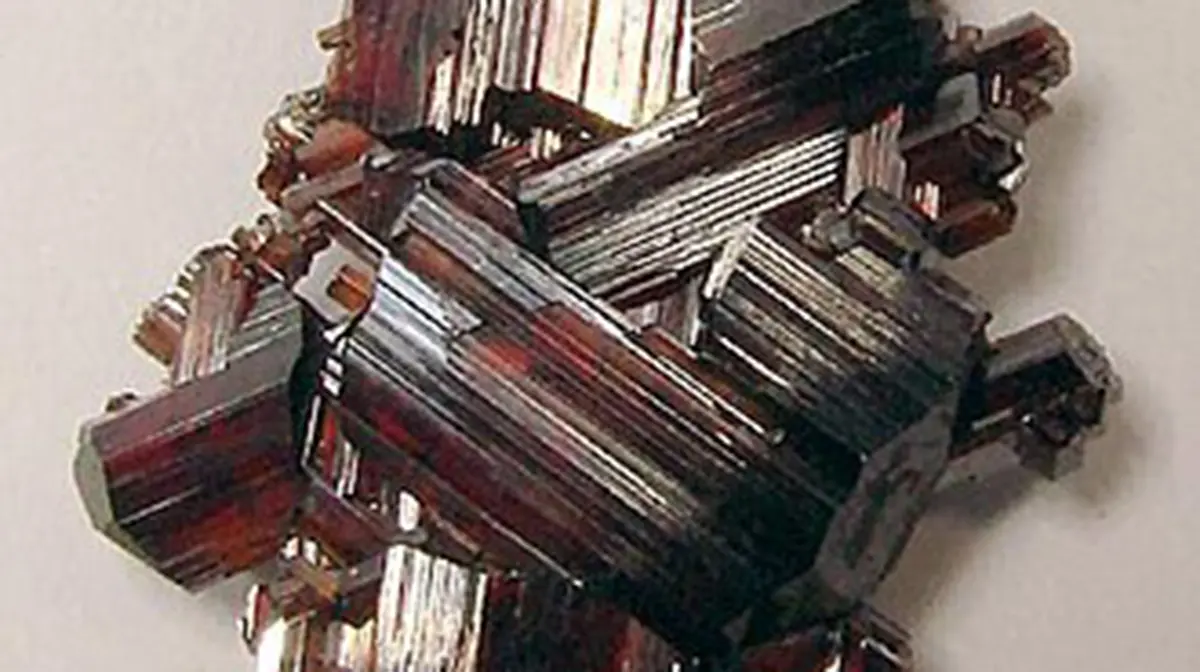
Rutile is a mineral composed mostly of titanium dioxide (TiO2). The name comes from the Latin word rutilus, meaning red, because some crystals display a reddish hue. German mineralogist Abraham Gottlob Werner first described the mineral in 1803. Rutile is the most stable form of titanium dioxide at all temperatures found on Earth. It occurs as an accessory mineral in igneous and metamorphic rocks and is often recovered from heavy mineral sands.
Characteristics
- Crystal habit: Rutile forms slender prismatic crystals that can be red, brown or black. The colour depends on the presence of iron or other impurities.
- Optical properties: It has a very high refractive index (around 2.7) and strong birefringence. These properties make rutile valuable for optical applications.
- Composition: Natural rutile may contain small amounts of iron, niobium or tantalum. It is one of several polymorphs of titanium dioxide; others include anatase and brookite.
- Occurrence: Major producers are Australia, South Africa and India. In India rutile deposits are found in the coastal sands of Odisha, Kerala and Tamil Nadu.
Uses
- Titanium metal: Rutile is the main source of titanium metal, which is lightweight, strong and resistant to corrosion. Titanium alloys are used in aircraft, medical implants and defence equipment.
- White pigment: Finely ground rutile is used as a white pigment in paints, plastics, paper and even food products. It provides brightness and opacity.
- Ceramics and welding: Rutile is added to ceramic glazes and welding electrodes. Its high melting point improves thermal stability.
- Sunscreens: Nano‑sized titanium dioxide particles derived from rutile absorb ultraviolet light, making them popular in sunscreens and cosmetics.
Conclusion
Rutile is an important mineral resource because it supplies titanium for high‑performance alloys and versatile pigments. Its extraction from heavy mineral sands supports industries from aerospace to cosmetics. Responsible mining and processing are essential to maximise benefits while protecting the environment.