

Why in news?
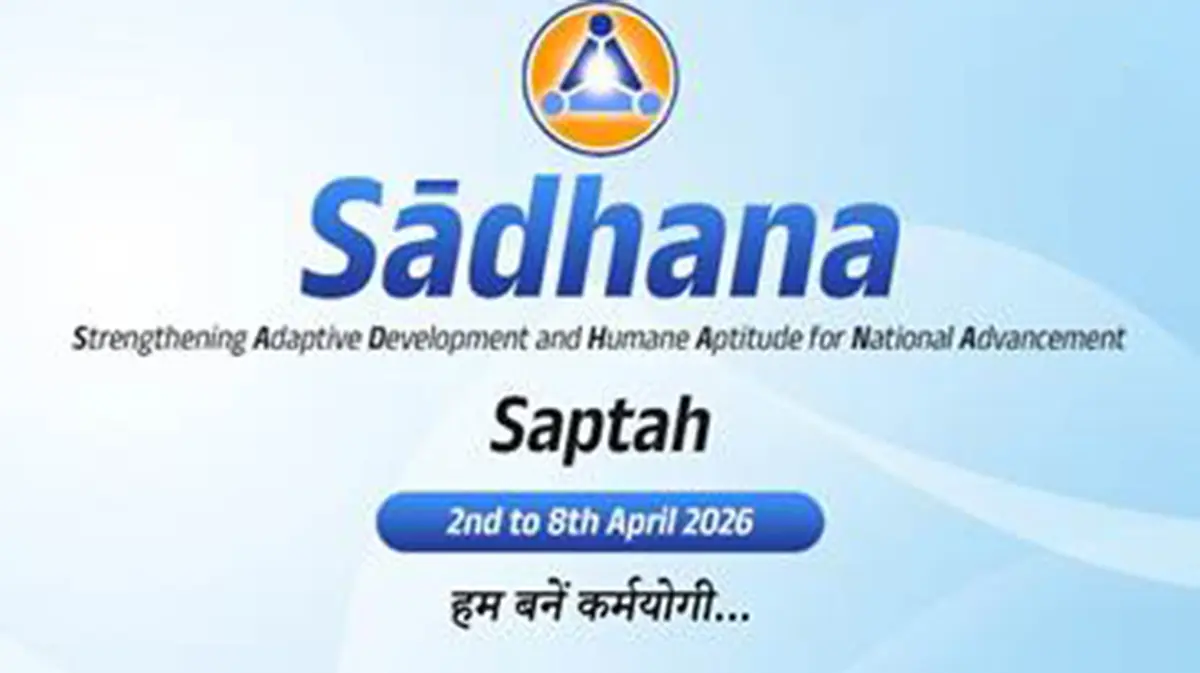
The Government launched Sādhana Saptah (“Week of Practice”) from 2 April to 8 April 2026 as part of Mission Karmayogi. This week‑long programme brought together central ministries, departments, and training institutions to equip civil servants with new skills and promote citizen‑centric governance.
Background
Mission Karmayogi, formally known as the National Programme for Civil Services Capacity Building, was unveiled in 2020 to transform India’s bureaucracy from a rule‑based culture to a role‑based one. It seeks to build competencies in officials through continuous learning on the digital platform iGOT Karmayogi. As of early 2026 the platform had over 1.5 crore registered learners and more than 8 crore course completions.
What is Sādhana Saptah?
- Themes: Each day focused on a different “sutra” or guiding principle – Technology (leveraging digital tools), Tradition (learning from India’s administrative heritage) and Tangible Outcomes (translating training into measurable results).
- Capacity‑building initiatives: During the week, several programmes were launched or highlighted, including the Karmayogi Kshamata Connect to match officials with training opportunities, the Rashtriya Jan Sewa Programme for community engagement, the UNNATI Portal for performance tracking, and outreach sessions with newly inducted recruits.
- Ministry participation: Secretaries and capacity‑building teams from more than 100 ministries and departments participated. They were encouraged to identify key functional areas, design training curricula and outline expected outcomes.
- Citizen‑centric approach: The programme emphasised that all training should ultimately improve service delivery. Courses on empathy, communication and public consultation were given prominence alongside technical skills.
Significance
- Strengthens mission culture: By dedicating an entire week to training, the government signalled that continuous learning is integral to public service.
- Focus on outcomes: Ministries were asked to set measurable targets for how training would improve policies, projects and public interactions.
- Blending technology and tradition: The programme balanced modern e‑learning tools with lessons drawn from India’s administrative history, emphasising values such as integrity and public spirit.
Conclusion
Sādhana Saptah illustrates how Mission Karmayogi is moving beyond slogans to practical steps. By equipping civil servants with the skills and mindset needed for citizen‑centric governance, India aims to build a responsive and future‑ready bureaucracy.
Source: Press Information Bureau