

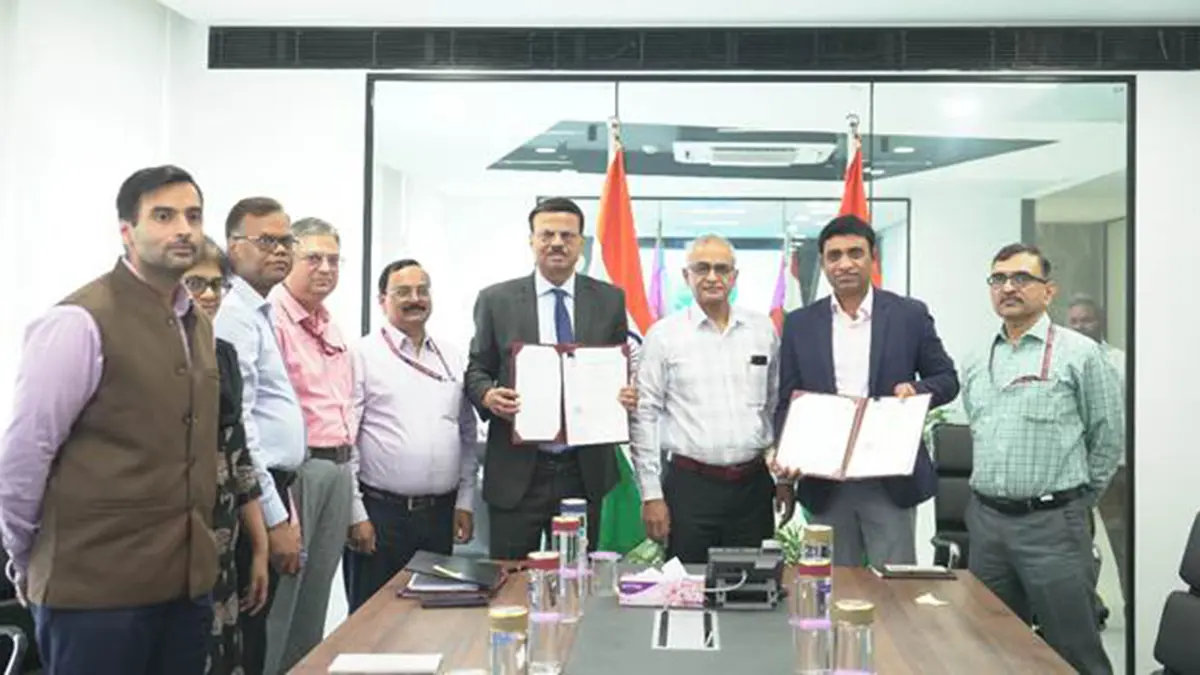
Why in news?
On 14 March 2026 the Union Minister of Communications, Jyotiraditya M. Scindia, inaugurated the first Samriddhi Kendra in Umri village, Guna district, Madhya Pradesh under the Samriddh Gram Phygital Services Pilot Project. The initiative seeks to demonstrate how high‑speed broadband built under BharatNet can deliver integrated citizen services in rural areas through a blend of physical centres and digital platforms.
Background
BharatNet is one of the world’s largest rural broadband programmes, aiming to connect every Gram Panchayat with optical fibre. Despite the infrastructure, rural communities often lack convenient access to government services, healthcare, education and markets. The Samriddh Gram pilot aims to bridge this gap by creating “phygital” hubs — physical centres equipped with digital connectivity.
The first centre, Samriddhi Kendra, is located at the Panchayat Bhawan in Umri village. Two other pilot locations have been chosen: Narakoduru in Guntur district, Andhra Pradesh, and Chaurawala in Muzaffarnagar district, Uttar Pradesh. Each centre serves several surrounding villages within a five‑kilometre radius. The project is run by the Department of Telecommunications in collaboration with the Digital Empowerment Foundation.
Services offered
- Education and skill development: Access to online courses, digital classrooms and vocational training programmes.
- Agriculture: Weather updates, crop advisories, soil testing and market linkage information.
- Health and telemedicine: Remote consultations with doctors, health check‑ups and awareness campaigns such as cataract screening.
- E‑governance: Assistance with government schemes, certificates and grievance redressal.
- Financial inclusion and e‑commerce: Banking services, digital payments, insurance enrolment and access to online marketplaces for local products.
- Connectivity and surveillance: Public Wi‑Fi, CCTV‑based safety systems and high‑speed internet for local entrepreneurs.
Significance
- Integrated model: By combining physical touchpoints with digital platforms, the project aims to create a replicable model for delivering citizen‑centric services in villages.
- Socio‑economic development: Improved access to information, healthcare and markets can enhance incomes, education and overall wellbeing.
- Community participation: Local residents participate in managing and maintaining the centres, ensuring that services reflect community needs.
- Scalability: Lessons from the pilot will inform expansion of similar hubs across rural India.
Source: Press Information Bureau