

Why in news?
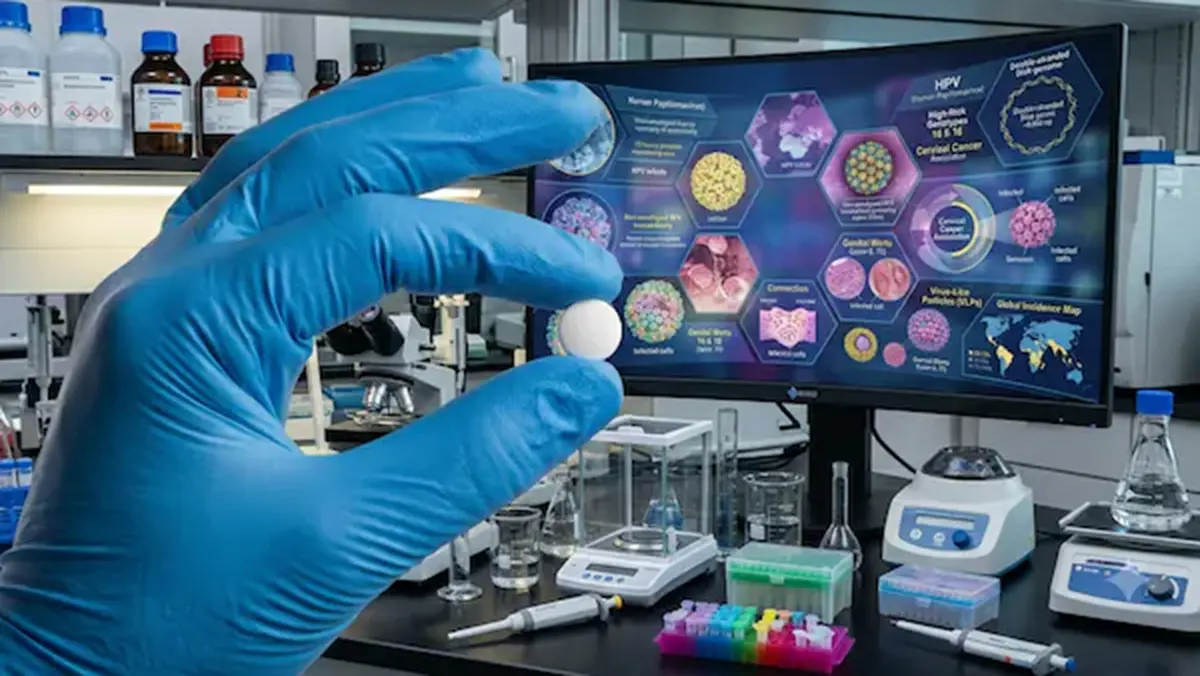
India’s biomedical research council licensed SHetA2 to Emcure Pharmaceuticals for further development. The investigational candidate targets precancerous cervical changes linked with high-risk human papillomavirus. Laboratory and animal studies support its biological mechanism. It is not yet an approved cervical-cancer medicine.
Background
The Indian Council of Medical Research is India’s apex organisation for biomedical research.
It works under the Department of Health Research within the Union Health Ministry.
On 21 July 2026, the council announced three technology licences for further product development.
One licence transferred SHetA2 development rights to Emcure Pharmaceuticals.
What is human papillomavirus?
Human papillomavirus, or HPV, describes related viruses carrying deoxyribonucleic acid, or DNA.
Several types spread through intimate skin contact and can infect the genital tract.
Most infections clear naturally, but persistent high-risk infections can produce abnormal cervical cells.
HPV types 16 and 18 cause a large share of cervical cancers worldwide.
What is cervical intraepithelial neoplasia?
Cervical intraepithelial neoplasia, or CIN, means abnormal precancerous changes within the cervical surface lining.
It is not automatically invasive cancer, and some low-grade changes disappear without treatment.
Persistent high-grade lesions have a greater chance of becoming cancer over time.
Screening allows clinicians to identify and manage these changes before invasion develops.
What is SHetA2?
SHetA2 is a small-molecule therapeutic candidate developed through an India–United States research collaboration.
The Indian work involved the National Institute of Cancer Prevention and Research.
The United States collaboration involved the Stephenson Cancer Center at the University of Oklahoma.
The council describes the technology as a first-in-class targeted candidate for HPV-related disease.
The candidate may eventually use an oral formulation or a vaginal suppository.
However, a possible dosage form does not establish safety, efficacy or regulatory approval.
How may the molecule work?
Cells contain heat-shock proteins that help other proteins fold, stabilise and function correctly.
Important targets include mortalin, heat-shock cognate protein 70 and glucose-regulated protein 78.
These targets belong to the heat-shock protein 70 family, commonly shortened to HSP70.
High-risk HPV produces an E7 oncoprotein that disrupts normal cell-cycle control.
Laboratory studies suggest SHetA2 disrupts interactions between E7 and selected HSP70 proteins.
This action reduced E7 levels, cell-cycle progression and tumour-cell viability in experimental models.
Researchers observed these effects in cell cultures and mouse xenografts, not completed population trials.
What evidence exists?
| Evidence stage | What it establishes | What it does not establish |
|---|---|---|
| Laboratory cells | The molecule can affect HPV-related biological pathways. | It cannot prove safe treatment in patients. |
| Animal models | Researchers can test tumour response and early toxicity signals. | Animal results may not reproduce fully in humans. |
| Early human trial | A Phase I study examines safety and suitable dosing. | It does not yet prove cervical-lesion efficacy. |
| Technology licence | A company may continue development, manufacturing and commercialisation work. | The licence is not a marketing authorisation. |
What is the current trial status?
An ongoing United States Phase I study examines SHetA2 in advanced or recurrent solid tumours.
Phase I trials primarily examine safety, tolerability, pharmacology and an appropriate dosage range.
This trial is not a completed efficacy study for cervical precancer.
The council’s technology brief placed SHetA2 at Technology Readiness Level five during May 2026.
Therapy and prevention are different
- HPV vaccination prevents many high-risk infections before harmful cellular changes begin.
- Regular cervical screening finds abnormal cells in people without obvious early symptoms.
- Established high-grade lesions may require careful ablation or appropriate surgical removal.
- SHetA2 seeks a future therapeutic option after persistent infection has caused cellular changes.
Why does technology transfer matter?
Public laboratories often discover candidates but lack capacity for large clinical and manufacturing programmes.
Licensing gives an industrial partner defined rights and responsibilities for later development stages.
Regulators must still review clinical evidence, manufacturing quality and the final product application.
Prelims facts
- HPV is a diverse DNA virus group, not a single bacterium.
- CIN describes precancerous cervical changes rather than already confirmed invasive cancer.
- Phase I clinical trials primarily study initial safety and suitable dosage.
- Technology licensing and regulatory product approval remain two separate development steps.
- Vaccination prevents disease, while therapeutic medicine treats an already existing condition.
Conclusion
SHetA2 is a promising translational project, but careful trials must establish its clinical value.