

Why in news?
Recent field studies highlighted weakening intergenerational transmission within Telangana’s Thoti community. Researchers focused on traditional tattooing, oral narratives and unequal access to services.
Who are the Thoti?
The Thoti are a Scheduled Tribe and a Particularly Vulnerable Tribal Group. Their main settlements lie in and around the former Adilabad district of Telangana.
The 2011 Census recorded 4,811 Thoti people in the then undivided Andhra Pradesh. A government study placed 2,231 of them in Adilabad district.
Administrative boundaries changed after Telangana’s formation and later district reorganisation. Older statistics must therefore be read with that geographic context.
Government studies describe agricultural wage labour as an important livelihood. They also record weak access to education, health care and secure income.
A distinctive cultural role
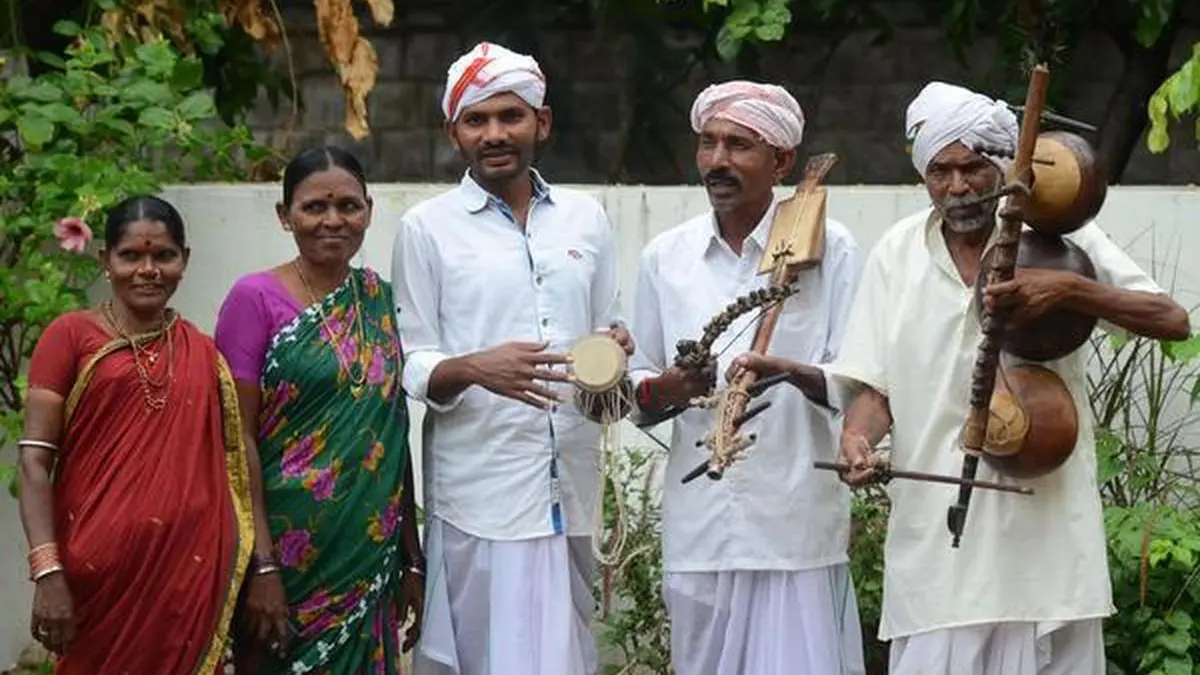
Thoti performers have preserved oral accounts associated with Gond history and identity. The Gond Gatha tradition combines narration, music and community memory. Women have also practised a distinctive tattoo tradition. Designs can express identity, aesthetics and inherited knowledge.
These practices are not museum objects; they change as younger people migrate, attend school and adopt new occupations.
Preservation must therefore support voluntary transmission; it should never force individuals to perform an identity for outsiders.
What recent research found
One qualitative study used 48 semi-structured interviews across five villages. It reported a widening gap between elders and younger community members. Participants linked change with migration, schooling, urban influence and weak institutional support. They also described falling engagement with tattooing and oral performance.
The study offers useful community voices, but its sample is limited. Population decline and medical causes need official demographic and health investigation.
Avoid unsupported extinction claims
The community is numerically small and faces serious vulnerabilities. Available evidence does not justify predicting its disappearance or assigning one unverified cause.
Policy priorities
First, updated household data can identify gaps in nutrition, schooling, land rights and health care. Community institutions should help design that exercise. Second, mother-tongue support and locally recruited teachers can reduce alienation in residential schools. Education should add choices without devaluing cultural knowledge.
Third, archives should remain accessible to the Thoti themselves. Consent, authorship and control over recordings are essential.
The Pradhan Mantri Janjati Adivasi Nyaya Maha Abhiyan targets basic services for Particularly Vulnerable Tribal Group habitations. Delivery must be measured at settlement level.
Livelihood support can also strengthen cultural continuity. Artists need fair payment, while workers need secure access to wider employment and social protection.
Conclusion
Protecting Thoti heritage cannot be separated from health, education and dignity. Community-led documentation should accompany reliable services and genuine economic choice.