

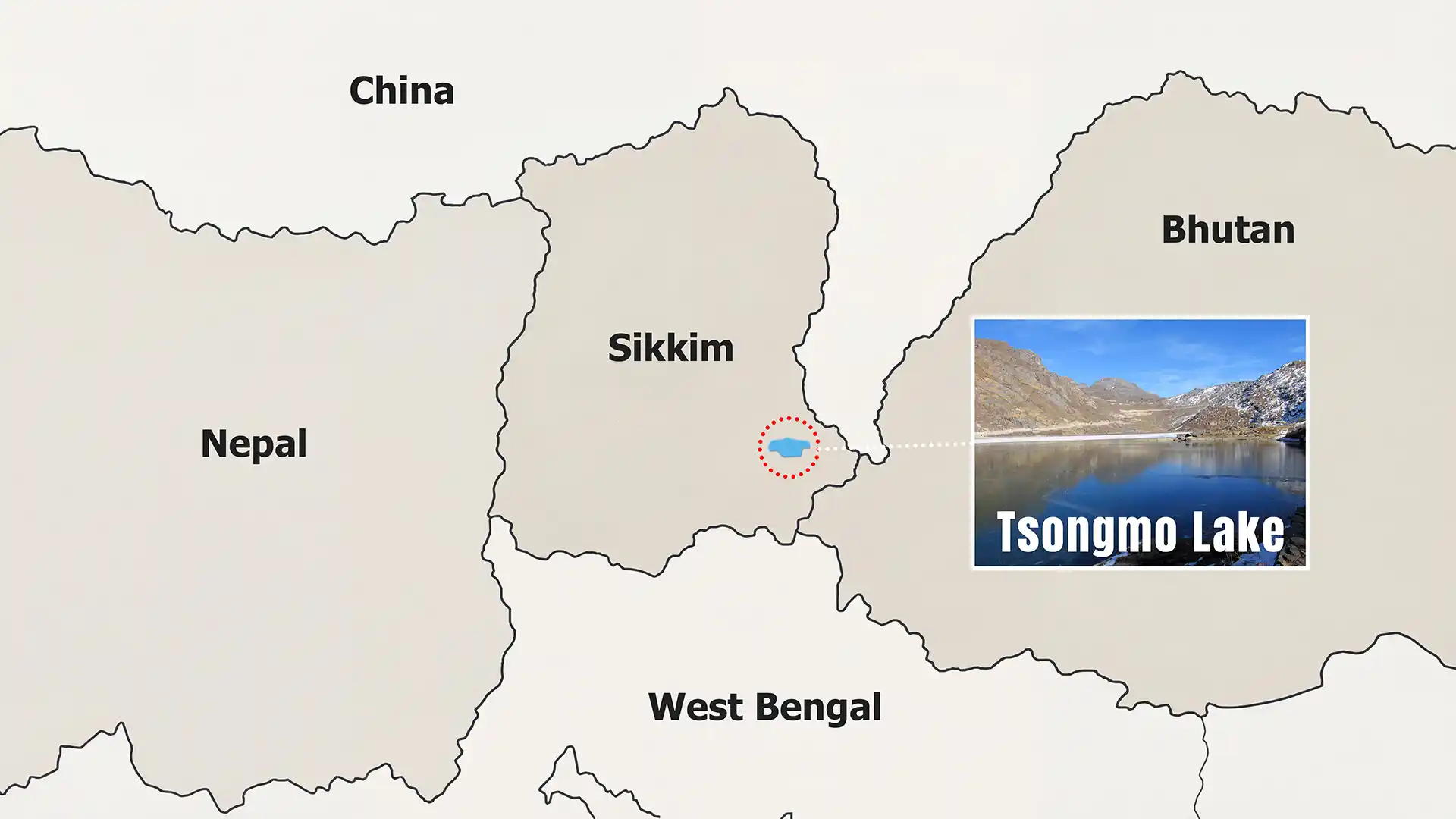
Why in news?
More than 2,700 tourists were stranded near Tsomgo Lake in Sikkim after heavy snowfall blocked the roads on 23 February 2026. The Indian Army and local authorities launched a rescue operation to bring them to safety. The incident has raised questions about travel preparedness and weather alerts for visitors to high‑altitude destinations.
Background
Tsomgo Lake (also called Changu Lake) is a glacial lake located at an altitude of about 3,750 metres in East Sikkim. It lies around 40 kilometres from the capital Gangtok on the road leading to the Nathula Pass. The lake is sacred to the local Buddhists and is a popular tourist attraction for its scenic beauty and snow in winter.
Sikkim’s Himalayan terrain is prone to sudden snowfall and landslides. Visitors often require permits to travel to places like Tsomgo because of their proximity to the international border. The area has limited shelters, making quick evacuation essential during bad weather.
What happened during the rescue
- Heavy snowfall: In late February, a snowstorm cut off the road linking Tsomgo Lake to Gangtok, leaving buses and vehicles stuck.
- Joint operation: The Indian Army, Indo‑Tibetan Border Police and local authorities coordinated to move stranded tourists to safe locations, providing food and warmth.
- Use of bulldozers: Snow clearance machines were deployed to clear the road and make it passable.
- No casualties: Thanks to timely action, all tourists were rescued without loss of life, though some suffered minor health issues due to the cold.
Lessons and safety advice
- Check weather forecasts: Visitors should monitor official weather updates and avoid travel during predicted snowfalls.
- Carry essentials: Tourists need warm clothing, food, water and basic medicines when heading to high‑altitude areas.
- Follow permit rules: Travel permits often restrict the number of vehicles; adhering to regulations reduces congestion and aids evacuation.
- Emergency contacts: Keep emergency numbers of local authorities handy and inform someone about your travel plan.
- Sustainable tourism: Tour operators should educate visitors about environmental sensitivity and safety protocols.
Conclusion
The Tsomgo Lake rescue underscores the importance of preparedness when travelling in mountainous regions. While the lake remains a beautiful attraction, visitors must respect weather conditions and follow safety guidelines to ensure a safe and enjoyable trip.
Source: The Hindu