

Why in news?
Mongolia hosted the seventeenth Conference of the Parties to the United Nations Convention to Combat Desertification in Ulaanbaatar. The meeting ran from 17 to 28 August 2026 under the theme “Restoring Land. Restoring Hope.” India presented its restoration record during a conference event on 24 August. It also urged stronger drought resilience during the continuing negotiations.
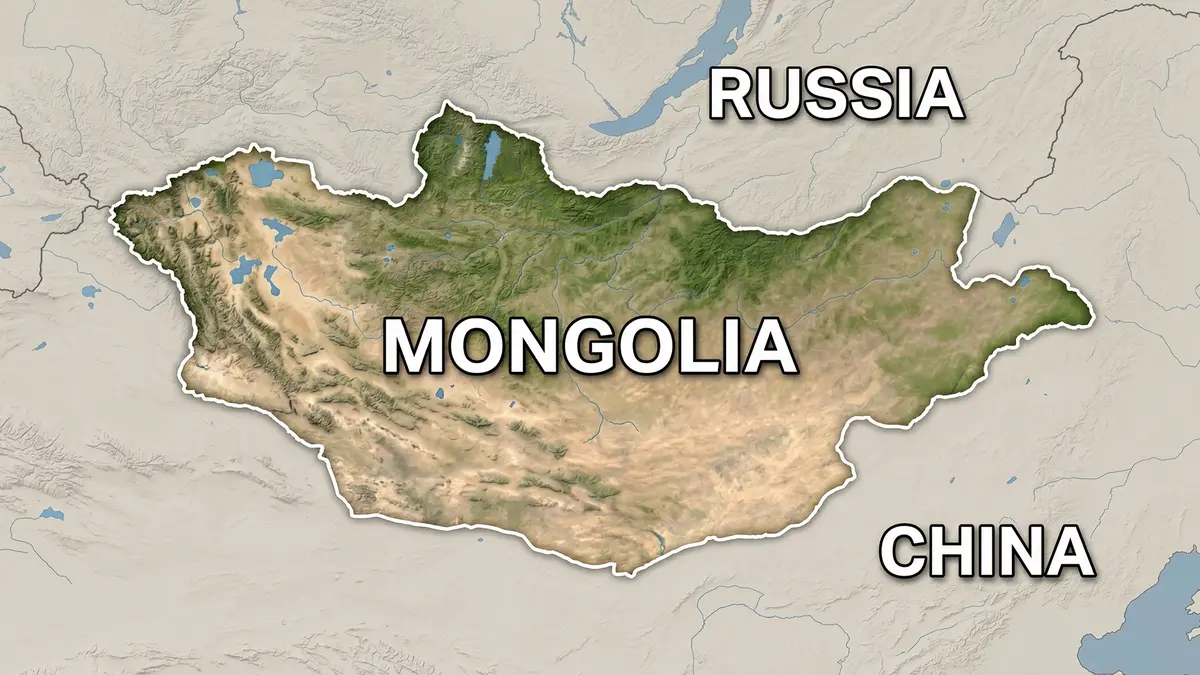
Where Mongolia lies
Mongolia is a landlocked country in the centre of the Asian continent. Russia lies along its northern border. China surrounds it on the east, south and west. This location leaves the country dependent on overland routes for international trade.
The physical landscape changes sharply from north to south. Siberian taiga and mountain forests occur in the north. Broad steppe grasslands occupy much of the centre. Semi-desert and the Central Asian Gobi dominate the drier south.
Mongolia has an average elevation of about 1,580 metres. More than four-fifths of its territory stands above 1,000 metres. Its distance from oceans creates a severe continental climate. Winters are long and cold, while rainfall is low and uneven.
Why this geography matters
Large rangelands support mobile herding and rural livelihoods. Grass, water and seasonal movement are closely connected. Drought can weaken pasture before a harsh winter arrives. That sequence can cause heavy livestock losses and deep household distress.
Mining is another major economic activity. It creates exports and public revenue, but also raises land and water concerns. Restoration policy must therefore address pasture, mines, forests and settlements together. A single tree-planting measure cannot meet every need.
The purpose of the convention
The United Nations Convention to Combat Desertification entered into force in 1996. It is the binding global agreement focused on desertification, land degradation and drought. Its parties meet periodically to review commitments and agree on common action.
Desertification does not mean that every affected place becomes a sand desert. It means land degradation in dry areas caused by climatic variation and human activity. Soil fertility, vegetation and water retention can decline together. Farming and pastoral livelihoods then become less secure.
The conference gathers governments, scientists, civil society and land users. It covers restoration finance, drought planning and sustainable land management. Mongolia’s presidency also placed rangelands and pastoralists at the centre. The year 2026 is the United Nations International Year of Rangelands and Pastoralists.
India’s restoration record
India joined the Bonn Challenge with a land-restoration pledge in 2015. It later raised its goal to 26 million hectares by 2030. The Bonn Challenge is a voluntary global effort. It seeks restoration of degraded and deforested landscapes.
At Ulaanbaatar, India reported 21.76 million hectares under restoration during 2011–2020. The exercise counted work across forests, farms, soil and water systems. The government also reported about 1.22 billion person-days of employment. These figures came from India’s second progress report.
The next reporting cycle covers 2021–2025. It will examine restored area, financial flows and employment. Better monitoring is important because a planted hectare is not automatically a restored ecosystem. Survival, soil recovery, water and livelihood results must also be measured.
From emergency relief to drought resilience
Drought response often begins after crops, pasture or water supplies have failed. Resilience starts earlier. It needs risk maps, forecasts, water planning and social protection. Land users must receive information before losses become irreversible.
Healthy soil holds more water and supports vegetation for longer. Watershed work can slow runoff and improve recharge. Suitable crops and grazing plans can reduce pressure during dry periods. These measures work best when communities help design them.
What COP17 can achieve
A conference decision cannot restore land by itself. It can create common standards, finance priorities and reporting duties. It can also improve cooperation across borders. Dust, drought, migration and commodity markets do not remain within one country.
Dryland countries need finance that reaches local users. Projects must respect pastoral mobility and customary access. They should avoid replacing native grasslands with unsuitable plantations. Restoration succeeds when ecological recovery and secure livelihoods reinforce each other.
Restoration is broader than planting trees
Forests may require assisted regeneration, while grasslands may need better grazing and water management. Farms may need soil conservation or agroforestry. The correct method depends on the original ecosystem and local use.
Conclusion
Mongolia’s geography makes land degradation a daily economic and social issue. Hosting COP17 gives dryland communities greater visibility in global policy. India’s reported progress is significant, but lasting outcomes need stronger field measurement. Drought planning must begin before an emergency. The conference matters when its commitments improve soil, water and livelihoods on the ground.