

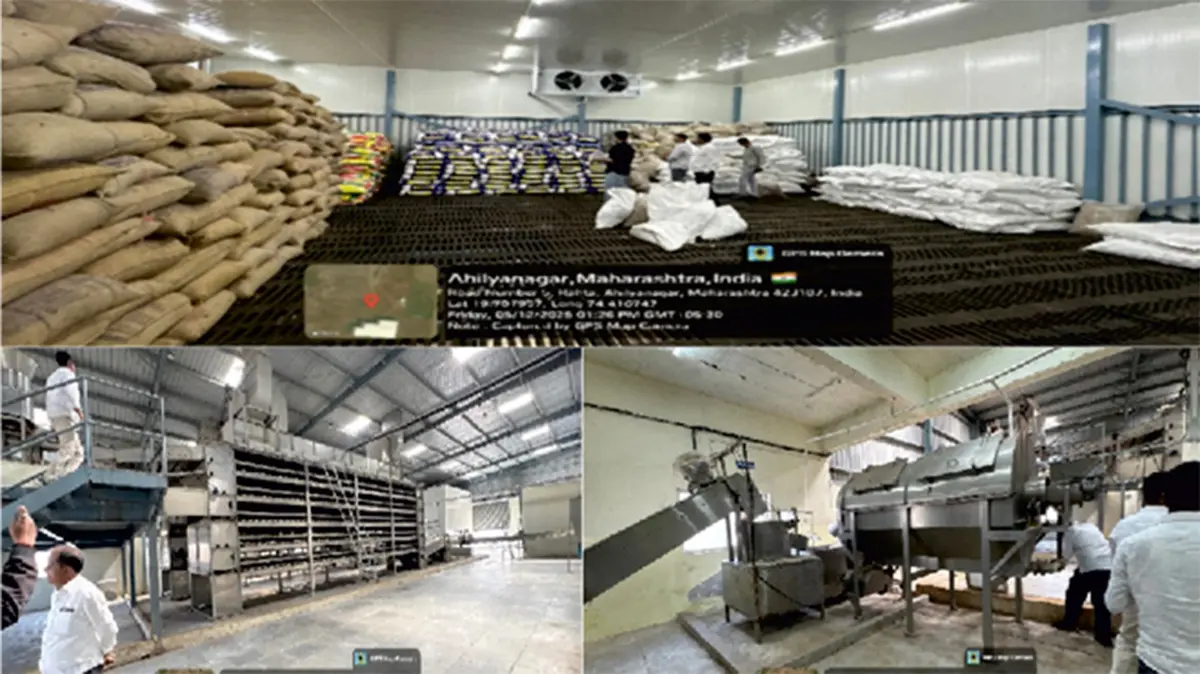
Why in news?
The government highlighted Smart-Waves Technologies under a specialised entrepreneurship fund.
The company received ₹4.98 crore through the fund during 2018.
The Hyderabad enterprise reported 128 jobs and expanded electronics production.
The portal stopped accepting new online applications from 1 August 2026.
Background
The Union Budget for 2014–15 proposed concessional finance for Scheduled Caste entrepreneurs. The Venture Capital Fund for Scheduled Castes launched on 16 January 2015. It is commonly abbreviated as VCF-SC after its first full reference.
The initial government allocation announced during 2014 was ₹200 crore; subsequent contributions expanded the total corpus to ₹750 crore. Industrial Finance Corporation of India is now formally named IFCI Limited.
Institutional structure
| Element | Verified position |
|---|---|
| Implementing department | Department of Social Justice and Empowerment |
| Administrative ministry | Ministry of Social Justice and Empowerment |
| Investment manager | IFCI Venture Capital Funds Limited |
| Fund structure | Category II Alternative Investment Fund |
| Regulator | Securities and Exchange Board of India |
| Total corpus | ₹750 crore |
| Government contribution received | ₹669.47 crore |
| IFCI contribution or commitment | ₹80.53 crore |
A Category II Alternative Investment Fund pools capital under regulated investment rules. This structure differs from a direct budget grant delivered to every applicant.
Objectives
- Promote entrepreneurship among people belonging to Scheduled Castes; provide concessional capital for viable and growth-oriented enterprises.
- Encourage innovation, technology adoption and productive asset creation; generate direct and indirect employment within local economies.
- Broaden ownership in sectors requiring patient risk capital.
Who can receive assistance?
The fund considers manufacturing, services and allied activities creating productive assets. Start-ups and enterprises linked with technology incubators can also qualify. Scheduled Caste entrepreneurs must hold at least 51 per cent shareholding.
They must also retain management control within the applicant company. Applications up to ₹50 lakh require six months of qualifying ownership. Applications above ₹50 lakh generally require twelve months of qualifying ownership.
Successor companies may rely upon eligible predecessor entities meeting these periods. Applicants must provide documentary proof of Scheduled Caste status.
Financial design
- Published assistance ranges from ₹10 lakh to ₹15 crore; total assistance cannot exceed twice the company's current net worth.
- Funding may use shares or different categories of convertible debentures.
- The maximum tenure can reach ten years, including permitted moratoriums.
- Assistance up to ₹5 crore may fund 75 per cent of project cost.
- Larger assistance may fund 50 per cent of project cost.
- Debt instruments carry a published four per cent annual rate.
- Eligible women and disabled entrepreneurs receive a 3.75 per cent rate.
Compulsorily Convertible Debentures become equity under agreed conditions; Optionally Convertible Debentures permit conversion under agreed terms. Non-Convertible Debentures remain debt and require repayment under their contract. The mix gives enterprises longer repayment horizons than many ordinary business loans.
How are proposals processed?
- A Screening Committee checks eligibility and preliminary appraisal parameters; eligible proposals undergo detailed appraisal, negotiation and financial structuring.
- An Investment Committee decides sanction terms and assistance quantum; the investment manager completes legal documents after issuing sanction terms.
- Approved money is normally disbursed through monitored tranches.
Performance and the Smart-Waves example
Official data recorded 145 sanctions by 31 March 2026; the sanctioned amount totalled ₹613.02 crore across those companies. Disbursements reached ₹432.88 crore across 122 companies; sanction and disbursement differ because release follows conditions and project progress.
Smart-Waves manufactures electronic circuit boards for several advanced sectors; its customers reportedly include defence, aerospace, automobile and commercial enterprises. The 2018 assistance combined equity with optionally convertible debentures. The company later added another Hyderabad unit with greater production capacity.
Reported assets reached ₹8.41 crore and annual revenue reached ₹18.87 crore. These results describe one beneficiary, not the fund's entire performance.
Issues and implications
- Concessional capital can address historical barriers to formal business finance.
- Equity-like instruments share business risk better than standard secured loans.
- Careful appraisal remains necessary because public capital must support viable enterprises.
- Ownership rules should prevent proxy control while allowing genuine business partnerships.
- Outcome reporting should separate sanctions, disbursements, survival, employment and repayments.
Conclusion
VCF-SC combines social inclusion with commercially appraised enterprise finance. Transparent outcomes must show whether funded firms remain productive and employment-generating.