

Why in news?
Water and debris entered a project tunnel in Chamoli district. By 14 August, seven workers were confirmed dead and three remained missing.
What was known
Associated Press reported that 22 people were working inside when water and debris entered the tunnel. Twelve workers were rescued alive. The reported numbers remained provisional while search operations continued.
National and State disaster teams joined the operation. Rising water and continuing seepage complicated access.
No verified investigation had established the initiating cause by the reporting cut-off. Geological or operational explanations therefore remain unproven.
The project and its setting
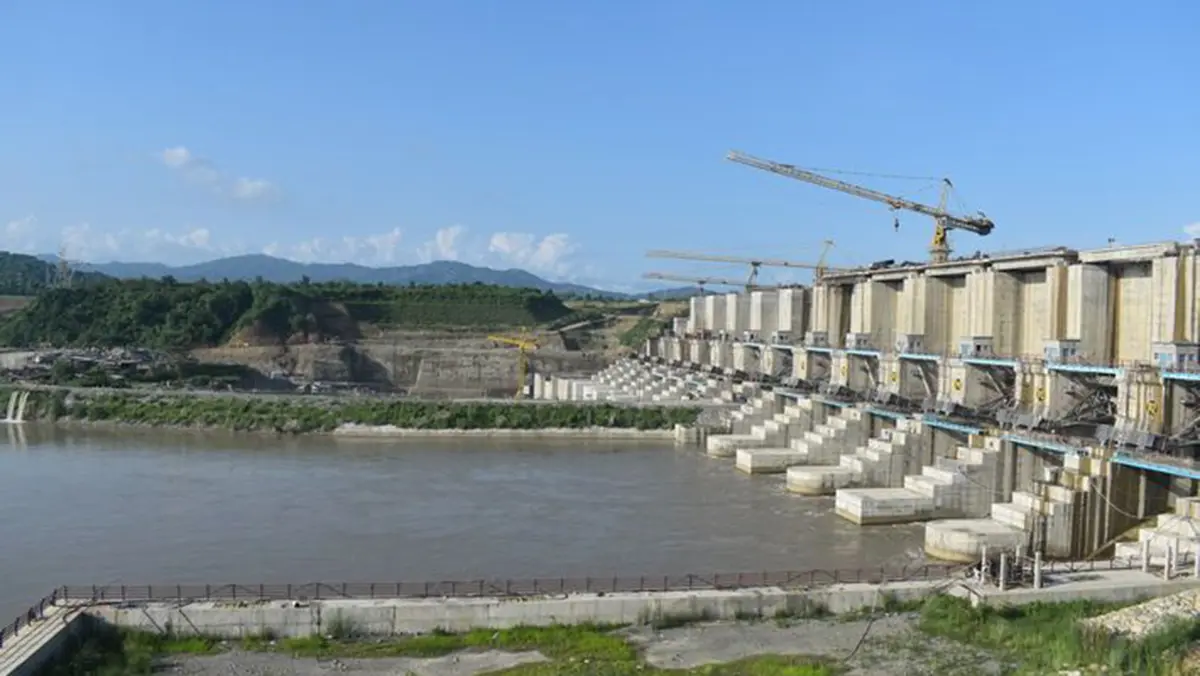
THDC India Limited, formerly Tehri Hydro Development Corporation Limited, is building the 444-megawatt Vishnugad–Pipalkoti Hydroelectric Project. The project is on the Alaknanda River.
It lies between Helang and Pipalkoti in Chamoli district, Uttarakhand. The Alaknanda is a principal headstream of the Ganga.
The run-of-river design includes a 65-metre diversion dam. Water travels through a 13.4-kilometre head-race tunnel.
At its 2011 approval, the World Bank expected average annual generation of 1,665 gigawatt-hours.
The Bank approved a 648-million-dollar loan. These projections describe the financing decision, not current operating performance.
Chamoli lies in the young Himalayan mountain system. Steep relief, fractured rock and monsoon flows complicate underground construction.
These regional conditions increase risk-management demands. They do not, by themselves, prove the cause of this incident.
Do not infer causation
Only geotechnical records, water data, work logs and forensic evidence can establish why water entered the tunnel.
Safety implications
Underground works require mapped escape routes, reliable communication and independent emergency power. Shift-wise worker registers must remain current.
Water-ingress monitoring needs thresholds that trigger evacuation before access fails. Rescue equipment should match tunnel length and likely hazards.
Investigators should examine design assumptions, support systems, contractor practices and warning data. Findings should be published without compromising evidence.
Project appraisal also needs cumulative basin and disaster analysis. Himalayan hydropower cannot be assessed only through generation capacity.
Safety is a project outcome
Engineering progress has little value without worker protection. Independent investigation should guide design, contracting and emergency reforms.
Conclusion
The immediate priority remains people and evidence. The wider lesson is to treat tunnel safety as central infrastructure governance.