

Why in news?
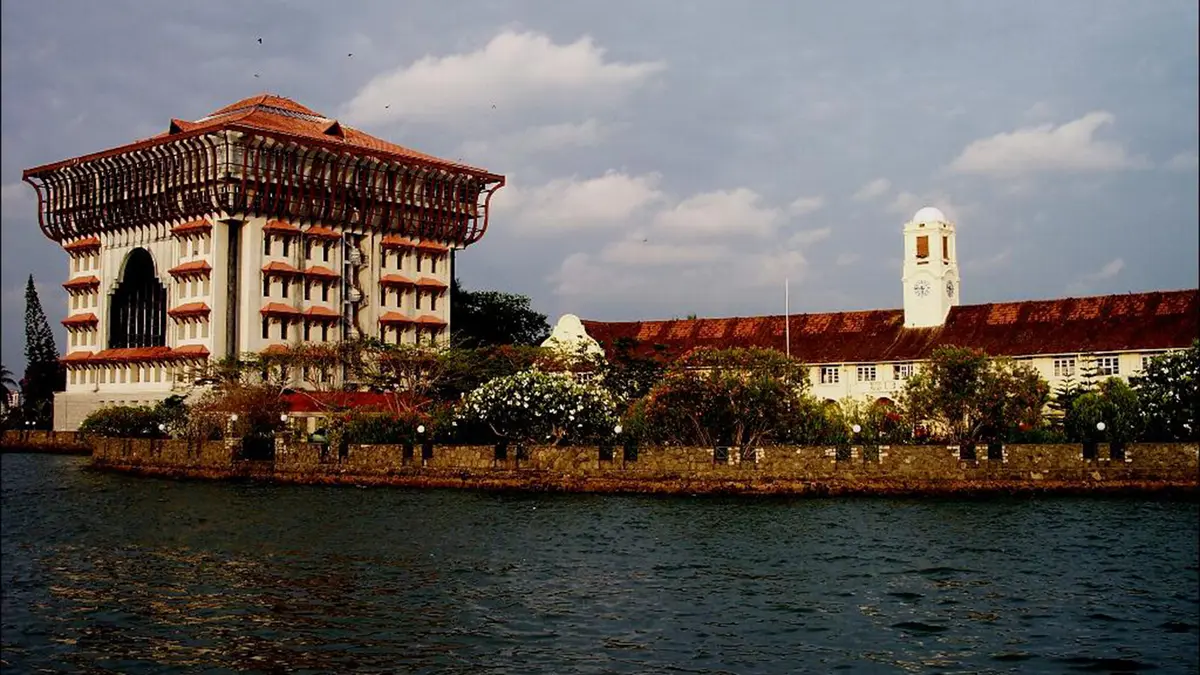
A seminar organised by the Cochin Port Employees Organisation called for the revival of Willingdon Island’s economic role. The New Indian Express reported the discussion on 14 September 2026. The island is an artificial landmass within Kochi’s harbour system, with longstanding port facilities and transport connections. The shift of container operations to Vallarpadam left parts of its earlier port economy underused. Speakers argued that existing land and infrastructure could support new cargo, logistics, maritime and visitor-related activities. Their proposals raise a practical question: how can an established port district remain useful when shipping patterns change? The seminar presented recommendations and priorities, not a newly approved, fully funded redevelopment programme with a confirmed completion date.
An island created through harbour engineering
Willingdon Island lies within Kochi’s backwater-and-harbour setting on Kerala’s southwest coast. The port opens towards the Arabian Sea. The island should not be confused with Vallarpadam, another part of the port landscape, or with the older settlement of Fort Kochi. These places are connected within the urban region but have distinct locations and functions.
The development of the modern harbour is closely associated with engineer Robert Bristow. Ships needed a dependable entrance through the coastal sand bar and a usable inner channel. Kerala Tourism’s historical account connects dredging with shoreline protection and land reclamation. Creating the harbour therefore involved much more than building a place for ships to berth.
Dredging removes material from the bed of a waterway to maintain or create navigable depth. Suitable dredged material can also be used in reclamation, raising land within a coastal or backwater area. Willingdon Island’s formation belongs to that harbour-building process. An artificial island is therefore not necessarily a detached offshore platform.
The official historical account records the steamship Padma entering the new port on 26 May 1928. This milestone followed the opening of the entrance channel. It helps establish the modern port’s chronology, but does not mean every island building or facility was completed on that date. The port continued to develop through later stages.
How containerisation changed the island’s role
Container shipping concentrates cargo into standardised units that can move between ships, trucks and trains. Handling these units efficiently requires suitable berths, cranes, storage areas and transport links. As ships and cargo volumes change, ports may develop facilities elsewhere rather than expanding indefinitely within an older operational layout.
Cochin Port’s own land-development documents describe container operations and associated business shifting from Willingdon Island after Vallarpadam’s terminal opened in 2011. The facility is the International Container Transshipment Terminal. Transshipment means transferring containers between ships, often connecting smaller regional services with longer-distance shipping routes.
This shift did not mean that Cochin Port as a whole closed or that all island activity disappeared. It changed the distribution of work within the port. Land, sheds and supporting businesses linked to the earlier pattern could become less intensively used even while activity expanded at another terminal.
What the revival discussion proposed
The September seminar linked revival with better use of existing port assets. The newspaper’s account described interest in cargo handling, logistics, coastal shipping, maritime services and cruise-related activity. Participants also discussed equipment and supporting facilities. The common theme was diversification: finding uses that suit the island instead of relying only on its former container role.
Logistics involves the storage and movement of goods through a supply chain. A waterfront site can be valuable when cargo can move efficiently between ships, warehouses and inland transport. But proximity to water alone does not make a successful logistics centre. Access, handling costs, available services and dependable demand all influence whether businesses will use it.
Visitor-oriented development creates different requirements. Passenger movement, public access and hospitality may need to be separated from heavy cargo operations or secure port areas. A redevelopment plan therefore has to resolve how activities fit together. Simply listing several attractive industries does not establish that they can operate on the same parcel of land.
What would turn an idea into a workable programme?
Cochin Port had already considered alternative uses for island land before the seminar. Its 2024 tender material identified potential business, hospitality and logistics uses for particular plots. These documents provide evidence of earlier planning. They should not be presented as fresh September 2026 project approvals or proof that every proposed development has been completed.
A practical programme would need to connect land availability with investment, permissions, environmental requirements and an operating model. It would also need to explain who maintains shared roads, utilities and waterfront access. Existing infrastructure can reduce some costs, but ageing assets may require substantial rehabilitation before they support a new use.
Reuse is successful when it restores useful activity, not merely occupancy. The relevant tests include dependable cargo or visitor demand, sustainable maintenance and employment suited to the new operations. For workers and businesses affected by the earlier shift, the transition arrangements matter alongside the final redevelopment image.
Conclusion
The Willingdon Island discussion concerns adapting an inherited port landscape to changed economic needs. Its location and established infrastructure offer possibilities, but the seminar itself did not settle investment or implementation. A credible revival would match specific sites with viable uses while integrating workers, transport and the wider harbour environment.