

Regular UPSC news, every day
‹ News Blitz Economy Settled

India's GDP grew 7.8 per cent in April to June 2026
First brief 1 Sep, 10:00 am IST Updated 6 Sep, 1:53 am IST 6 developments 4 min read Latest ↓
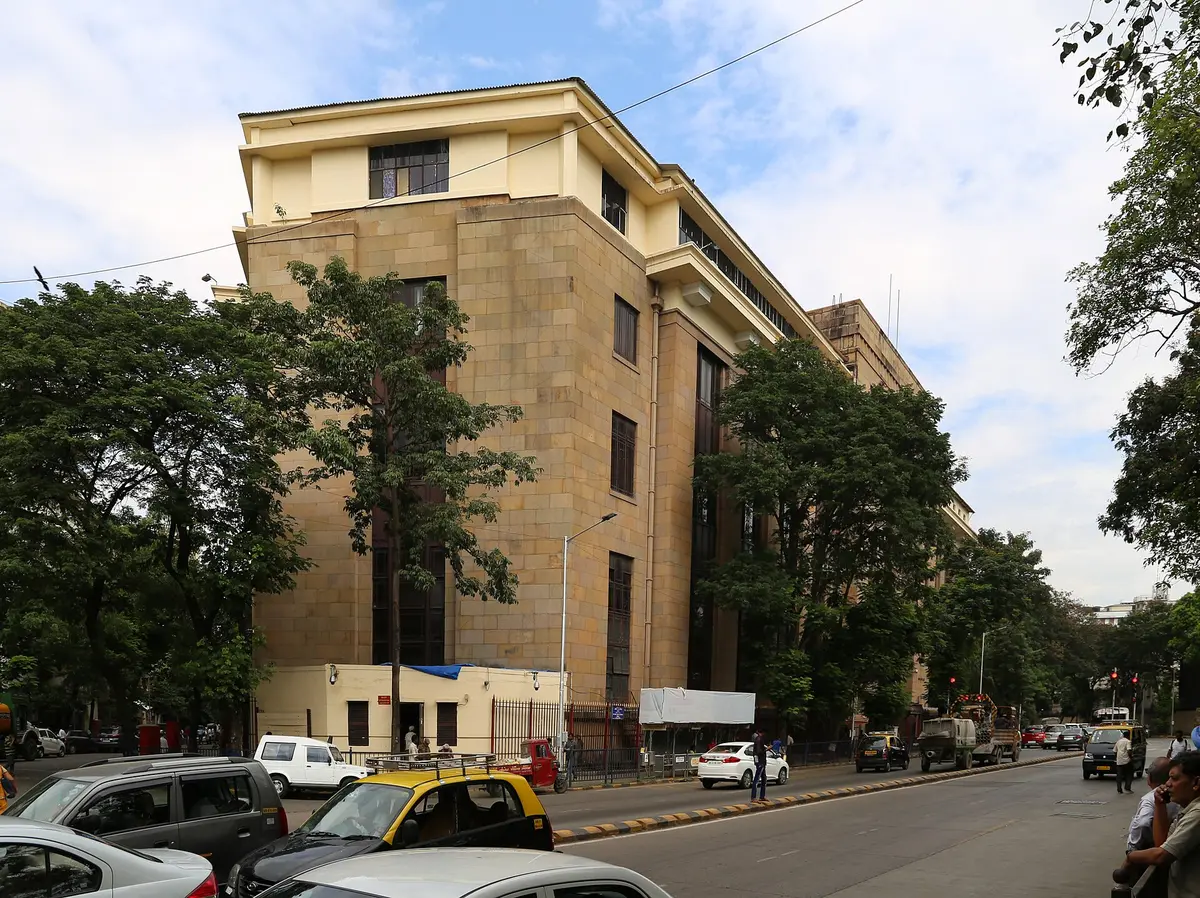
File: RBI headquarters, Mumbai
Sailko · CC BY 3.0

Where it stands

The debate is now about the method behind India's April-June 2026 GDP figure. On 31 August 2026 the National Statistics Office said real GDP grew 7.8 per cent. The numbers use a new base year, 2022-23, introduced in February 2026. The new series puts April-June 2025 nominal GDP at Rs 80 lakh crore. The old series had said Rs 86.05 lakh crore. On 2 September 2026 the statistics ministry said the change was not a deliberate cut. Former chief statistician Pronab Sen questioned the price data behind the new series. World Bank Executive Director Neelkanth Mishra said other indicators show strong growth. On 5 September 2026 the Prime Minister cited electricity, vehicle, steel and cement growth.

Background

GDP is the value of all final goods and services made in India in a period. GVA is the value added by producers before product taxes. GDP equals GVA plus taxes on products minus subsidies on products. The National Statistics Office (NSO) under the Ministry of Statistics and Programme Implementation releases these numbers. The NSO releases the numbers about two months after each quarter ends. April-June is the first quarter of the financial year 2026-27. The first quarter gives the first official reading of the year. Forecasters revise full-year forecasts after this reading.

How it developed

  1. 31 August 2026, 4 pm
    How it started

    Statistics office releases the first quarterly GDP estimate of 2026-27

    The NSO publishes quarterly GDP estimates about two months after each quarter ends. The previous release on 5 June 2026 put January-March 2026 growth at 7.8 per cent. The same release put full-year 2025-26 growth at 7.7 per cent. A conflict in West Asia raised crude oil prices during April-June 2026. The NSO released the April-June 2026 estimates at 4 pm on 31 August 2026.

  2. 31 Aug, 4:00 pm IST
    New fact

    NSO: GDP grew 7.8 per cent, GVA 8.2 per cent

    Real GDP grew 7.8 per cent in April to June 2026. Real GDP had grown 6.9 per cent a year earlier. Real GVA grew 8.2 per cent. Nominal GDP grew 10.3 per cent, to Rs 88.27 lakh crore. Net taxes on products grew only 3.9 per cent in real terms. Slow growth in net taxes explains the gap between GDP growth and GVA growth.

  3. 31 Aug, 4:05 pm IST
    New fact

    Investment led the quarter. Services and manufacturing grew fast.

    Fixed investment (GFCF) grew 11.9 per cent, against 5.8 per cent a year earlier. Private consumption (PFCE) grew 7.1 per cent. Services grew 10 per cent. Manufacturing grew 9.2 per cent. Agriculture and allied activities grew 3.6 per cent. The NSO also revised January to March 2026 growth to 8.6 per cent, from 7.8 per cent.

  4. 1 Sep, 9:01 am IST
    Settled

    Economists raise full-year forecasts after strong April-June data

    Chief Economic Adviser V Anantha Nageswaran spoke to the press on 31 August 2026. Nageswaran said manufacturing and services did well despite the West Asia crisis. Several economists raised their growth forecasts for 2026-27 the same evening. CareEdge Ratings now expects 7.3 per cent growth, up from 7 per cent. India Ratings and Research now expects more than 7 per cent, up from 6.8 per cent. Some economists expect growth to slow in the second half of 2026-27.

  5. 2 September 2026
    Official response

    Statistics ministry defends 7.8 per cent growth, rejects 2.6 per cent claim

    On 2 September 2026 the statistics ministry rejected a claim of 2.6 per cent nominal growth. Former finance secretary Subhash Chandra Garg made the claim in a television interview. Under the old base year 2011-12, April-June 2025 nominal GDP was Rs 86.05 lakh crore. The ministry changed the base year to 2022-23 in February 2026. Under the new base year, April-June 2025 nominal GDP is Rs 80.00 lakh crore. The ministry said figures from two base years cannot be compared.

  6. 1 to 2 September 2026
    Official response

    Ministry explains the four-step revision and the negative manufacturing deflator

    Statistics ministry FAQs of 1 September 2026 called the revisions improved estimates, not error corrections. The ministry's 2 September note traced April-June 2025 nominal GDP in four steps. The figure was Rs 80.32 lakh crore in February 2026 and Rs 80.44 lakh crore in June 2026. New price and production indices then moved the figure to Rs 80 lakh crore. The note explained the manufacturing deflator of minus 1.5 per cent. Nominal manufacturing GVA grew 7.7 per cent, real GVA 9.2 per cent. Input prices rose faster than output prices under double deflation. The ministry said this does not mean manufacturing prices fell.

  7. 3 to 5 September 2026
    Official response

    Sen questions the price data. Mishra and the Prime Minister defend the growth.

    Pronab Sen, India's first chief statistician, spoke to Business Standard on 3 September 2026. Sen's doubt is about the price deflators. Sen said he has seen no evidence that the ministry has the input prices double deflation needs. World Bank Executive Director Neelkanth Mishra disagreed, Business Standard reported on 4 September 2026. Mishra said vehicle sales, cement volumes and credit demand were doing very well. On 5 September 2026 the Prime Minister spoke at a Delhi college centenary. The Prime Minister said April-June electricity generation rose 9 per cent. Vehicle sales rose over 20 per cent and steel and cement use 8 per cent, the Prime Minister said.

Why it matters for UPSC

GS3 · Indian economyPrelims · GDP and GVA

For Prelims, remember GDP equals GVA plus product taxes minus product subsidies. Real growth (7.8 per cent) removes price changes, unlike nominal growth (10.3 per cent). Quarterly GDP numbers are provisional estimates, open to revision by the NSO in later releases.

Key terms

Gross value addedGross value added (GVA) is output minus the cost of inputs. A cycle factory in Ludhiana buys steel and tyres. The finished cycle is worth more than the steel and tyres. The extra value is the factory's GVA. India's GVA is the sum of all producers' GVA.
Real versus nominal growthNominal growth includes price rises. Real growth removes price rises. A kirana shop sells the same rice at a higher price. The shop's nominal sales rise. The shop's real sales stay the same. The NSO measures real growth at 2022-23 prices.
Gross fixed capital formationGross fixed capital formation (GFCF) is spending on assets used for many years. Roads, factory sheds, machines and new houses count as GFCF. A new expressway in Uttar Pradesh adds to GFCF. GFCF is the investment part of GDP. GFCF rose 11.9 per cent in April-June 2026.
Private final consumption expenditurePrivate final consumption expenditure (PFCE) is household spending on goods and services. Food, mobile recharges, school fees and scooters all count as PFCE. PFCE is the largest part of India's GDP. PFCE rose 7.1 per cent in April-June 2026.
Net taxes on productsNet taxes on products are product taxes minus product subsidies. A product tax is a tax on a good or service, like GST on a mobile phone. A product subsidy lowers the price of a good, like the subsidy on urea. Net taxes on products link GVA to GDP. Net taxes grew 3.9 per cent in real terms in April-June 2026.
Provisional estimateA provisional estimate is an early number based on partial data. The NSO replaces provisional estimates with revised estimates later. The January-March 2026 growth number moved from 7.8 to 8.6 per cent in this way.
Base yearA base year is the year whose prices are used to measure real growth. India's GDP base year moved from 2011-12 to 2022-23 on 27 February 2026. The statistics ministry tries to change the base year every five years. A base year change also brings in new data and methods. Business Standard reported that the 2004-05 base raised April-June 2007 nominal GDP by about 6 per cent.
GDP deflatorThe GDP deflator is GDP at current prices divided by GDP at constant prices. The ministry derives the deflator from the accounts. The deflator covers the whole economy, including government services, investment and exports. So the deflator need not move with the Consumer Price Index or the Wholesale Price Index. The ministry's 2 September note put the implied GDP inflation for April-June 2026 at 2.5 per cent.
Double deflationDouble deflation measures real value added in two steps. Output is deflated with output prices. Inputs are deflated separately with input prices. Real value added is the difference. The old series used one deflator. The 2022-23 series uses double deflation for manufacturing and agriculture. When input prices rise faster than output prices, the value-added deflator can turn negative. The ministry says other countries see this during energy price shocks.
Sources (16)
Sign in Today’s news
Current affairs Daily news Daily quiz News Blitz Shorts Economic Survey 2025-26 Subjects
Polity Economy Geography Environment History Science & Tech Intl. Relations Internal Security Art & Culture Social Issues
All subjects Exam info UPSC Syllabus Prelims syllabus Mains syllabus Exam pattern Eligibility & attempts OBC & EWS checker Resources Free downloads Booklist 2026 Previous year papers Video notes YouTube channel