

Why in news?
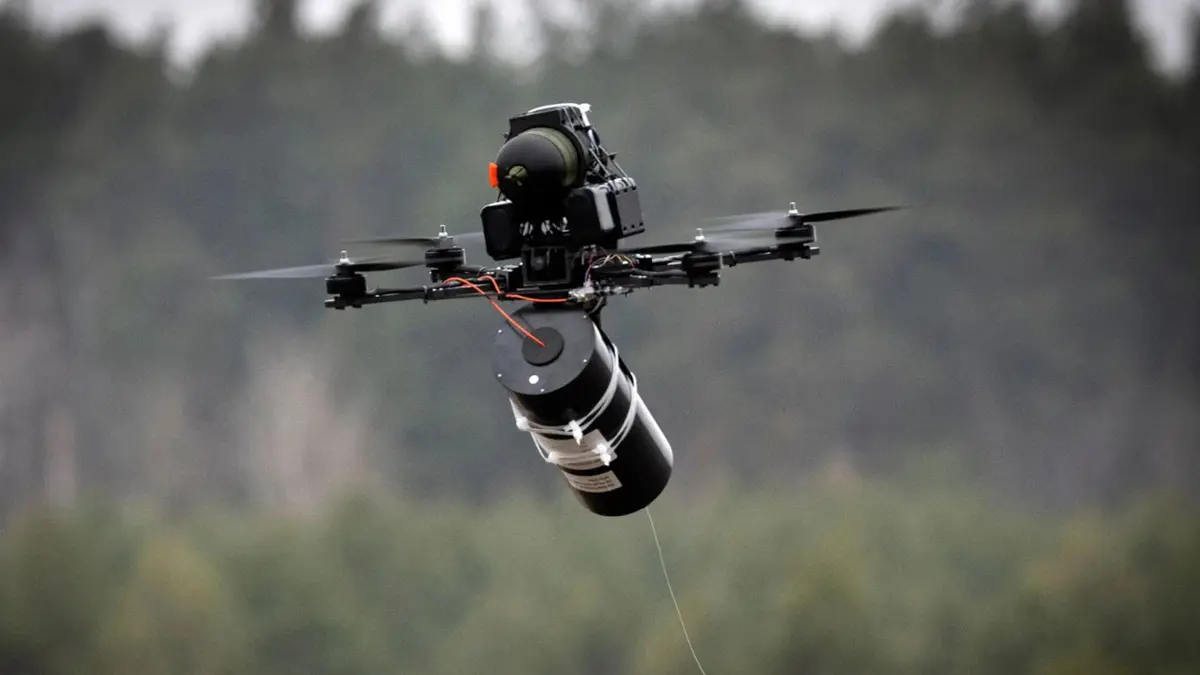
Militant groups have recently used fibre‑optic drones in conflict zones. These unmanned aircraft are guided through ultra‑thin fibre cables instead of radio signals, allowing them to operate in electronic warfare environments. Reports highlighted how such drones evaded jamming attempts during recent clashes.
Background
Conventional drones communicate with their pilots via radio waves. Modern battlefields, however, are saturated with electronic countermeasures that can jam or spoof radio signals. Fibre‑optic drones address this challenge by spooling out a hair‑thin cable connecting the drone to the operator. The cable carries high‑speed digital data and control signals, making the connection immune to electromagnetic interference. This technology emerged from military research and has been adopted by several armies for reconnaissance and targeting.
How fibre‑optic drones work
- A small reel of optical fibre is attached to the drone. As the aircraft flies, it unspools the cable behind it.
- Control commands and live video feed travel through the fibre at high speed with very low latency. Because the signal is physical rather than radio‑based, it cannot be intercepted or jammed by electronic warfare systems.
- The fibre can be several kilometres long, allowing the drone to operate at long distances while the pilot remains hidden.
- Once the mission ends, the fibre is often cut and left on the ground. Some designs allow partial re‑spooling, but tangling can occur.
Advantages
- Anti‑jamming capability: The optical cable makes the link immune to radio‑frequency jamming and hacking.
- Secure data transmission: Fibre provides high‑bandwidth, low‑latency communication for high‑definition video and precise control.
- Stealthy operation: Without radio emissions, the drone is difficult to detect using electronic surveillance.
Limitations
- Limited range and manoeuvrability: The drone cannot fly beyond the length of the fibre. Obstacles can snag or sever the cable.
- Battlefield litter: The discarded fibre remains on the ground and may pose hazards to personnel and equipment.
- Training and logistics: Operating and deploying fibre‑optic drones requires skilled crews and extra equipment.
Significance
Fibre‑optic drones have proven useful in conflicts where electronic warfare is intense, such as in Ukraine. Their ability to evade jamming and provide reliable real‑time intelligence makes them valuable for reconnaissance, artillery spotting and precision strikes. As militaries invest in counter‑drone technologies, fibre‑optic systems offer an alternative that will likely influence future battlefield tactics.