

Why in news?
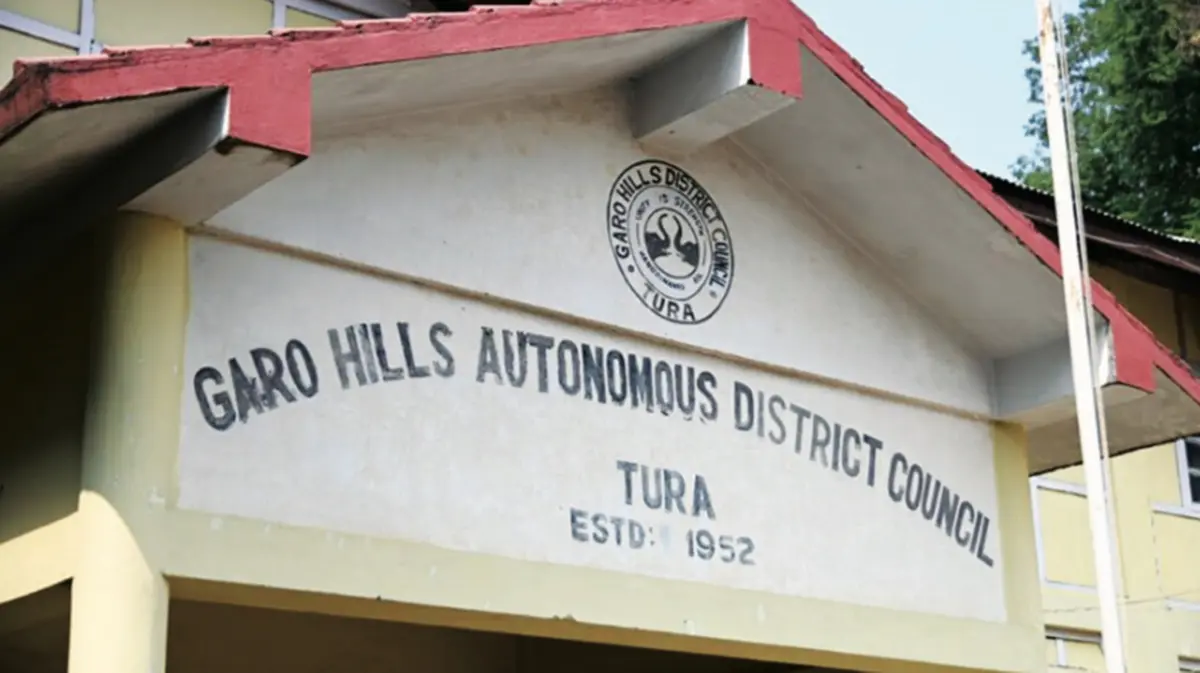
The Meghalaya cabinet extended the term of the Garo Hills Autonomous District Council (GHADC) by six months in March 2026 following protests over the participation of non‑tribals in council elections. The extension gives the state government time to consider amendments to protect tribal representation.
Background
Under the Sixth Schedule of the Indian Constitution, certain tribal areas in Assam, Meghalaya, Tripura and Mizoram are administered as autonomous districts. Governors may create or modify districts, each governed by a District Council of up to 30 members (four nominated by the Governor and the rest elected for five years). Councils are empowered to legislate on land, forest management, shifting cultivation, village administration, inheritance, marriage and social customs. They administer primary schools, markets and roads, establish village courts and collect taxes. These arrangements recognise the distinct lifestyles of hill tribes and aim to preserve their culture within the Indian union.
Key features of District Councils
- Legislative powers: Councils can make laws on land ownership, forests, shifting cultivation, village administration and customary law, subject to the Governor’s assent.
- Executive functions: They manage primary schools, dispensaries, markets, water supply and road construction. Councils may prescribe the language of instruction in primary schools.
- Judicial powers: Village and district council courts adjudicate cases involving tribes according to customary practices.
- Financial autonomy: Councils prepare budgets, collect land revenue and taxes on trades, animals, vehicles and markets, and licence the extraction of minerals.
Current issue in the Garo Hills
The GHADC, one of the three councils in Meghalaya, witnessed protests when non‑tribals sought voting rights in local council elections. The six‑month extension delays polls until October 2026, allowing the government to review electoral rules. Supporters argue that only indigenous tribes should decide local matters, while opponents caution against exclusion. The episode illustrates the continuing negotiations between democratic participation and the protection of tribal identity in the Sixth Schedule areas.
Source: News on Air