

Why in news?
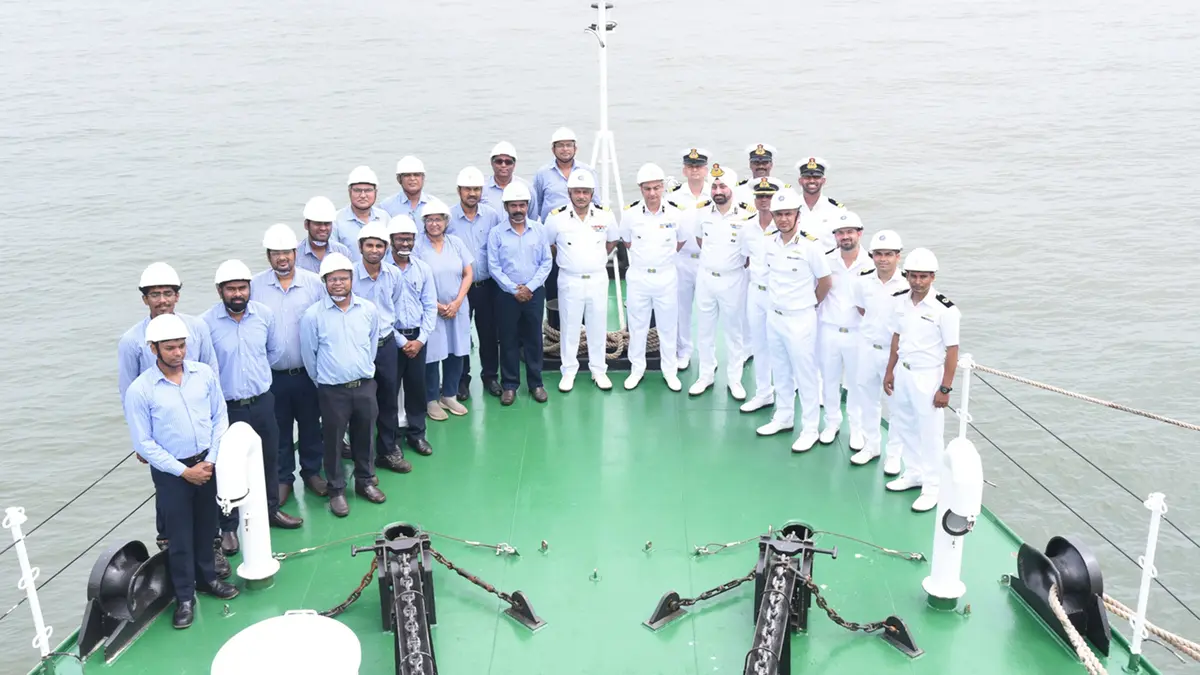
Goa Shipyard Limited handed over Indian Coast Guard Ship Ajit to the Indian Coast Guard on 25 August. The new Fast Patrol Vessel carries the shipyard number Yard 1277. It contains more than 65 per cent indigenous content. The delivery strengthens the Coast Guard’s capacity for patrol, law enforcement and rescue at sea.
What the handover means
A handover transfers the completed vessel from the builder to its operator. It follows construction, equipment fitting, trials and formal acceptance procedures. Commissioning is a separate service ceremony. The official release announced delivery, so both milestones should not be treated as identical.
Goa Shipyard Limited built Ajit at Vasco-da-Gama in Goa. The company is a defence public sector undertaking under the Ministry of Defence. Ajit forms part of an eight-vessel project signed with the Coast Guard in March 2022. The project supports regular renewal of smaller patrol assets.
Design and operating features
The vessel is 51.43 metres long and eight metres wide. Its displacement is 330 tonnes at a draught of 2.5 metres. Twin marine diesel engines drive controllable-pitch propellers. The builder describes this propulsion arrangement as a first for this Fast Patrol Vessel class.
Controllable-pitch propellers can change blade angle while rotating. This allows more flexible control of thrust under different operating conditions. Ajit can exceed 27 knots and travel 1,500 nautical miles. An integrated machinery control system supports monitoring, readiness and efficient operation.
The ship will carry six officers and 35 sailors. Its planned duties include fisheries protection and coastal patrol. It can also support anti-smuggling, anti-piracy and search-and-rescue missions. These tasks require speed, endurance and reliable communication rather than the size of an offshore patrol vessel.
The Coast Guard’s legal role
The Indian Coast Guard is an armed force of the Union. Section 14 of the Coast Guard Act, 1978 defines its central duties. It protects India’s maritime interests and assists other authorities. Its work includes marine pollution control, fishermen’s safety and action against smuggling.
Coast Guard ships also enforce laws within India’s maritime zones. They protect offshore installations and respond to people in distress. Maritime Rescue Coordination Centres direct search-and-rescue operations. A fast patrol vessel can reach incidents quickly and remain on station for sustained work.
Why the Exclusive Economic Zone matters
The United Nations Convention on the Law of the Sea defines an Exclusive Economic Zone beyond the territorial sea. It may extend 200 nautical miles from coastal baselines. India has sovereign rights over natural resources within this zone. Other countries retain lawful navigation and overflight freedoms.
India’s island territories enlarge the waters requiring regular awareness and presence. Patrol vessels help observe fishing activity, offshore assets and merchant traffic. They also support rescue over wide distances. Maritime security therefore depends on many responsive vessels, not only large warships.
Indigenisation and operational value
The reported indigenous content exceeds 65 per cent. Domestic construction can develop design, equipment and maintenance skills within India. It can also shorten support chains during long service lives. The percentage alone does not reveal which high-value systems remain imported.
Operational value depends on availability after delivery. Crew training, spare parts and scheduled maintenance are equally important. Integrated systems must remain reliable in heat, salt and heavy sea conditions. Future assessments should therefore examine deployment and serviceability, not only construction milestones.
Delivery is not the same as commissioning
The official announcement records Ajit’s formal handover by Goa Shipyard. A separate commissioning event would mark its ceremonial entry into active service. This article does not merge those two stages.
Conclusion
ICGS Ajit adds a modern platform for daily maritime law enforcement. Its speed and range suit patrol and rescue across large coastal areas. Domestic construction also deepens India’s shipbuilding base. The real test will be dependable service after induction. Sustained maintenance and trained crews will convert delivery into lasting maritime capability.