

Why in news?
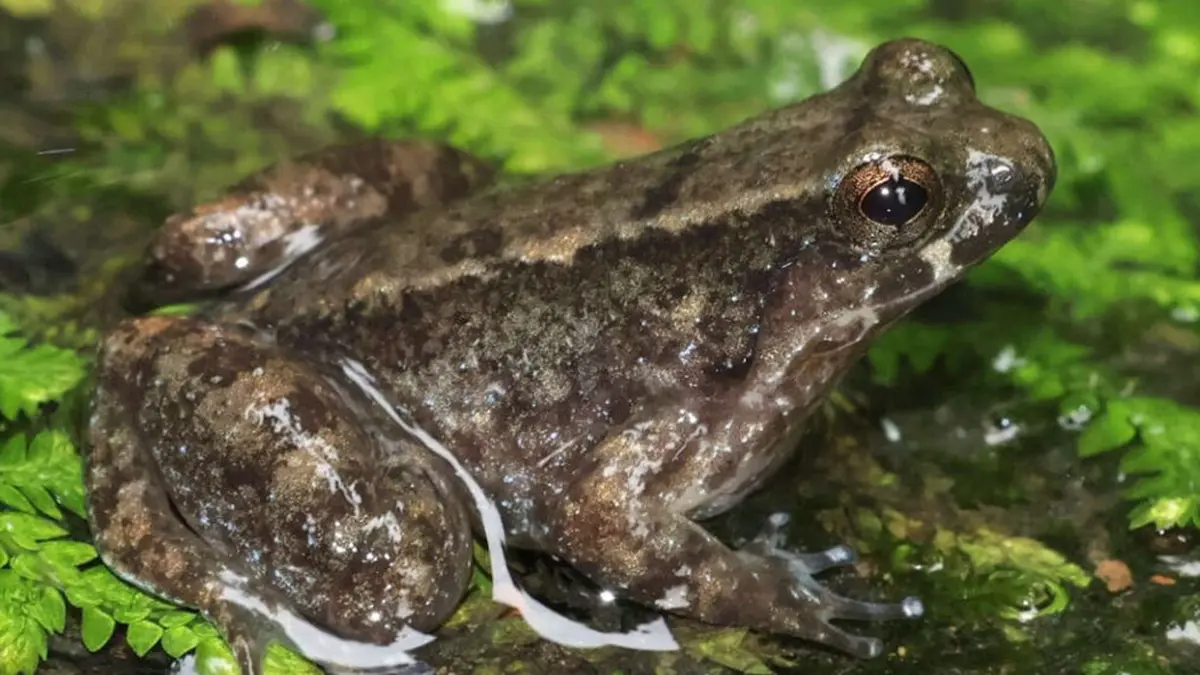
Scientists have described a new frog species named Ingerana occidens, commonly called the western trickle frog. The species was found in the Garo and Khasi Hills of Meghalaya. Its discovery was published in June 2026 and demonstrates that even well‑studied regions can yield new amphibians.
Background
Frogs in the genus Ingerana are small, stream‑dwelling amphibians found in South and Southeast Asia. Until now the only recognised Indian species was Ingerana borealis. R.S. Naveen and colleagues from Griffith University compared specimens from south of the Brahmaputra River with populations north of the river. They used morphology and mitochondrial DNA sequences (16S rRNA) and found an 18 percent genetic divergence. The frogs south of the Brahmaputra were thus described as a new species and named occidens, Latin for ‘west.’
Characteristics
- Size and appearance: Adult males measure about 21–23 millimetres, while females reach 25–26 millimetres. The head is broader than long, and the tympanum (ear drum) is distinct and projects outward. Skin on the back is smooth with light wrinkles, and a dark stripe runs along each side.
- Habitat and range: The species occurs in slow‑flowing streams in evergreen forests near Wari Chora and Mawlynnong in Meghalaya and extends to Cox’s Bazar District in Bangladesh. It likely replaces I. borealis south of the Brahmaputra River, which acts as a biogeographic barrier.
- Significance: The discovery highlights hidden diversity in amphibians. It shows that geographic features like large rivers can drive speciation. Protecting forest streams will benefit these small frogs and the organisms that depend on them.
Conclusion
Ingerana occidens broadens our understanding of biodiversity in Meghalaya. The discovery underlines the importance of combined morphological and genetic studies. Conservation efforts must ensure that forest streams remain intact so that cryptic species do not disappear before we can study them.