

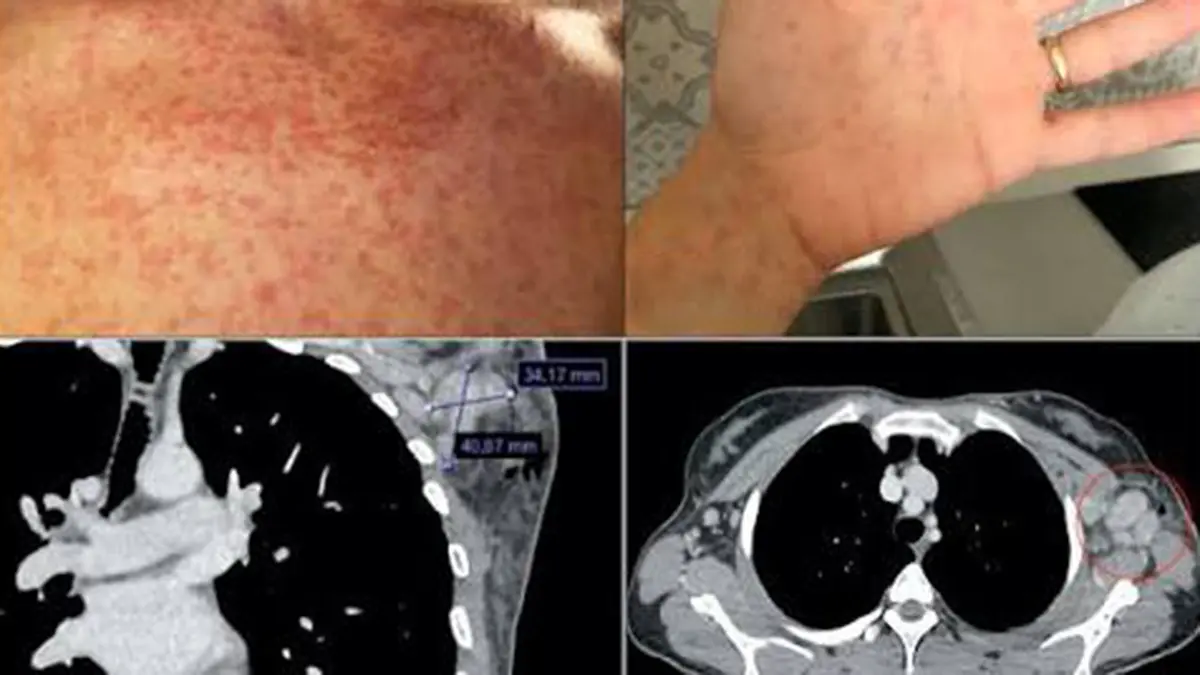
Why in news?
A 32-year-old Visakhapatnam man was diagnosed after nearly six years of recurring lymph-node swelling. He had repeatedly received treatment for suspected tuberculosis.
What is Kikuchi–Fujimoto disease?
Kikuchi–Fujimoto disease is a rare inflammatory disorder of the lymph nodes. Its medical name is histiocytic necrotising lymphadenitis.
Japanese doctors Masahiro Kikuchi and Y. Fujimoto separately described it in 1972. It commonly affects young adults, although any age group may develop it.
The usual sign is painful swelling of lymph nodes in the neck. Fever, tiredness, night sweats and weight loss can accompany that swelling.
The cause remains uncertain. Researchers have examined viral triggers and an unusual immune response. No single infection has been established as the cause.
Why diagnosis becomes difficult
The symptoms resemble tuberculosis, lymphoma and systemic lupus erythematosus. This overlap creates a serious problem in regions where tuberculosis is common.
Clinical examination and routine blood tests cannot reliably separate these conditions. Imaging may locate enlarged nodes, but it cannot confirm the disease.
A lymph-node biopsy usually provides the decisive evidence. Pathologists examine the tissue for areas of cell death and distinctive immune cells.
Typical findings include fragmented nuclear material and crescent-shaped histiocytes. Neutrophils are usually scarce within the affected tissue.
Why the biopsy matters
A firm diagnosis prevents unnecessary anti-tuberculosis treatment. It also ensures that lymphoma and autoimmune disease are not missed.
Treatment and follow-up
The disease is usually benign and self-limiting. Most patients improve within several months with rest and medicines for pain or fever.
Non-steroidal anti-inflammatory drugs may control ordinary symptoms. Doctors sometimes use corticosteroids for severe, persistent or complicated illness.
Recurrence is uncommon but possible. Follow-up is important because some patients later develop systemic lupus erythematosus or have overlapping features.
A patient with continuing fever, new rashes or joint symptoms needs reassessment. The diagnosis should never become a reason to ignore later changes.
Wider lessons for health systems
The case illustrates the danger of treating a likely diagnosis without adequate confirmation. Tuberculosis programmes must support tissue diagnosis where symptoms remain atypical.
Referral systems should connect physicians, radiologists and pathologists early. Patients also need a clear record of previous medicines, tests and treatment response.
Rare diseases do not require careless over-testing. They require careful review when common explanations repeatedly fail.
Do not let prevalence replace proof
Common diseases deserve early consideration. Persistent or unusual illness still needs a fresh diagnosis based on adequate evidence.
Conclusion
Kikuchi–Fujimoto disease usually has a favourable course. The greater danger often comes from delay, uncertainty and unnecessary treatment.
Timely biopsy can shorten that journey. Strong referral networks can also protect patients from repeating the same ineffective care.