

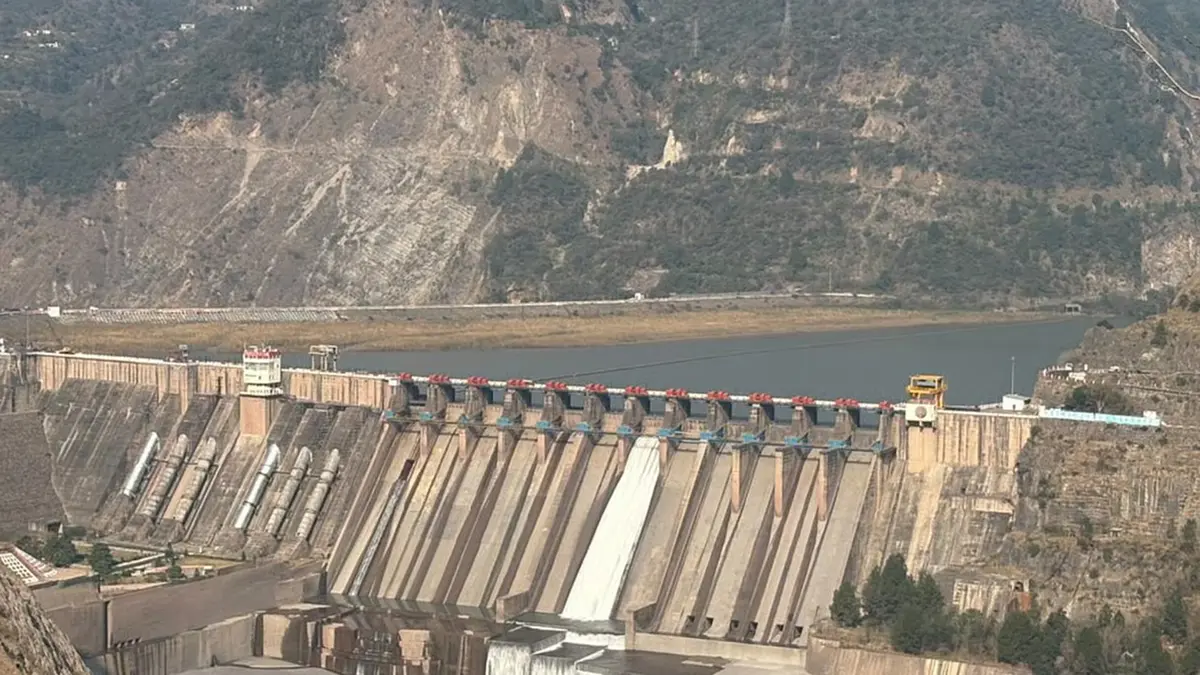
Why in news?
After India suspended the Indus Water Treaty following a terror attack in 2025, the Union government decided to revive the 930 megawatt Kirthai‑II run‑of‑river hydroelectric project on the Chenab river in Jammu & Kashmir. The project had been dormant for decades because Pakistan objected to its terms. In May 2026 the Ministry of Power approved updated terms of reference for the joint venture company Chenab Valley Power Projects Ltd., allowing detailed investigations and land acquisition to proceed.
Background
The Indus Water Treaty of 1960 divided the Indus river system between India and Pakistan. Under this pact, India could use the waters of the eastern rivers but had limited rights over the western rivers (Indus, Jhelum and Chenab). The Kirthai scheme, conceived in 1984, proposes a concrete gravity dam and underground powerhouse on the Chenab river. Its two stages would together generate 1,200 megawatts; stage II alone is expected to produce 930 MW. In the 1990s Pakistan raised objections at the Permanent Indus Commission, and the project was put on hold. The joint venture company – Chenab Valley Power Projects Ltd. – is owned by NHPC (51 %), the Jammu & Kashmir State Power Development Corporation (39 %) and PTC India (10 %).
Key details of the revival
- Reason for urgency: After the Pahalgam terror attack in 2025 India suspended participation in the Indus Water Treaty. This allowed previously stalled projects on the Chenab to move ahead. The central government transferred the terms of reference for Kirthai‑II from NHPC to Chenab Valley Power Projects Ltd., clearing administrative hurdles.
- Project features: Stage‑II envisages a 135‑metre concrete gravity dam and an underground powerhouse housing four 232.5 MW turbines. As a run‑of‑river scheme it would generate energy using the natural flow of the Chenab without creating a large reservoir, minimising submergence and displacement.
- River and existing dams: The Chenab originates in Himachal Pradesh and flows through Jammu & Kashmir before entering Pakistan. Major hydro projects on the river include Salal, Dulhasti, Baglihar and the under‑construction Pakal Dul. Kirthai‑II would be located downstream of the Kirthai‑I dam site near the village of Kirthai.
- Economic and strategic value: Besides producing affordable power for northern states, the project could help India exercise greater control over the Chenab’s flows and reduce future disputes. Its completion would support regional development and create employment in Jammu & Kashmir.
Conclusion
The revival of the Kirthai‑II project shows how geopolitics can unblock infrastructure. With careful environmental management, the project promises clean electricity and greater water security for India while respecting run‑of‑river principles. Successful execution will require transparent rehabilitation of affected communities and timely clearance of environmental and forest approvals.