

Why in news?
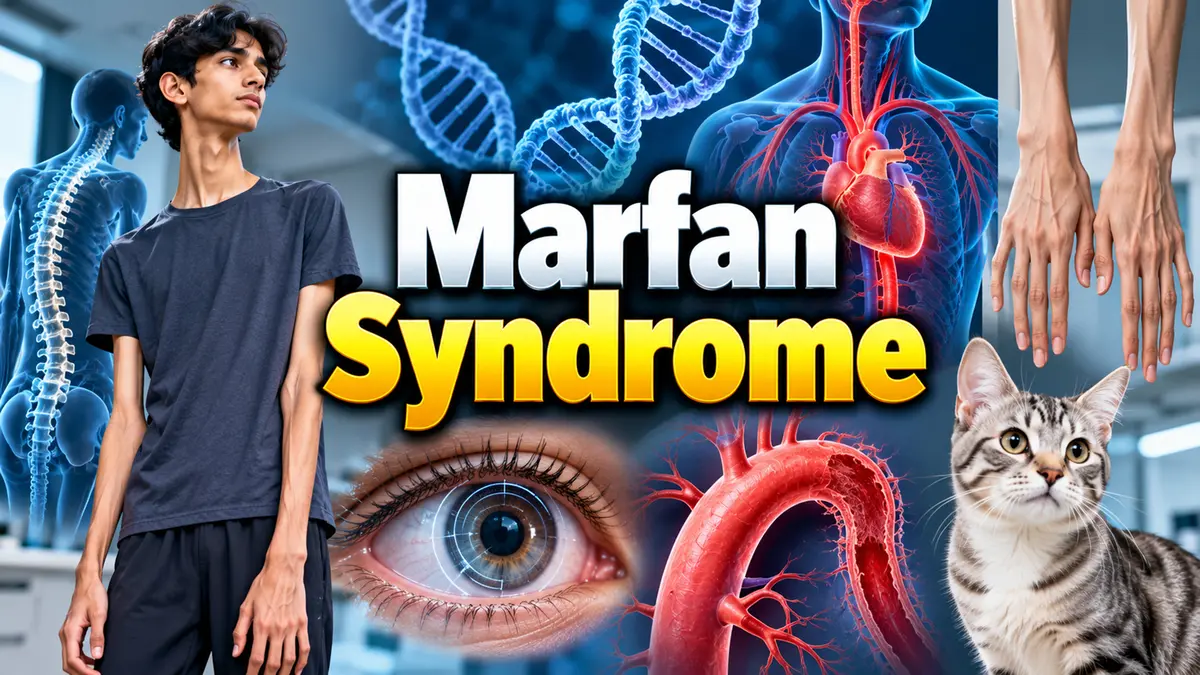
Researchers have identified a genetic change associated with Marfan syndrome in two domestic cats from the same litter. Cornell University announced the findings on 22 September, following publication in Scientific Reports on 19 September. Marfan syndrome affects connective tissue, the supporting material that helps organs, blood vessels and other structures withstand movement and pressure. The cats had eye abnormalities, unusually long limbs and enlargement near the heart's main outgoing artery. Clinical examinations and genetic analysis connected these features with the fibrillin-1 gene. The authors describe this as the first molecular characterisation of the syndrome in domestic cats. It offers a basis for recognising similar veterinary cases, not a new treatment or a population-wide screening recommendation.
Why one tissue disorder affects several organs
Connective tissue is not confined to a single organ. It supports structures throughout the body, including ligaments, blood vessels and the tissues that hold the eye's lens. Some components provide strength, while others allow controlled stretching and recoil. A defect in this shared supporting system can therefore produce problems in apparently unrelated places. Long limbs, a displaced lens and an enlarged artery may form a meaningful pattern rather than three separate conditions.
The fibrillin-1 gene, called FBN1, supplies instructions for making a protein involved in this supporting framework. Genes carry information; proteins perform much of the resulting structural and biochemical work. A harmful change in a gene can alter the quantity or behaviour of its protein. In Marfan syndrome, abnormal fibrillin-1 affects tissue support and biological signalling. The consequences vary between individuals, including people in the same family.
What the cat study actually established
The researchers studied two littermates with a combination of skeletal, eye and cardiovascular abnormalities. Both had displacement of the eye lenses and widening of the aortic root. This is the part of the aorta nearest the heart. Examination of tissue from one affected cat also found disruption in elastic structures within the artery wall. The investigation therefore combined outward features, internal clinical findings and molecular evidence, rather than diagnosing the condition from appearance alone.
Genetic sequencing identified the same altered FBN1 sequence in both copies carried by the affected cats. Further analysis examined how the gene's instructions were processed before protein production. The change disrupted splicing: the step that joins the usable sections of a gene's message. Much of the resulting message skipped a section, but some normal message remained. The authors describe the variant as hypomorphic, meaning that it reduces function rather than eliminating it completely.
That remaining function helps explain why these cats survived into adulthood despite carrying two altered copies. However, two related animals do not establish how common the variant is across domestic cats. Nor does identifying a plausible disease mechanism show that a particular treatment will work. The study is valuable because it links a recognisable clinical pattern with a molecular explanation. Wider diagnostic use would need further validation in relevant animals.
Human inheritance is an important distinction
In humans, FBN1-related Marfan syndrome usually follows autosomal dominant inheritance. “Dominant” means that one disease-causing copy can be enough; “autosomal” means the gene is not on a sex chromosome. An affected parent commonly has a one-in-two chance of passing the altered copy to each child. This probability applies separately to each pregnancy. It does not mean that exactly half the children in every family must have the condition.
Some people have a new gene change without an affected parent. A missing family history therefore does not rule out the disorder. The two-copy finding in these cats must not be substituted for the usual human inheritance pattern. Comparative research is useful precisely because it can reveal both shared mechanisms and important differences. It does not make the species interchangeable.
The aorta explains the need for continuing care
The aorta carries blood from the heart to the body under substantial pressure. If its wall weakens, part of it can widen, producing an aneurysm. A tear within the wall can allow blood to separate its layers, a process called dissection. These problems may develop without obvious outward signs. Consequently, being tall or flexible is neither a diagnosis nor a reliable measure of cardiovascular risk.
Human diagnosis brings together family history, physical examination, eye assessment and cardiovascular imaging. Genetic testing can help clarify the diagnosis or distinguish related conditions. Doctors also consider how different findings fit together. A single feature, such as long fingers or short-sightedness, occurs in many people without Marfan syndrome. This is why clinical assessment matters more than matching oneself to a short symptom list.
There is no cure that removes the underlying inherited change. Management instead aims to reduce complications through monitoring, appropriate medicines and, when necessary, surgery. Blood-pressure treatment can reduce strain on the aorta, while planned repair may prevent a dangerous rupture or tear. Eye, skeletal and other problems need their own assessment. Decisions depend on the individual's findings and should not be inferred from an animal study.
Conclusion
The feline findings add a documented example of how a connective-tissue gene change can produce a linked pattern of disease. Their immediate value lies in veterinary recognition and further research. For human Marfan syndrome, the central lesson remains the connection between an inherited tissue disorder and potentially silent cardiovascular damage. Molecular discoveries strengthen understanding, while careful diagnosis and continuing care remain essential to managing risk.