

Why in news?
Tamil Nadu’s revised 2026–27 budget promised to pursue a higher water level at Mullaperiyar Dam. It linked this goal to farm support and long-term water security. Kerala protested on 5 August 2026; it said safety must take priority under present conditions.
Kerala also opposed storage beyond the Supreme Court-permitted level of 142 feet. Both States explored official discussions, possibly between their Chief Ministers.
How a dam in Kerala supplies water to Tamil Nadu
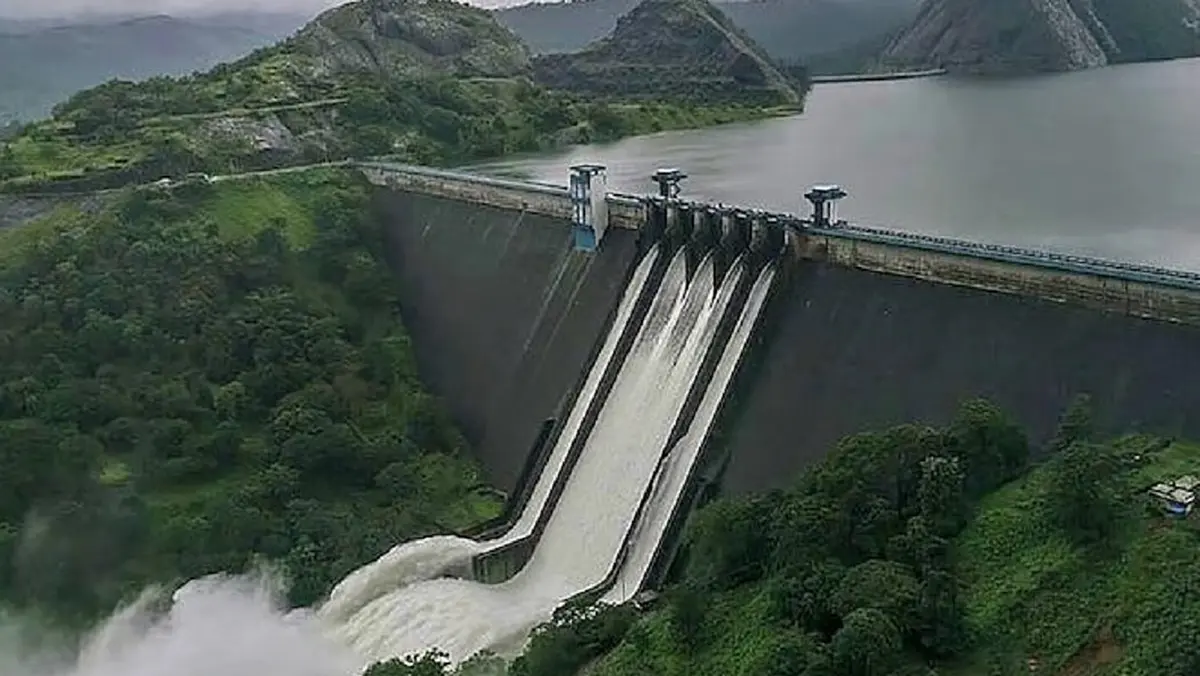
Mullaperiyar is a masonry gravity dam on the Periyar river system. It stands in Kerala’s Idukki district. The Periyar Lake Lease Agreement was executed on 29 October 1886. Its parties represented Travancore and the British Indian administration.
The Supreme Court’s 2014 judgment records about eight years of construction; the dam was completed in 1895.
Although the structure stands in Kerala, Tamil Nadu owns, operates and maintains it. Long-term arrangements examined in the litigation support this position.
The project diverts water east across the Western Ghats towards the Vaigai basin. It supports irrigation and drinking-water needs in southern Tamil Nadu.
The downstream system also uses this water for power generation. Tamil Nadu therefore connects reservoir operation with farms and dependable dry-season supply.
Kerala focuses on a different risk; the ageing dam lies upstream of inhabited areas, where failure would have severe consequences.
Safety and emergency preparation are therefore central concerns; a durable settlement must address both States’ interests.
What the court orders actually mean
The full reservoir level is recorded as 152 feet. That figure is not present permission to store water at that level. In 2006, the Supreme Court permitted restoration to 142 feet. The 2014 interstate judgment later examined that decision.
A further increase required additional strengthening and independent expert examination; the 2014 judgment also created a Supervisory Committee.
The committee would oversee restoration to 142 feet; it would inspect the dam and issue safety directions.
The Dam Safety Act, 2021, later entered into force. In April 2022, the Supreme Court strengthened the committee. The Court gave it National Dam Safety Authority powers until the regular authority became functional. It also required a fresh safety review.
Both States were directed to cooperate; the institutional framework has since developed further, including a comprehensive safety-evaluation process.
Kerala announced another development in August 2026. The Central Water Commission recognised its nominee to the Independent Panel of Experts.
Current technical evaluation must now guide the next step; a political declaration cannot replace it.
A budget statement does not itself change the reservoir rule
Tamil Nadu committed only to “pursue” an increase; the budget did not itself raise the operating level. It provided neither new Supreme Court permission nor proof that the 152-foot conditions were satisfied. Political positions cannot replace binding judicial directions.
They also cannot displace the statutory duties of dam-safety institutions. Those bodies must act on current evidence.
Analysis: moving from positional politics to risk governance
The dispute is often reduced to two slogans. Tamil Nadu stresses water, while Kerala stresses safety; a workable approach must deliver both. It first needs a transparent and time-bound safety evaluation.
The review should use current standards, instrument readings and material tests; it also needs hydrological, seismic and independent peer assessment.
Published findings should explain methods, uncertainty and required work. Sensitive operational details can still remain protected.
Second, both States should understand reservoir operations and emergency management jointly. Real-time data can reduce mistrust and improve warnings; that data should cover rainfall, inflow, storage and releases. Communities also need inundation maps, sirens and clear evacuation routes.
Communication protocols and periodic drills are public-safety necessities. Coordination with the Idukki reservoir system matters as well.
These measures remain necessary whatever the final decision on level or replacement. Rare but catastrophic risks cannot be managed through litigation alone.
Third, pending work must not become an indefinite bargaining instrument. Every activity needs a clear legal status and technical justification. It also needs a responsible agency and completion timeline. This applies to strengthening, access and environmental permissions.
Experts may recommend rehabilitation, operational changes or a replacement structure. Any arrangement must preserve Tamil Nadu’s legitimate water needs.
It must also address Kerala’s safety concerns. New construction would require design review, environmental appraisal, financing and a transition plan.
A replacement is therefore not an instant solution; its construction and commissioning would create their own risks and responsibilities. Finally, public statements should distinguish four different water levels; these are permitted, actual daily, full reservoir and proposed future levels.
Mixing them creates needless fear or false reassurance. The dam’s age justifies close surveillance but is not a technical verdict.
An earlier safety finding also cannot end monitoring. Rainfall, structural condition and risk exposure can change over time.
Conclusion
A budget promise triggered the August dispute; the operating decision cannot be made through a budget speech. It belongs within court directions, dam-safety law and independent assessment. Cooperative management must secure Tamil Nadu’s water and protect people in Kerala.