

Why in news?
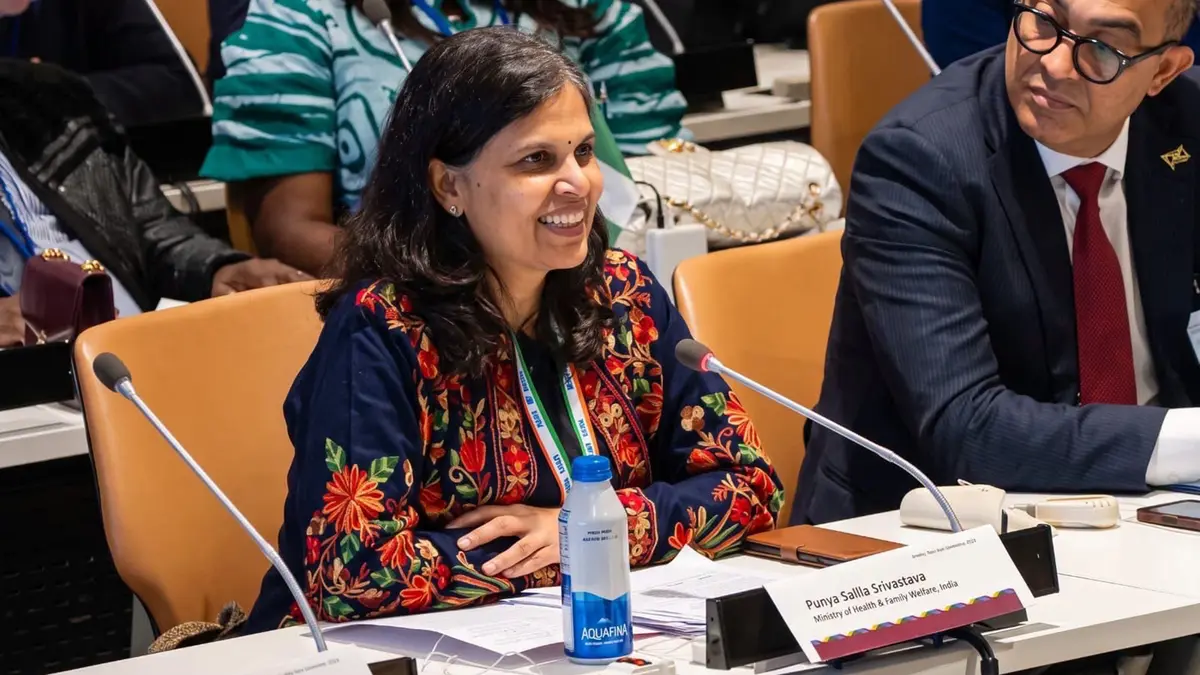
India co-hosted the launch of OneSCD, a global partnership for sickle-cell care, in New York on 23 September. The event took place alongside the 81st United Nations General Assembly. Sickle-cell disease is an inherited blood disorder that can cause severe pain, anaemia and damage to organs. Its consequences depend partly on whether people receive timely diagnosis and continuing treatment. The partnership seeks stronger political coordination, financing and accountability for that care, particularly where services remain inadequate. India presented its national elimination mission as part of the discussion. The announcement creates a platform for cooperation; it does not announce a new medicine or establish that the disease has been eliminated.
Why a change in haemoglobin affects the whole body
Haemoglobin is the protein that carries oxygen inside red blood cells. Normally, these cells are flexible enough to pass through narrow blood vessels. In sickle-cell disease, an inherited change produces an abnormal form called haemoglobin S. Under low-oxygen conditions, this protein can form stiff strands. The affected cells become less flexible and may take the curved shape that gives the disease its name.
Two connected problems follow. Fragile cells break down faster than the body can replace them, producing anaemia, or a shortage of healthy red blood cells. Meanwhile, rigid cells can obstruct small vessels and reduce oxygen delivery. That obstruction can cause sudden episodes of severe pain and injure organs. The condition is therefore much more than a change visible under a microscope.
Disease and trait are not the same
A person with sickle-cell trait usually inherits one haemoglobin S gene and one gene for normal haemoglobin. Having the trait is not equivalent to having sickle-cell disease. Disease can result from inheriting two haemoglobin S genes, but that is not the only combination. Haemoglobin S can also interact with another abnormal haemoglobin variant, including haemoglobin C or certain beta-thalassaemia variants.
When both parents carry the usual sickle-cell trait, each pregnancy has a one-in-four chance of producing a child with two haemoglobin S genes. The probability applies separately to each pregnancy. It does not mean that exactly one child in every family of four will have the disease. Genetic counselling explains such possibilities and supports informed choices. It should not become a basis for stigma or pressure on families.
Diagnosis must lead to continuing care
A screening programme identifies people who need further testing or clinical attention. Its value depends on what happens afterwards. A confirmed diagnosis should connect the person to appropriate care, information and follow-up. Otherwise, a large screening total can coexist with untreated illness. This is especially important when families live far from specialist services or have difficulty returning for repeated appointments.
Treatment can reduce complications even when a person continues to live with the underlying condition. The United States' National Heart, Lung, and Blood Institute describes medicines, transfusions and specialist monitoring among the available approaches. Hydroxyurea, for example, can reduce sickling and painful crises in suitable patients. Its use requires clinical supervision rather than a general instruction that every patient should take the same treatment.
Blood transfusions can help in selected circumstances, but they also require matching, monitoring and reliable supplies. Stem-cell transplantation can offer a potential cure for some patients, while gene therapies have expanded treatment possibilities in certain health systems. These are not simple substitutes for accessible routine care. Eligibility, risks, specialised facilities and cost affect whether an individual can receive them.
How India's mission fits the partnership
India launched the National Sickle Cell Anaemia Elimination Mission at Shahdol in Madhya Pradesh on 1 July 2023. Its stated aim is to eliminate sickle-cell disease as a public-health problem by 2047. The programme combines awareness, screening, counselling and care, with particular attention to affected tribal populations. The target is a policy commitment, not a claim that every inherited variant will disappear by that date.
At the New York launch, Health Secretary Punya Salila Srivastava described the need to integrate services into the public-health system. That approach connects diagnosis with treatment and follow-up instead of treating screening as a separate campaign. The national experience can inform international discussion, but a programme's design is different from evidence of its results. Coverage, continued access and patient outcomes remain important measures.
What international cooperation can usefully change
OneSCD's launch focused on coordinated action and sustainable financing. The United Nations event description also emphasised comprehensive care and accountability. Those priorities address a practical difficulty: a lifelong illness needs dependable services after the launch event ends. Shared commitments can help align governments, researchers and care organisations around that continuing requirement.
The useful test is whether cooperation reduces specific gaps. These may include delayed diagnosis, interrupted medicine supplies or weak referral arrangements. Comparing experiences can help countries identify workable service models, while financing can support their implementation. However, neither a partnership name nor an international meeting proves that those gaps have closed. Progress needs to be visible in the care available to affected people.
Conclusion
OneSCD places sickle-cell disease within a shared international effort, while India's mission supplies one national approach to the challenge. The connection that matters is between identifying an inherited disorder and supporting the person throughout life. Better diagnosis, dependable treatment and respectful counselling must advance together. The partnership's value will ultimately depend on that continuity of care, not simply on the number of organisations joining its launch.