

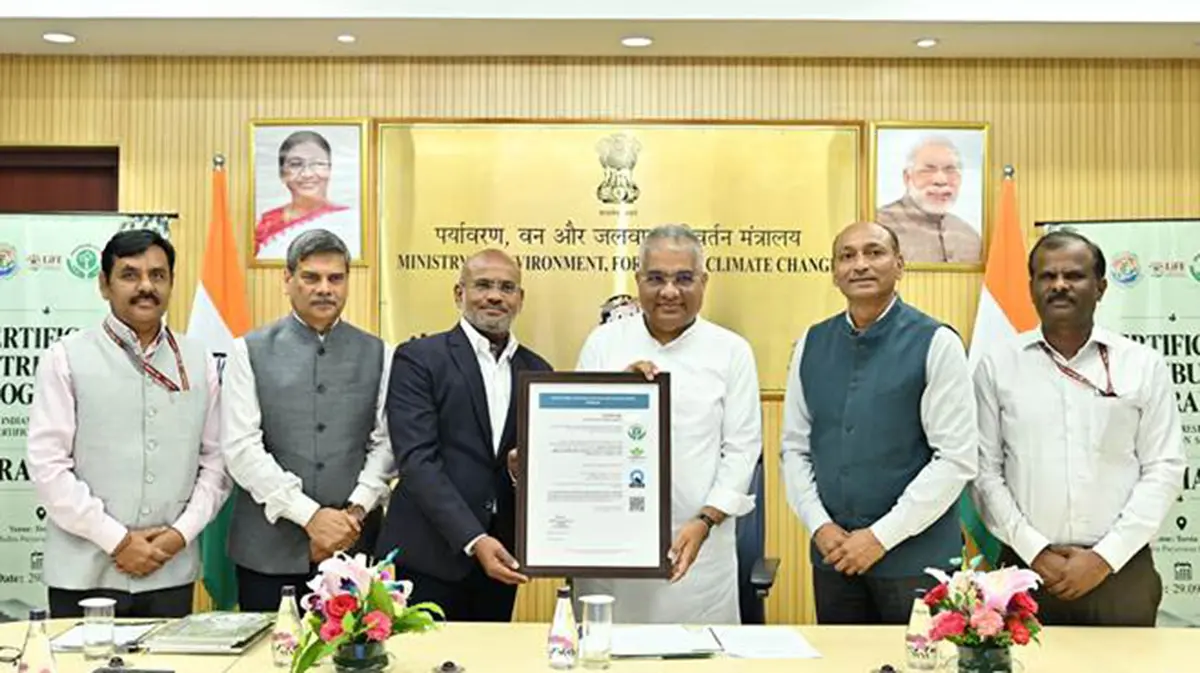
Why in news?
India awarded the first PRAMAAN certificates under the Indian Forest and Wood Certification Scheme on 29 September 2026. The recipients included the Andhra Pradesh Forest Development Corporation, covering 33,000 hectares of plantations, and Odisha farmer Govind Mohapatra. Certification provides an independently audited basis for claims about how forests, farm trees and related products are managed. The scheme itself was launched in December 2023; the new development is the award of its first certificates. This matters because a buyer cannot establish responsible production simply by looking at a piece of timber or bamboo. Verified management and a traceable supply chain answer different parts of that problem, and both need functioning checks.
What the name and the scheme mean
The government expands PRAMAAN as Programme for Recognition and Accreditation of sustainable Management practices for Agroforestry And Natural forestry resources. It is the brand of the Indian Forest and Wood Certification Scheme, not a separate forest law. Participation is voluntary. An independent certification body examines whether the relevant operation meets the scheme’s standards before a certificate can support its claims.
There are three connected forms of certification. Forest-management certification concerns how a forest operation is managed. Trees-outside-forests certification covers relevant tree resources beyond forests, including farm and plantation settings. Chain-of-custody certification follows material through processing and trade. The distinction matters because good management at the source does not automatically prove the origin of every finished product later sold by an intermediary.
Following a product through its journey
Consider a simple illustrative supply chain: a grower supplies wood to a processor, which sells material to a furniture maker. Each transaction changes ownership, while processing changes the material’s form. A buyer at the end needs evidence that the product’s certification claim survived those changes. Supplier documents, material records and controlled handling provide that evidence; an unsupported logo does not.
The scheme’s chain-of-custody standard requires organisations to identify incoming material and control the claims made about outgoing products. It also deals with inventory, processing yields, subcontractors and record keeping. These requirements reduce the risk of certified and other material becoming indistinguishable in the paperwork. The standard permits specified claim categories, so a purchaser must read the actual claim rather than assume every label means identical certified content.
Traceability and environmental management are therefore related but separate assurances. Traceability asks where material came from and how its claim was maintained. Management certification examines practices at the source against the relevant standard. Neither should be presented as a universal guarantee about every environmental effect of a finished product. The certificate’s scope, the operation covered and the product claim remain important.
Who checks whom?
The Indian Forest and Wood Certification Council oversees the scheme, while the Indian Institute of Forest Management acts as its operating agency. The National Accreditation Board for Certification Bodies, within the Quality Council of India, accredits certification bodies. Those bodies conduct the independent assessments. Separating these roles helps distinguish setting a standard, operating a scheme, checking an auditor’s competence and auditing a producer.
The scheme’s published frequently asked questions also provide for group certification. Small producers can organise collectively rather than each carrying the whole administrative burden alone. This can make participation more manageable, but collective participation still requires reliable internal arrangements. A group label is useful only when the relevant producers and practices remain within the certification system’s actual coverage.
What certification can and cannot deliver
The first awards show the scheme being applied to both a large plantation operation and an individual producer. They do not establish that all Indian timber or bamboo is certified. For participating producers, clearer evidence of origin and management could help answer buyers’ questions. Whether it produces a price premium depends on demand, costs and the purchasing requirements of the market concerned.
Certification also operates alongside law, not above it. The chain-of-custody standard requires legal compliance and relevant records; a certificate does not erase importing-country obligations. Maintaining credible assurance requires continuing documentation and scrutiny, especially when suppliers or subcontractors change. Its practical value comes from making a claim checkable, rather than turning a sustainability ambition into an unconditional promise.
Conclusion
PRAMAAN’s first certificates mark a step from scheme design towards audited application. The central benefit is a clearer link between production practices, product claims and supporting records. Its credibility will depend on the quality of assessments and the integrity of the supply chain after certification. Wider participation is useful only if those checks remain meaningful as more producers and products enter the system.