

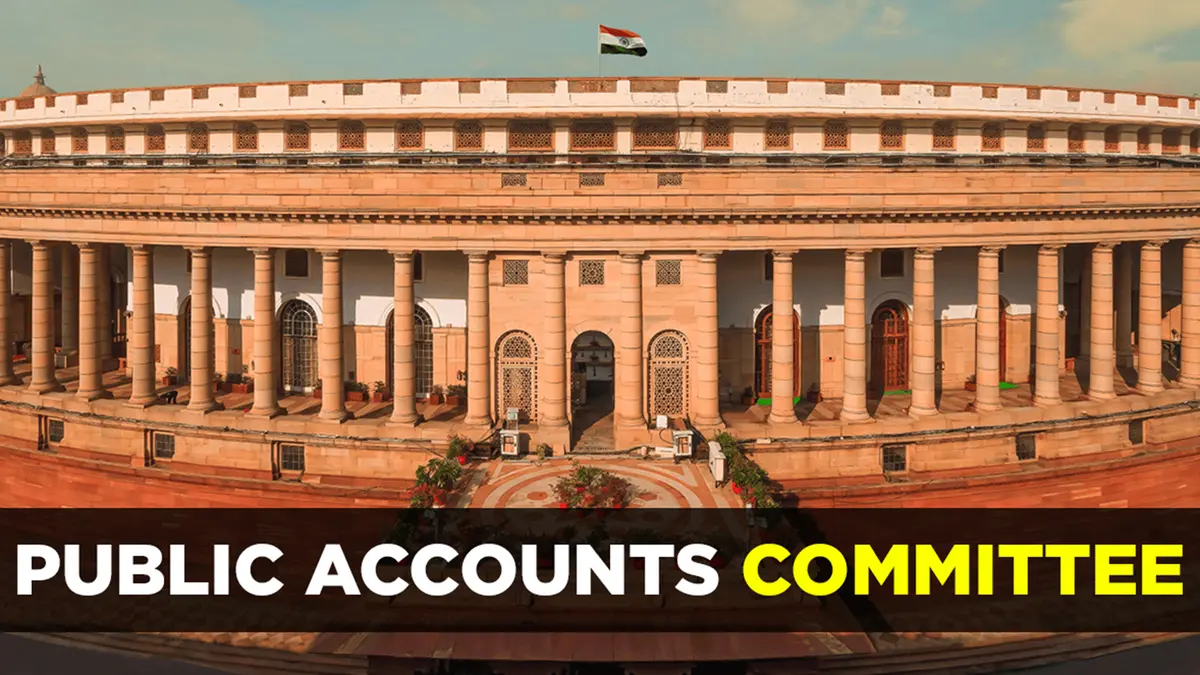
Why in news?
On 22 May 2026 the reconstituted Public Accounts Committee (PAC) of Parliament held its first meeting. Members from the ruling party raised objections when the chairperson, K. C. Venugopal, proposed taking up certain subjects on his own initiative (suo motu). The committee also expressed concern over delays in ministries submitting Action Taken Notes on audit observations.
Background
The PAC is the oldest parliamentary committee in India, created in 1921 during the colonial era to examine government expenditure. After independence it became a parliamentary committee appointed annually by the Speaker under Rule 308 of the Lok Sabha. The committee now comprises 22 members—15 from the Lok Sabha and 7 from the Rajya Sabha. Ministers cannot be members; if a member is appointed as a minister, they must resign from the committee. Since 1967 the chairperson has traditionally been from the opposition. The PAC’s primary job is to examine the appropriation accounts, finance accounts and Comptroller and Auditor General (CAG) reports to ensure that money is spent legally, within the grants voted by Parliament and for the intended purpose. It also reviews accounts of state‑owned enterprises, autonomous bodies and cases of excess expenditure or financial irregularities. The committee does not question government policy; its focus is financial discipline and accountability.
Recent issues
- Backlog of Action Taken Notes: Many ministries have not replied promptly to PAC observations. Delays hamper timely discussions and follow‑up on CAG findings.
- Suo motu examinations: The chairperson’s proposal to examine issues without a specific CAG report triggered debate. Members argued that the committee should stick to matters referred by the Speaker or based on audit reports to avoid overreach.
- Strengthening oversight: To improve efficiency, members suggested better digital tracking of audit paras, regular meetings and closer coordination with ministries to clear pending responses.
Conclusion
The PAC plays a vital role in safeguarding public finances by holding ministries accountable for their spending. Ensuring timely responses to audit observations and respecting the committee’s procedures will help uphold Parliament’s oversight function. The latest meeting highlights both the importance of the committee and the challenges it faces in enforcing financial discipline.