

Why in news?
In a landmark judgment delivered in December 2024 the Supreme Court of India directed the Union government to develop a comprehensive policy for the management and preservation of sacred groves across the country. While the case focused on protecting groves in Rajasthan, the Court’s directive has nationwide implications. Its observation continues to be relevant in 2026 as the government prepares to present progress reports.
Background
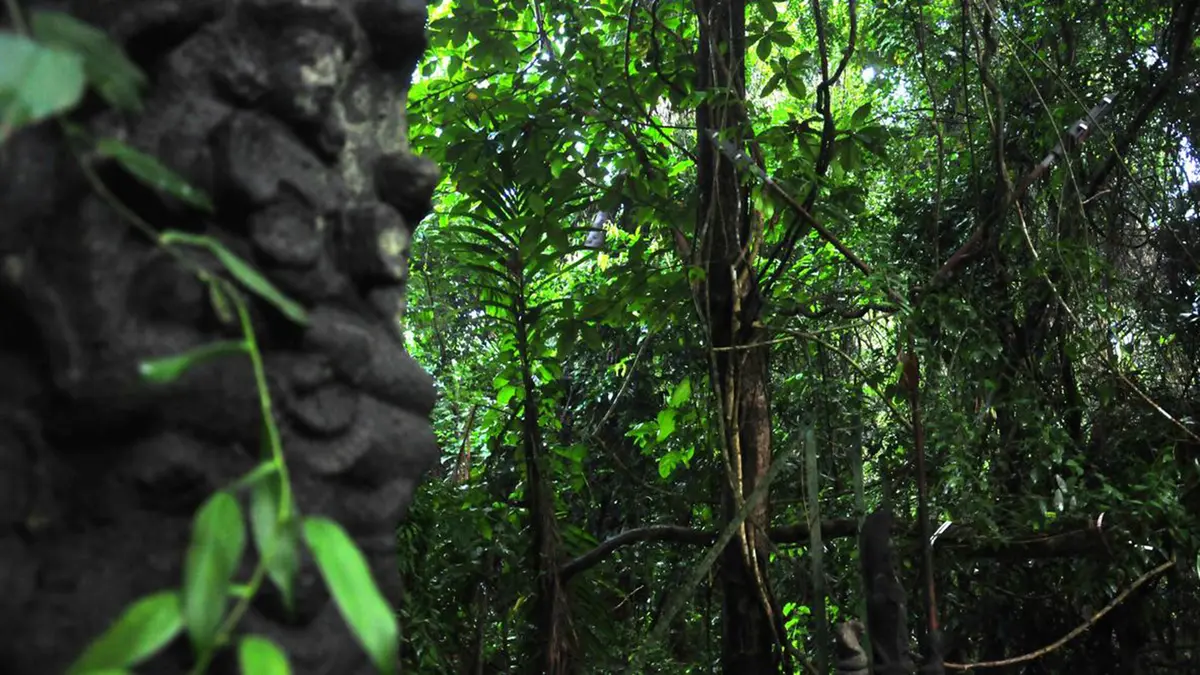
Sacred groves are patches of forest preserved by local communities for their religious and cultural value. In India these groves vary from tiny clusters of trees to forests spanning hundreds of acres. Communities believe that deities or ancestral spirits inhabit these spaces, and strict taboos prohibit felling trees, hunting or removing forest products. Such traditions date back to pre-agrarian times and have been documented since the 1800s. Because extraction is forbidden, sacred groves often harbour old-growth trees, medicinal plants and endangered species that have vanished from surrounding landscapes.
Supreme Court’s directives
- National survey: The Court asked the Ministry of Environment, Forest and Climate Change (MoEF&CC) to conduct a nationwide survey to identify and map sacred groves. It noted that the survey should mark boundaries but allow flexibility for natural growth.
- Policy formulation: The Union government must frame a policy that recognises sacred groves as community reserves under the Wild Life (Protection) Act 1972. This would provide legal protection and align management with the National Forest Policy 1988.
- Empowering communities: The Court suggested recognising traditional custodians under the Forest Rights Act 2006, enabling them to regulate activities and receive support for conservation.
- Supervisory committee: A five-member committee, led by a retired high court judge, will oversee the mapping and identification process and report progress to the Court.
Why sacred groves matter
- Biodiversity refuges: Sacred groves preserve remnants of native vegetation and serve as reservoirs of biodiversity. They harbour rare plants, medicinal herbs and wild relatives of crop species that are valuable for research and conservation.
- Water and soil conservation: Trees in groves absorb rainwater and release it during dry periods, supporting nearby streams and wells. Roots stabilise soil, reduce erosion and maintain micro-climates.
- Cultural identity: Rituals and festivals tied to sacred groves reinforce community cohesion and ecological stewardship. Many groves feature terracotta idols, stone shrines and annual ceremonies.
Conclusion
The Supreme Court’s directive elevates sacred groves from local customs to a matter of national importance. Developing a coherent policy and empowering communities will help ensure that these ecological and cultural treasures endure in the face of development pressures and changing social values.
Source: The Hindu