

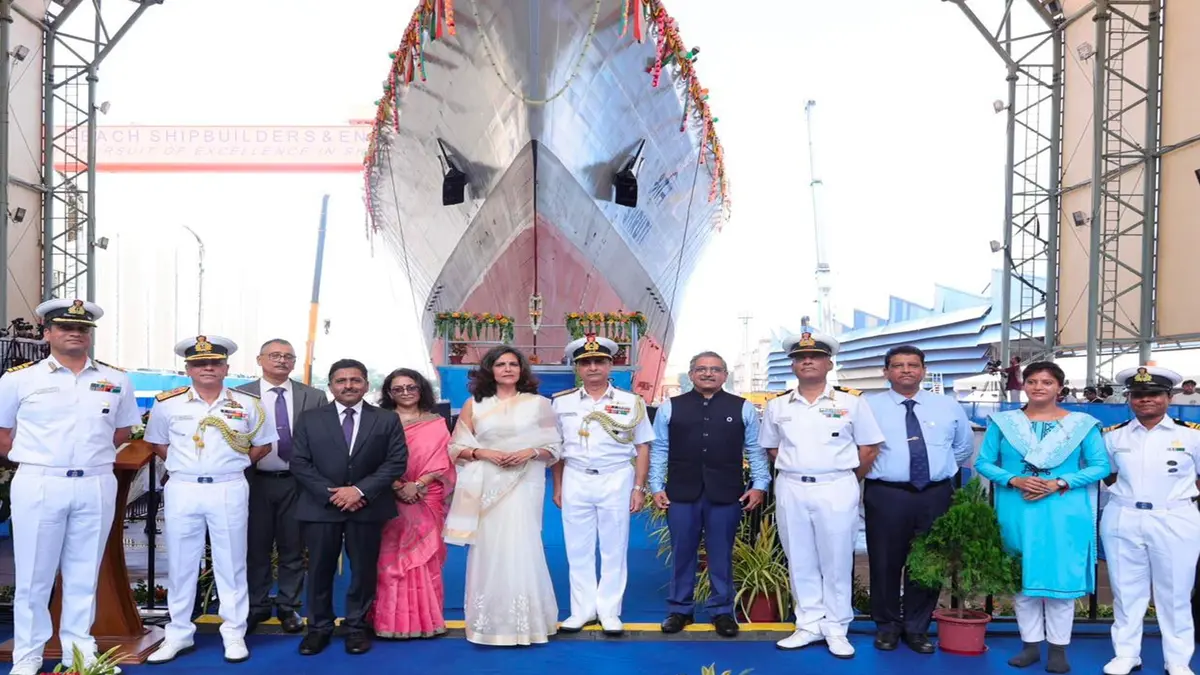
Why in news?
Garden Reach Shipbuilders and Engineers launched Shruti in Kolkata. It is the second next-generation offshore patrol vessel built there for the Indian Navy.
The vessel and programme
The Navy contracted eleven such ships on 30 March 2023. Goa Shipyard is building seven, while the Kolkata yard is building four.
Shruti is about 113 metres long and displaces roughly 3,000 tonnes. Its designed maximum speed is 23 knots.
The design provides an endurance of 8,500 nautical miles at 14 knots. Launching places the hull in water before fitting and sea trials.
Launch is not commissioning
The ship has entered a later construction stage. It will join operational service only after completion, trials, acceptance and commissioning.
Roles at sea
Offshore patrol vessels support surveillance, search and rescue, and protection of offshore assets. They can also assist anti-piracy and humanitarian operations.
Long endurance allows sustained presence across distant sea areas. That matters for monitoring shipping routes and India’s large maritime jurisdiction.
The ship’s name refers to the four Vedas. Its crest combines Ursa Major with a red-and-white lighthouse.
Industrial significance
Domestic construction builds design, integration and maintenance capacity. It can also strengthen supply chains for propulsion, sensors and specialised marine equipment.
Indigenisation should be measured by verified value and critical technology. A locally assembled platform may still depend on important imported systems.
Timely trials and transparent quality assurance remain essential. Schedule pressure cannot replace seaworthiness, crew safety or dependable lifecycle support.
Capability over the ship’s lifetime
Patrol effectiveness depends on sensors, communications and trained crews. Hull numbers alone do not reveal surveillance quality or response speed.
Maintenance planning should begin before commissioning. Spare parts, dock availability and technical documentation affect how often the vessel can sail.
Common designs can simplify training and support across a fleet. They also make early fault reporting especially important for later ships.
The two-yard programme can distribute industrial work and provide comparison. Shared naval standards must still produce consistent safety and performance.
Future reporting should distinguish construction milestones clearly. Keel laying, launch, delivery and commissioning each represent different readiness levels.
Sea trials should test endurance and systems under realistic conditions. Independent acceptance protects public spending and operational crews from hidden defects. Results should inform later vessels in the class.
Conclusion
Shruti marks progress in a substantial naval shipbuilding programme. Its real capability will be established through trials, commissioning and sustained availability.