

Why in news?
India’s Science and Technology Ministry announced Guinness recognition for a 1.85-kilometre steel-slag road at Raigarh on 12 September 2026. The Chhattisgarh project uses processed steelmaking material in place of conventional stone aggregate. The Central Road Research Institute and Jindal Steel developed the project together. Aggregate is the granular material that forms much of a road’s structure, helping it carry and distribute traffic loads. Replacing quarried stone with a suitable industrial by-product can reduce waste accumulation and demand for new extraction. The ministry described the record category as the longest road built with processed steel-slag aggregates. Its announcement also promoted lower costs and greater strength, but those performance claims require project-specific interpretation. The useful innovation is controlled material processing and road design, not simply putting untreated factory waste beneath vehicles.
What steel slag contains
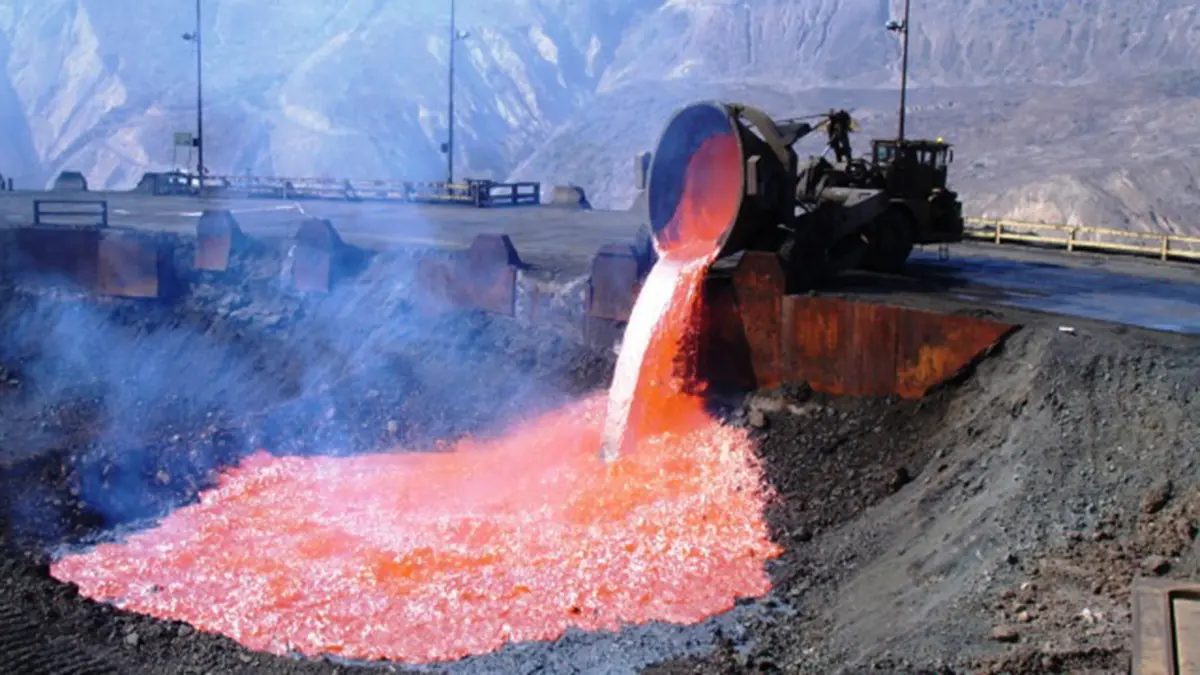
Steelmaking removes unwanted components from molten metal. Added materials known as fluxes help combine those components into a separate slag phase. Once cooled, slag can form a hard, stone-like material. Its composition varies with the production process and inputs, which is why all steel slag cannot be treated as one uniform construction product.
Steelmaking slag should also be distinguished from blast-furnace slag produced during ironmaking. Both arise within the wider iron-and-steel industry, but their compositions and suitable uses differ. A successful application of one material does not automatically establish the performance of another. Engineers must identify the actual source and properties of the supplied material.
Processing makes the difference
Unprocessed steel slag can contain recoverable metal and particles of unsuitable size. Crushing, screening and metal separation help turn it into graded aggregate. Grading means selecting a useful distribution of particle sizes. Particles must fit together within the designed pavement layer rather than leaving excessive voids or an unstable arrangement.
A further problem is volume stability. Some lime and magnesium compounds can react with water and expand. If significant expansion occurs after construction, a road layer can swell and damage the surface above it. Processing and testing must therefore establish suitability before the material becomes part of a pavement.
The United States Federal Highway Administration’s technical guidance explains this expansion risk and the need for controlled processing. Its archived recommendations describe American applications, not current Indian specifications. The underlying lesson is still relevant: a hard-looking particle can be unsuitable if its behaviour changes after exposure to moisture.
How the Indian technology developed
The Central Road Research Institute belongs to the Council of Scientific and Industrial Research. Its work addresses steel slag’s expansion, residual metallic content and potential leaching problems. Leaching occurs when water carries soluble substances out of a material. Environmental suitability therefore needs attention alongside strength and resistance to wear.
An earlier demonstration at Hazira, near Surat in Gujarat, used processed slag in a one-kilometre, six-lane road. The institute’s account describes replacement of natural aggregates throughout that specific pavement. This was an engineered application with its own material treatment and design. It was not an instruction to use untreated slag in every road layer.
India released guidelines for processing and using steel slag in road construction in July 2024. Such guidance matters when a technology moves beyond a closely supervised demonstration. Material acceptance, handling, construction and environmental controls need to remain consistent when different plants, contractors and public agencies become involved.
Interpreting the cost and strength claims
At the Raigarh announcement, Minister Jitendra Singh cited construction savings of around 40 per cent and fourfold strength. He also referred to long maintenance intervals in suitable applications. These are attributed claims from the announcement, not universal guarantees. Strength depends on the measured property, while overall road life depends on the complete pavement and its use.
Transport distance can change the economics substantially. A steel plant’s nearby road project may have an advantage that disappears at a distant site. Processing, testing and haulage still cost money. Comparing only the purchase price of slag and stone would leave out part of the decision facing a road authority.
The same reasoning applies to environmental benefits. Replacing natural aggregate can reduce quarrying and divert material from dumps. However, poorly controlled leachate or unsuitable disposal would create another problem. The relevant comparison includes extraction avoided, processing requirements, transport and performance over the road’s life, rather than treating all reuse as automatically harmless.
Conclusion
The Raigarh road marks a further application of processed steel slag, with record recognition reported by the ministry. Wider adoption should be judged by repeatable engineering and environmental results. Quality-controlled processing connects the waste-reduction opportunity to a dependable road. The record length alone cannot establish that every future project will perform equally well.