

Why in news?
Scientists from the Society for Education and Environmental Development and CSIR‑NEIST reported rediscovering Vaccinium piliferum, an endangered wild relative of blueberry, in the remote Vijoynagar region of Arunachal Pradesh after nearly 188 years. The finding shines a light on the rich but fragile biodiversity of the Eastern Himalaya.
Background
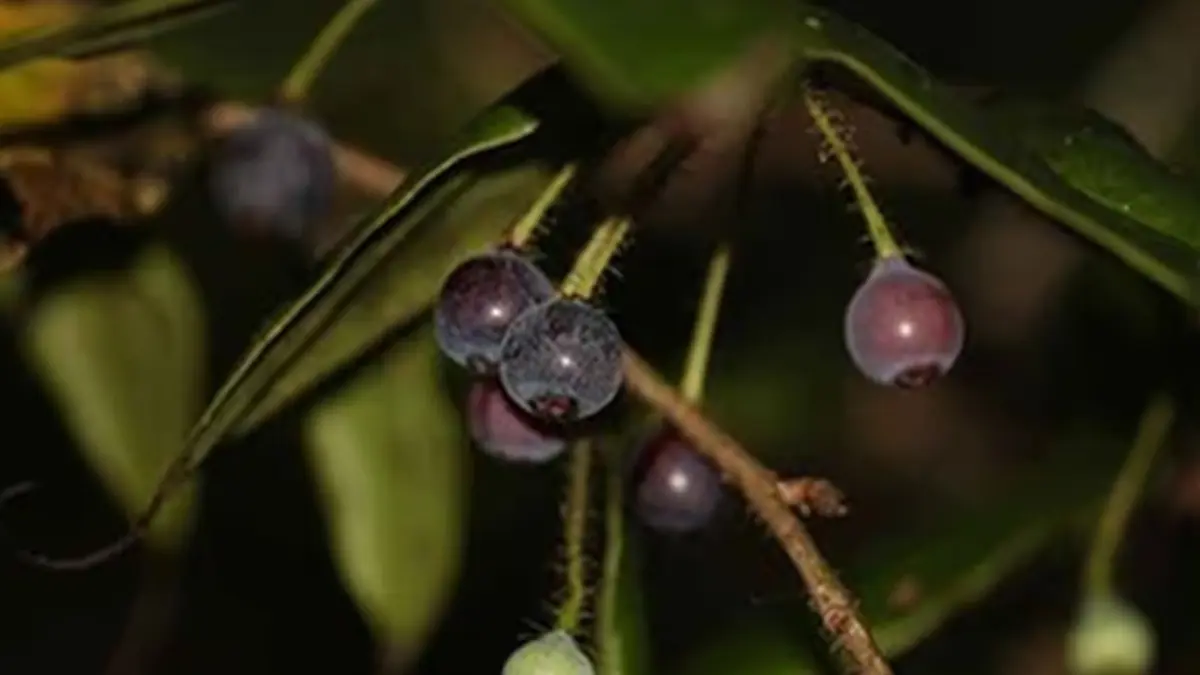
Vaccinium piliferum is a climbing shrub belonging to the Ericaceae family, which includes blueberries and cranberries. British botanist William Griffith first recorded the species in 1836 and it was last collected in 1850. The plant can grow up to 4.5 metres, has reddish‑margined leaves and produces bell‑shaped flowers followed by dark purple fruits. Due to its narrow range and habitat loss, the International Union for Conservation of Nature (IUCN) lists it as endangered.
Rediscovery details
The researchers located only 16 individual plants along tributaries of the Noa‑Dihing River at elevations between 1,150 and 1,280 metres. The species grows as an epiphyte—climbing on other trees without harming them—and has distinctive glaucous (bluish‑green) floral structures. Its rediscovery after nearly two centuries underscores the remoteness of the Vijoynagar forests and the need for detailed botanical surveys. Conservationists warn that habitat degradation from shifting cultivation and infrastructure projects could further imperil the tiny remaining population.
Significance
- Biodiversity value: The Eastern Himalaya is a global biodiversity hotspot. Rediscovering a species thought lost for decades highlights the importance of preserving its unique forests.
- Genetic resource: Wild relatives of cultivated fruits often possess traits such as pest resistance, nutritional diversity and climate adaptability. Vaccinium piliferum could contribute to future breeding programmes for blueberries and other berries.
- Conservation urgency: With only a handful of individuals located, the species is highly vulnerable. Protecting its habitat from deforestation and involving local communities in conservation efforts are crucial.
Conclusion
The rediscovery of Vaccinium piliferum is a reminder that many species remain hidden in India’s remote forests. Documenting and conserving such plants will strengthen food security and safeguard ecological heritage. Authorities should designate conservation reserves and support sustainable livelihoods to protect these rare species.