

Why in news?
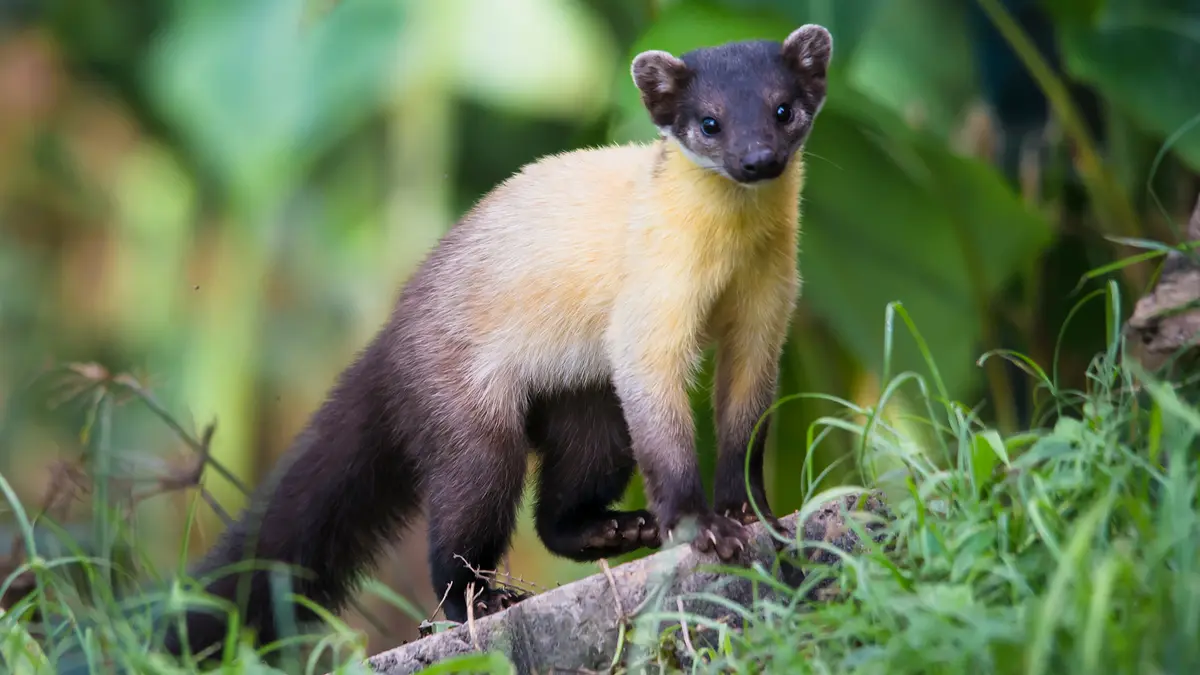
Kaziranga National Park in Assam recently recorded its first sighting of the yellow‑throated marten. The appearance of this colourful carnivore highlights the park’s rich biodiversity and underscores the importance of habitat conservation in northeastern India.
Background
The yellow‑throated marten (Martes flavigula), also known as kharza, belongs to the weasel family (Mustelidae). Found across the Himalayas and through much of South and East Asia, it inhabits a variety of forest types—from coniferous and broad‑leaved forests to montane rainforests and lowland swamps. Unlike many of its shy relatives, this species is diurnal and often moves in pairs or small groups. It is listed as “Least Concern” on the IUCN Red List due to its wide distribution, though local populations can be threatened by habitat loss and hunting.
Habitat and distribution
- Range: Yellow‑throated martens are found across the Himalayas, Nepal, Bhutan and Northeast India, extending south to Indonesia and north to the Korean Peninsula and the Chinese–Russian border.
- Habitats: They occupy coniferous and broad‑leaved forests, moist tropical forests, montane rainforests, shrublands and even treeless alpine slopes. Their adaptability allows them to live between sea level and high‑altitude terrain.
Physical characteristics
- Size: Adult males typically measure 50–72 cm in body length with a long tail about two‑thirds the body length. They weigh 2.5–5.7 kg, while females are slightly smaller.
- Colouration: The animal’s most striking feature is its bright yellow or golden throat and chest, contrasting with a black head and dark brown back. In winter the fur becomes denser and slightly duller.
- Build: It has a long, flexible body and muscular legs, making it the largest of the Old World martens. A strong odour produced by anal glands deters predators.
Behaviour and diet
- Diurnal hunter: Unlike many carnivores, the yellow‑throated marten is active during the day. It hunts small mammals, birds and insects, but also eats fruits and nectar, assisting in seed dispersal.
- Fearless nature: Its powerful build and strong odour mean it has few natural predators, and it will readily stand ground against animals larger than itself.
- Social habits: Martens sometimes hunt cooperatively in pairs or small groups, enabling them to tackle larger prey such as musk deer fawns.
Conservation status
The species is listed as Least Concern by the IUCN thanks to its broad range. Nevertheless, habitat destruction, deforestation and occasional hunting for fur pose local threats. The sighting in Kaziranga underscores the need to protect contiguous forest corridors that support this and other elusive species.
Conclusion
The yellow‑throated marten is a charismatic predator whose presence signals a healthy forest ecosystem. Its first recorded sighting in Kaziranga shows that conservation efforts are paying off. Continued protection of diverse habitats will ensure that this vibrant carnivore remains part of India’s wildlife heritage.