

Why in news?
Mumbai's Tree Authority approved tree removal for a Department of Atomic Energy road project near Bhabha Atomic Research Centre. The proposal permits 251 trees to be cut and 48 trees to be transplanted. Officials linked the work with road connectivity between Old Mandala and New Mandala. The approval also requires compensatory planting on land identified for the project.
What the approval covers
The project concerns movement around the Mandala and Trombay area of eastern Mumbai. Reports state that 299 trees fall within the affected site. Most are approved for felling, while a smaller group will be relocated. The distinction matters because transplantation does not guarantee survival.
The reported condition requires at least 2,211 native trees to be planted. Saplings must be at least six feet tall and planted within the prescribed period. Transplanted trees are to remain within the available project land. Compliance should be documented after planting, not only promised before construction.
The Tree Authority considered the proposal after public notice procedures. Reports said no objection was received during the notified period. Absence of an objection does not itself establish ecological adequacy. Technical scrutiny must still examine species, age, condition and alternatives.
What BARC is
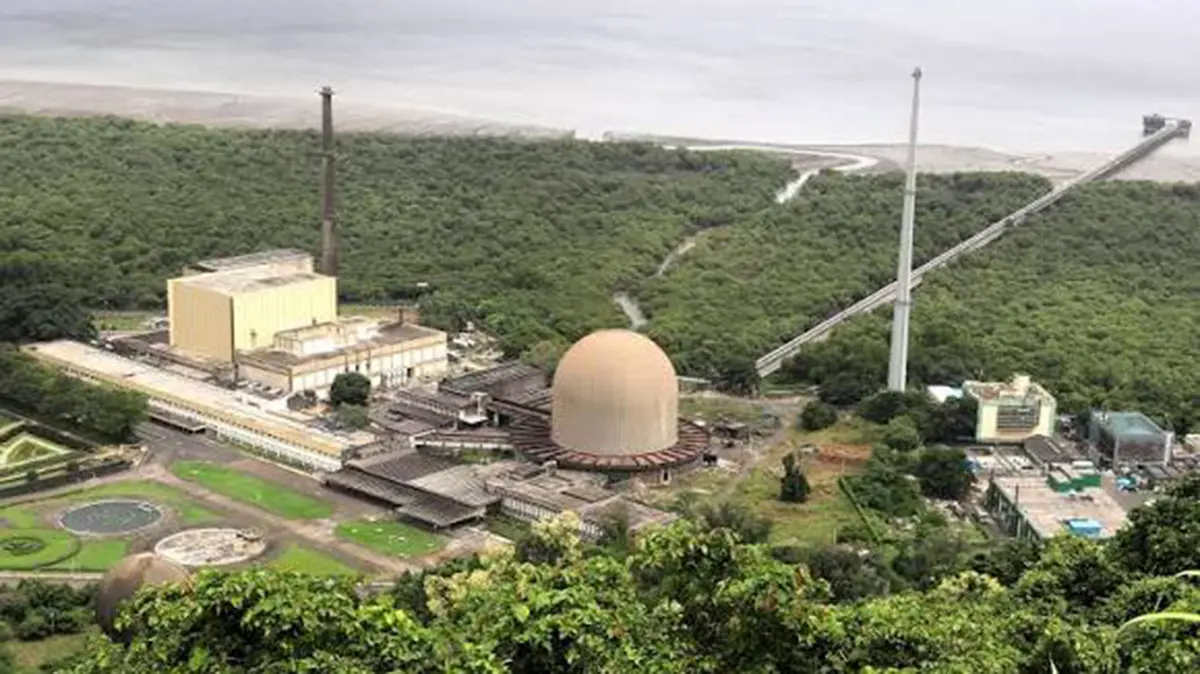
Bhabha Atomic Research Centre is the Department of Atomic Energy's major multidisciplinary research centre. It is located at Trombay on Mumbai's eastern side. The institution began as the Atomic Energy Establishment, Trombay, during the 1950s. It was renamed after physicist Homi Jehangir Bhabha in January 1967.
The Centre works across the nuclear fuel cycle and related sciences. Its facilities support reactor research, radioisotopes, materials, engineering, health and environmental studies. Research reactors have been central to this work. Apsara became Asia's first research reactor to reach criticality in August 1956.
Dhruva later became an important national facility for neutron research and isotope production. Apsara-U, an upgraded pool-type reactor, reached criticality in September 2018. These facilities serve research rather than commercial electricity supply. Their operation requires layered safety and security systems.
The local geographical context
Trombay projects into Mumbai Harbour on the city's eastern waterfront. The wider area contains hills, mangroves, industrial land and dense settlements. Thane Creek lies to the north and east of this urban region. Road planning must therefore address both restricted facilities and sensitive coastal ecology.
Mandala is a densely occupied locality near Mankhurd and Govandi. Better road access can support emergency movement and everyday connectivity. Construction can also increase dust, runoff and habitat fragmentation. The case presents a real public-interest trade-off rather than a simple choice.
Mumbai receives intense monsoon rainfall. Mature trees slow runoff, shade streets and support urban wildlife. Their benefits cannot be replaced immediately by young saplings. Project design should therefore retain every safe tree that does not obstruct essential work.
How compensatory planting should be assessed
A planting number is only the beginning of ecological compensation. Authorities should publish species, locations, planting dates and survival records. Native trees suited to local soils have better long-term value. Maintenance funding is necessary through several dry seasons.
Transplantation needs root assessment, suitable machinery and correctly prepared receiving pits. Large trees can suffer delayed stress after apparently successful movement. Independent survival checks should continue for multiple years. Dead replacements should trigger timely replanting.
Construction planning can reduce damage before compensation becomes necessary. Small route adjustments may save healthy mature trees. Work zones should protect retained roots from soil compaction. Drainage must prevent contaminated runoff from reaching nearby water bodies.
Conclusion
The approval enables a connectivity project around an important research complex. It also removes a substantial number of established urban trees. Compensatory planting must be judged by survival and ecological function. Transparent monitoring can show whether the conditions are actually fulfilled. Infrastructure and environmental responsibility should proceed through the same project plan.