

Why in news?
India has stepped up efforts to eliminate sickle cell disease (SCD) by 2047. In late 2025 the government launched BIRSA‑101, the country’s first indigenous CRISPR‑based gene therapy for SCD, and continues to promote screening and care under the National Sickle Cell Anaemia Elimination Mission. These developments are in focus again in May 2026 as awareness programmes expand across tribal regions.
Background
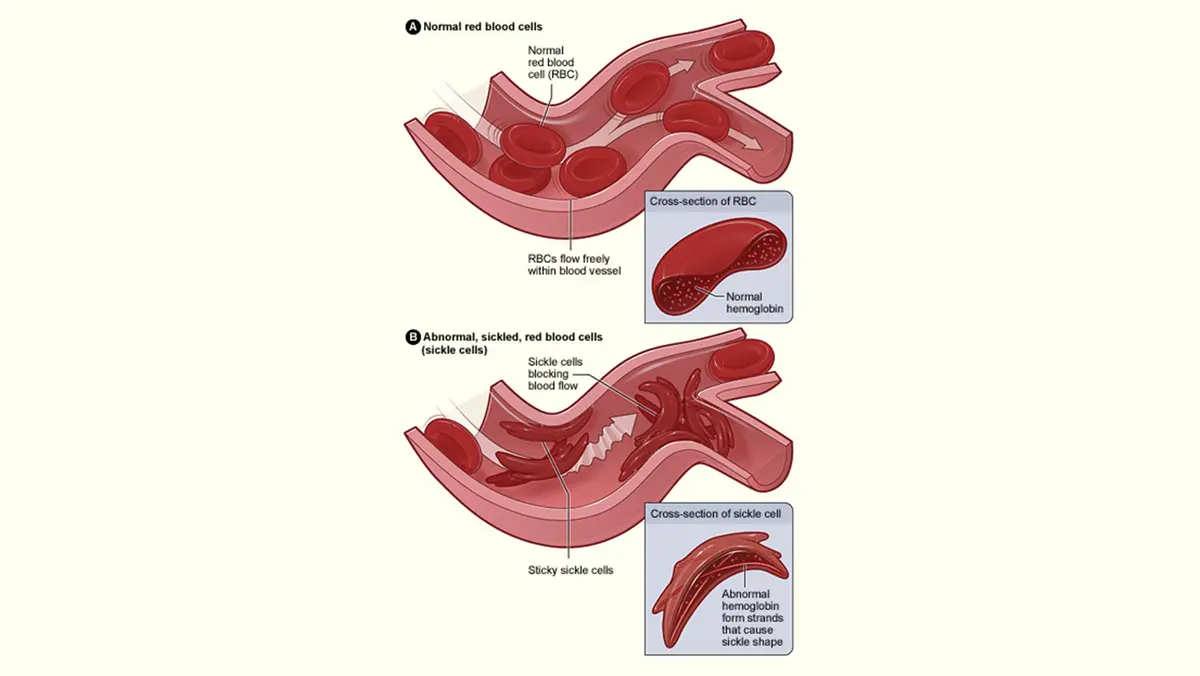
Sickle cell disease is a hereditary blood disorder caused by a mutation in the HBB gene that makes haemoglobin molecules stick together. Red blood cells become rigid and crescent‑shaped instead of round. They break down faster and can block small blood vessels, leading to anaemia, severe pain episodes, stroke and organ damage. The disease is most common in sub‑Saharan Africa but also affects tribal populations in central and western India. According to the World Health Organization, more than 7 million people worldwide live with SCD and over half a million babies are born with the condition each year.
Treatments for SCD include hydroxyurea to reduce painful crises, vaccinations and antibiotics to prevent infection, regular blood transfusions and, in some cases, bone marrow transplant. Emerging gene therapies aim to correct the genetic defect itself.
India’s initiatives
The National Sickle Cell Anaemia Elimination Mission was launched in 2023 to screen about 7 crore people over three and a half years, raise awareness and provide counselling and treatment. The goal is to make India free of SCD by 2047. The mission focuses on 17 states with high tribal populations, including Madhya Pradesh, Maharashtra, Odisha and Jharkhand. It emphasises early diagnosis, pre‑marital counselling and better access to medicines.
BIRSA‑101 is a path‑breaking gene therapy named after tribal freedom fighter Birsa Munda. Developed by scientists at the Council of Scientific & Industrial Research’s Institute of Genomics and Integrative Biology (CSIR‑IGIB) in collaboration with the Serum Institute of India, the therapy uses CRISPR/Cas9 technology to edit patients’ stem cells so they produce normal haemoglobin. The edited cells are infused back into the patient, potentially offering a one‑time cure. BIRSA‑101 is designed to be affordable for Indian patients; the government hopes to reduce costs compared with similar treatments abroad and make advanced care accessible to tribal communities.
Key points
- Burden in India: SCD is prevalent among tribal groups, who make up about 8.6 per cent of the national population. Lack of awareness and healthcare access have led to underdiagnosis and early deaths.
- Elimination mission: Targets screening of 70 million people, counselling carriers and providing free care. Involves both central and state governments.
- Gene therapy breakthrough: BIRSA‑101 uses CRISPR to correct the defective gene in a patient’s own stem cells. It is still undergoing clinical studies but represents a major milestone for Atmanirbhar Bharat in advanced medicine.
- Long‑term outlook: Combining widespread screening, conventional care and cutting‑edge therapies could drastically reduce SCD’s impact in India by mid‑century.
Conclusion
Sickle cell disease remains a serious health challenge but initiatives like the National Elimination Mission and BIRSA‑101 gene therapy give hope. Continued investment in screening, community education and affordable treatments will be vital for meeting the 2047 elimination goal and improving the lives of affected families.