

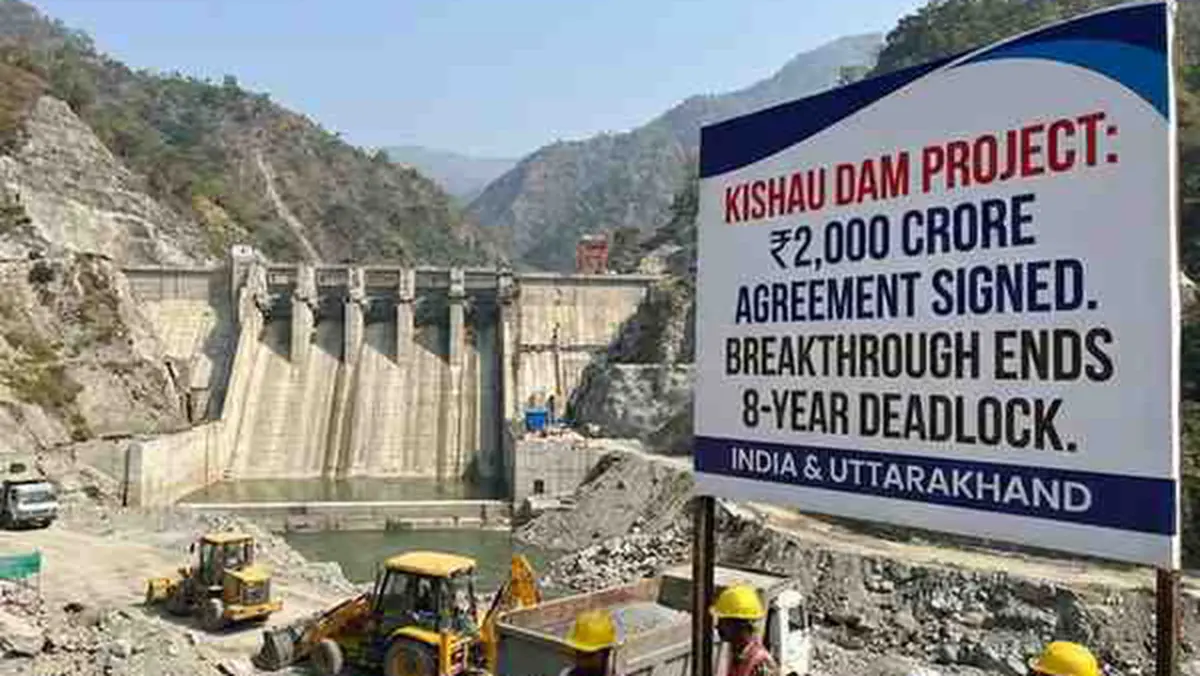
Why in news?
An eight‑year deadlock over the Kishau Dam project was resolved in June 2026 after the Union government and beneficiary states agreed on funding arrangements. The project aims to build a high concrete gravity dam on the Tons river at the border of Uttarakhand and Himachal Pradesh to provide irrigation, drinking water and hydro‑electric power.
Background
The Kishau Dam proposal dates back several decades as part of the Upper Yamuna Basin agreements. It involves constructing a 236‑metre high concrete dam across the Tons, a major tributary of the Yamuna. The project includes a power house of about 660 MW capacity (four units of 150–165 MW each) and a live storage of around 1,300 million cubic metres. The reservoir will supply irrigation water to about 97,000 hectares and provide 517 million cubic metres of drinking water annually.
Recent developments
- Cost sharing: The total project cost is estimated at around ₹15,000 crore. Under the new agreement, the water component will be funded by the central government while beneficiary states — Haryana, Delhi, Rajasthan and Uttar Pradesh — share the power component cost of about ₹2,000 crore.
- Strategic importance: The dam will harness monsoon flows in the Tons basin, improve irrigation in water‑scarce districts and supply drinking water to urban centres, including Delhi. The hydropower component will add renewable energy capacity.
- Environmental concerns: Environmentalists have raised issues about submergence of forests and displacement of communities. Detailed environmental impact assessments and rehabilitation plans are required before construction can begin.
Conclusion
Clearing the funding impasse paves the way for detailed design and clearances. If implemented responsibly, Kishau Dam could provide water security and clean energy for several northern states. It also underscores the importance of cooperative federalism in managing shared river basins.