

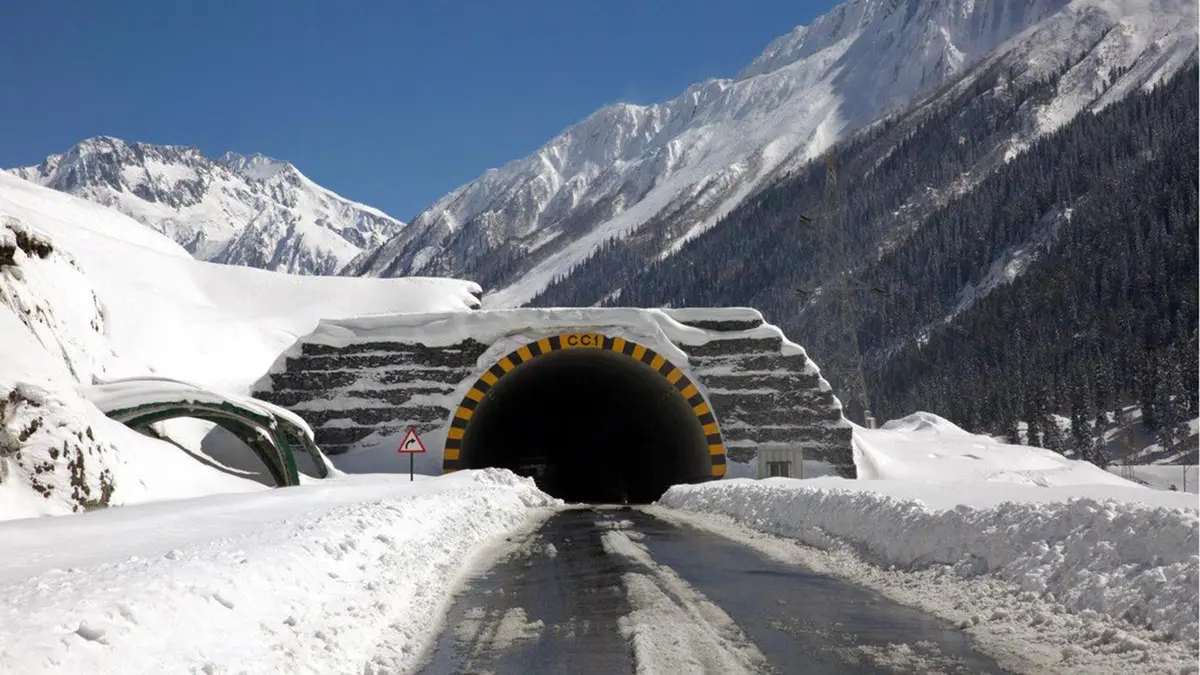
Why in news?
On 10 June 2026 Union Minister for Road Transport Nitin Gadkari announced the breakthrough of the Zojila tunnel, meaning that excavation crews working from both ends finally met. The 13.15 kilometre tunnel, part of the Srinagar–Sonamarg–Kargil road project, is being built at an altitude of about 3,530 metres to provide all‑weather connectivity between Kashmir and Ladakh.
Background
The Zojila pass on National Highway 1 links the Kashmir Valley with the Ladakh plateau. At an elevation of 3,528 metres, the pass remains closed for several months each winter due to heavy snowfall and avalanches, cutting off Ladakh from the rest of India. To address this strategic and economic bottleneck, the government approved the Zojila tunnel project in 2018, entrusting construction to Megha Engineering and Infrastructure Limited (MEIL). The project includes a 13.15 km main tunnel and 17 km of approach roads.
Features and expected benefits
- All‑weather connectivity: Once completed, the tunnel will allow vehicles to travel between Sonamarg in Kashmir and Minamarg in Ladakh throughout the year, reducing closures caused by snowstorms and landslides.
- Travel time reduction: The tunnel is expected to cut the journey between the two towns from about 90 minutes to around 15 minutes. This will improve logistics for civilians and the military.
- Safety features: Plans include modern ventilation systems, fire detection and suppression, CCTV surveillance and escape passages to meet international safety standards. Avalanche protection structures are being built along the approaches.
- Economic and strategic importance: The tunnel will facilitate tourism in Ladakh, ensure steady supply of essentials and strengthen defence preparedness along the border with China. It is part of a broader package of highway projects worth over ₹1.35 lakh crore in Jammu and Kashmir.
- Project timeline: Though excavation breakthrough has occurred, finishing work such as lining, ventilation and road surface installation will continue. Officials aim to open the tunnel to traffic by 2028.
Conclusion
The Zojila tunnel marks a milestone in India’s infrastructure drive to connect remote Himalayan regions. By ensuring reliable year‑round access between Kashmir and Ladakh, the project will boost economic development, tourism and national security. Continued vigilance during construction and strict safety oversight will be needed to deliver the tunnel on time and within budget.