

Why in news?
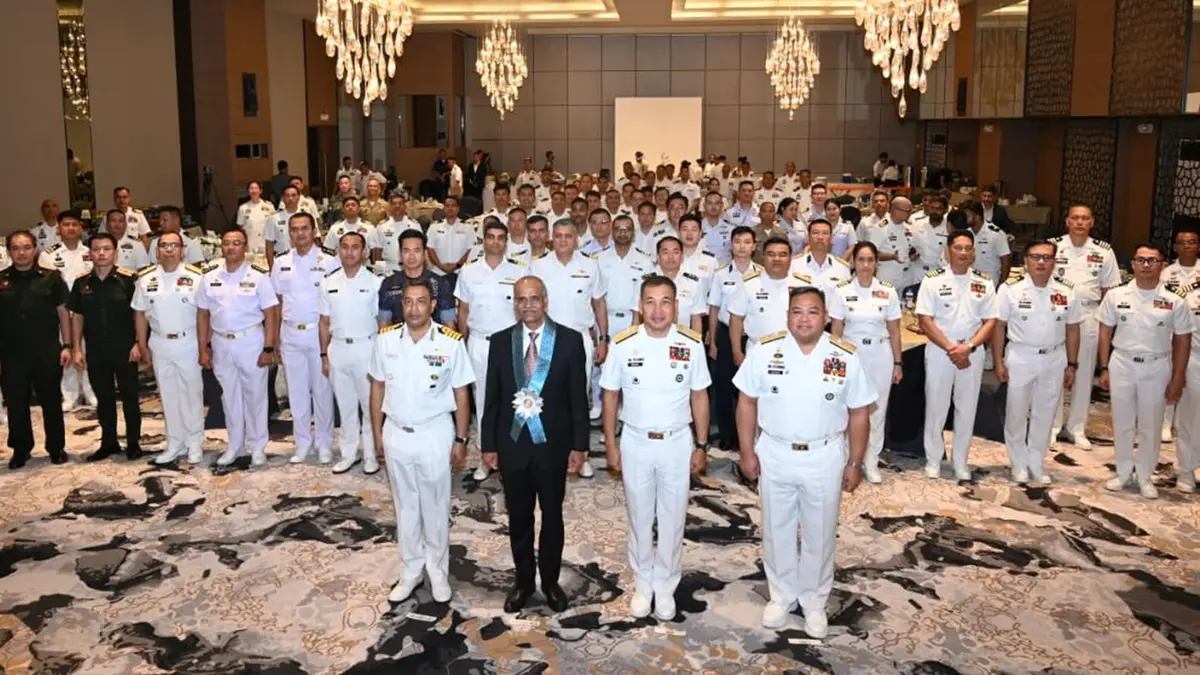
The second Association of Southeast Asian Nations–India Maritime Exercise began at Subic Bay in the Philippines on 28 September 2026. India's Defence Ministry announced the development on 30 September. The Association of Southeast Asian Nations, commonly called ASEAN, is a regional grouping with which India conducts maritime cooperation. India sent the warships Sahyadri and Kulish for an exercise combining harbour activities with a sea phase. Its purpose is to improve coordination between crews operating different ships and systems. Such cooperation requires shared procedures and practice, not simply ships appearing in the same place. At this stage, the announcement described the exercise programme rather than completed operational results.
Who is involved, and what the exercise represents
ASEAN is a regional association, not a single navy commanding all its members' ships. It has eleven member states following Timor-Leste's admission on 26 October 2025. India participates as a partner, not as a member of the association. These institutional distinctions matter because a joint exercise does not merge national commands or create a collective military organisation.
Sahyadri is a stealth frigate and Kulish a missile corvette, as identified in the ministry's September deployment reporting. Both are surface warships, though their designs and roles differ. The same ships had participated in a separate regional maritime activity at Subic Bay earlier in September. That activity concluded on 25 September. The second ASEAN–India exercise began afterwards and should not be confused with that earlier event.
Why harbour preparation comes before sea practice
The announced harbour programme includes professional exchanges, community activities and a pre-sail briefing. Professional discussions allow crews to compare procedures before operating together. A briefing can establish the shared plan and clarify responsibilities. These preparations help turn a multinational gathering into a coordinated exercise. Social contact also helps personnel become familiar with counterparts they may otherwise know only through radio messages.
Interoperability means the ability to work together effectively. It does not require every navy to use identical equipment. Ships may instead need compatible communication procedures, a common understanding of instructions and clear coordination between teams. An exercise provides a setting in which such arrangements can be practised and misunderstandings identified before they matter during a real operation.
The move to a sea phase tests coordination under conditions that cannot be reproduced entirely in a conference room. Ships and crews must relate the agreed plan to activity underway. This explains the relationship between preparation and practice. It does not establish that the 2026 exercise has already achieved every intended result; those outcomes require evidence from the exercise itself.
A connection with the first edition
The inaugural ASEAN–India Maritime Exercise concluded in the South China Sea on 8 May 2023. India's destroyer Delhi and frigate Satpura participated, alongside aircraft and other regional naval vessels. The Defence Ministry's account described activities including coordinated manoeuvres, helicopter cross-deck landings and seamanship exercises. Those details belong to the 2023 edition, not automatically to the current programme.
The earlier edition shows why repeated exercises can be useful. Coordination involves practical skills that need to be maintained as personnel, equipment and circumstances change. A later exercise offers another opportunity to practise cooperation rather than merely repeat a diplomatic announcement. Whether that opportunity produces lasting improvement depends on the work undertaken and what participating navies learn from it.
Why Subic Bay's location matters
Subic Bay lies on the western coast of Luzon, the large northern Philippine island. It opens towards the South China Sea. The Philippine mapping authority identifies this west-coast position in its navigation records. A sheltered harbour and access to nearby sea areas provide the geographical setting for harbour preparation followed by activities offshore.
This location places the exercise within Southeast Asia's connected maritime environment. However, conducting an exercise in a region does not by itself settle maritime boundaries or disputed claims. Nor does cooperation automatically create new treaty obligations. The immediate development is practical naval engagement, whose significance should be assessed through its stated purpose and observed activities.
Conclusion
The second ASEAN–India Maritime Exercise continues a framework for professional contact and coordinated naval practice. Its harbour and sea components address different parts of the same task: making cooperation workable between separate national forces. The meaningful outcome will be improved procedures and familiarity that remain useful after the ships leave Subic Bay.