

Why in news?
The Attunli Hydroelectric Project has reached another stage of environmental appraisal. A 31 August sector report said an expert committee recommended prior environmental clearance. The proposed 680-megawatt project is in Arunachal Pradesh’s Dibang Valley district. This recommendation does not equal final permission to begin construction.
What the project proposes
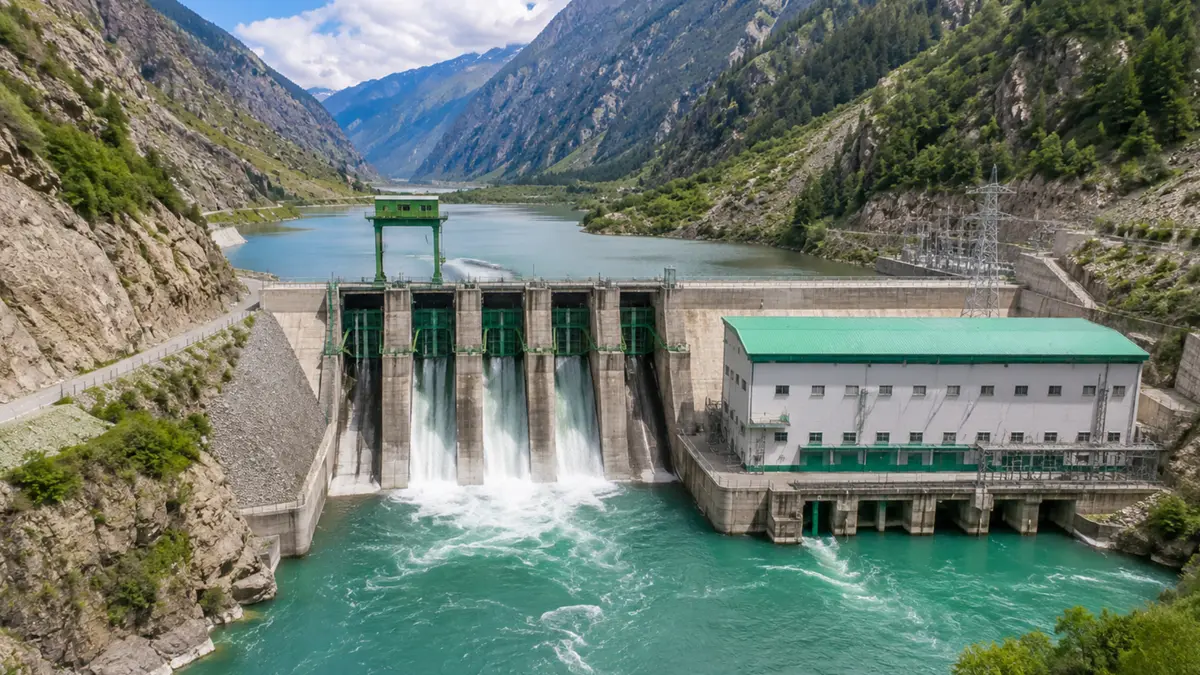
Attunli is planned as a 680-megawatt run-of-river hydropower project. It would use four generating units of 170 megawatts each. The scheme includes a concrete gravity dam and underground water-conveyance works. Its final design remains subject to approved project documents and conditions.
SJVN Limited, formerly Satluj Jal Vidyut Nigam Limited, is the present developer. The Union Government identified SJVN for five Dibang-basin projects in December 2021. Arunachal Pradesh formally allotted the projects in July 2023. The parties signed their development agreement in August 2023.
SJVN’s recent material places Attunli in the pre-construction stage. It gives a tentative cost near ₹7,505 crore. The company also indicates a possible 2032–33 commissioning period. Such estimates can change after approvals, contracting and site conditions.
Location and river geography
The project lies near Athunli, Edilin and Gunil villages in Dibang Valley. Official records place it on the Talo, also called the Tangon River. This river belongs to the wider Dibang basin. The Dibang later joins the Brahmaputra river system.
Dibang Valley is a mountainous district in north-eastern Arunachal Pradesh. It adjoins China’s Tibet Autonomous Region along India’s northern frontier. The terrain is steep, forested and seismically active. Roads and construction seasons are constrained by rain and landslides.
River gradients create high hydropower potential across the region. The same terrain supports rich forests and many small settlements. Projects therefore interact with biodiversity, community land and downstream flows. Basin-level effects matter alongside each individual dam.
Environmental and forest approvals are different
Environmental appraisal proceeds under the Environmental Impact Assessment Notification, 2006. The Expert Appraisal Committee examines studies, public-hearing issues and proposed safeguards. It may recommend clearance with conditions. The ministry must still issue the formal decision.
Forest diversion follows a separate legal process. The Forest Advisory Committee considered 261.53 hectares of unclassed forest for Attunli. It recommended in-principle approval with conditions. Final diversion needs compliance and a further government order.
Older project records cannot automatically settle the current proposal. The developer and appraisal documents have changed over time. Current applications must be read through their latest proposal numbers. A historic terms-of-reference letter is not a present construction clearance.
What the assessments must examine
A hydropower assessment should measure submergence, tree loss and habitat fragmentation. It must also study muck disposal and worker settlements. Roads can create impacts beyond the dam footprint. Landslide and erosion controls require monitoring throughout construction.
Environmental flows must protect downstream river functions. Fish movement, sediment and seasonal variation deserve attention. A run-of-river label does not mean the project has no reservoir or diversion. It describes the operating design, not absence of impact.
Seismic safety is especially important in the eastern Himalaya. Designers need site-specific geological and earthquake information. Extreme rainfall and probable maximum flood assumptions must remain conservative. Emergency plans should cover workers and downstream communities.
Community and cumulative questions
Dibang Valley has low population density but strong community relationships with land and rivers. Public consultation must therefore be meaningful, not merely procedural. Documents should be accessible before hearings. Responses to objections need a clear public record.
Several large hydropower projects are proposed within the Dibang and neighbouring basins. Their combined roads, transmission lines and altered flows may exceed one project’s footprint. Cumulative assessment should examine these connected pressures. Project-by-project conditions cannot replace basin planning.
Hydropower can provide low-carbon electricity and help manage peak demand. It can also support local roads and revenue. These benefits depend on reliable generation and fair sharing. Delays, cost escalation or ecological damage can weaken the public case.
A recommendation is not the final clearance
The current report concerns an appraisal recommendation. Separate environmental, forest, financial and construction decisions remain legally and operationally distinct.
Conclusion
Attunli could add substantial hydropower capacity in the Dibang basin. Its Himalayan location also creates serious ecological and safety duties. Committee recommendations move the proposal forward without completing every approval. Transparent conditions and cumulative assessment are therefore essential. Construction should follow only after each legal requirement is fully satisfied.