

Why in news?
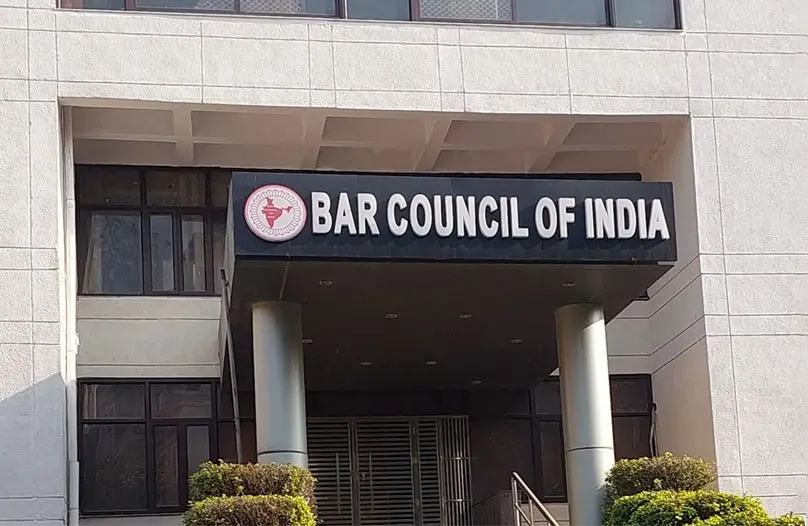
The Supreme Court delivered an important ruling on 3 September 2026 concerning law students. It set aside Bar Council of India communications directed at NALSAR University of Law, Hyderabad. The Court held that Bar Councils cannot discipline students before their enrolment as advocates. Universities retain authority over student conduct within their academic institutions.
What led to the case?
The dispute followed a protest at the National Academy of Legal Studies and Research (NALSAR) University of Law. It concerned convocation arrangements. Bar Council communications then sought action against members of the graduating batch. Two of the university's alumni challenged that intervention before the Supreme Court.
A bench led by Chief Justice of India Surya Kant heard the matter. Justices Joymalya Bagchi and V. Mohana were also on the bench. The Court quashed the challenged communications. It found no statutory power allowing Bar Councils to punish people who were still students.
The ruling did not declare that student misconduct must go unanswered. It placed that responsibility with the educational institution under its governing rules. A university can investigate conduct and provide a fair hearing. Its decision must still comply with law and natural justice.
How the Bar Council system works
The Advocates Act, 1961 creates the Bar Council of India and State Bar Councils. The national body includes the Attorney-General and Solicitor-General of India as ex officio members. Each State Bar Council also elects one representative. Members elect the national Council's chairperson and vice-chairperson.
Section 7 gives the Bar Council of India several functions. It sets professional conduct standards for advocates and promotes legal education. It can recognise universities whose law degrees qualify graduates for enrolment. These education powers support minimum professional standards across institutions.
Recognition of a law degree does not make every student an advocate. A graduate must apply for enrolment under the statutory process. Professional status begins only after the relevant legal requirements are met. The distinction determines when Bar Council discipline becomes available.
Why Sections 35 and 36 matter
Section 35 concerns professional misconduct by an advocate whose name appears on a State roll. A State Bar Council may refer such a case to its disciplinary committee. That committee can dismiss the complaint, reprimand the advocate, suspend practice or remove the name. These are professional sanctions with serious consequences.
Section 36 gives the national Council specified disciplinary powers concerning advocates. Neither provision creates a general code of discipline for students. Courts cannot add a new class of regulated people to clear statutory language. The ruling therefore follows the limits chosen by Parliament.
This reading also protects institutional responsibility. Bar Councils oversee entry into and conduct within the legal profession. Universities manage teaching, examinations, campuses and student discipline. The two systems can cooperate without exercising each other's statutory powers.
Wider implications
Regulators often influence earlier stages of a profession through accreditation. Medical, legal and technical bodies may prescribe educational standards. Such power does not automatically include every disciplinary function. The enabling law must support each coercive action.
The judgment reinforces the principle that public bodies need legal authority for their decisions. Good intentions cannot replace jurisdiction. A regulator may issue guidance or seek information within its powers. It cannot impose consequences upon people whom the statute does not cover.
Universities must also use their authority responsibly. Disciplinary rules should be published, specific and applied consistently. Students should know the allegation and receive a meaningful opportunity to respond. Decisions affecting degrees or careers require recorded reasons and proportionate action.
The ruling does not weaken the Bar Council's role in legal education. It can continue setting standards and recognising eligible law degrees. It can also regulate advocates after enrolment. The boundary simply prevents educational oversight from becoming unsupported personal discipline.
Conclusion
The Supreme Court has clarified a significant boundary in professional regulation. Bar Councils may regulate advocates and recognised legal education within the Advocates Act. They cannot punish law students before enrolment without statutory authority. Universities remain responsible for fair campus discipline under their own rules. Clear institutional boundaries protect both accountability and individual rights.